Garden & Exterior
Your garden and exterior spaces form a living extension of your home—one that changes with every season, responds to unpredictable weather, and shapes your daily wellbeing more profoundly than any interior room. Whether you’re coaxing a monstera to flourish on a north-facing windowsill, wrestling with a waterlogged patio after heavy rain, or wondering why your neighbour’s tiny courtyard feels more restful than your sprawling lawn, the decisions you make outdoors ripple inward, affecting everything from your stress levels to the visual harmony you see through your bi-fold doors.
This category brings together the practical realities of gardening and outdoor living in climates where sunshine is fleeting, frost arrives unexpectedly, and a hosepipe ban can disrupt even the most carefully planned border. You’ll find guidance rooted in the genuine challenges British gardeners face: limited light, unpredictable rainfall, weight restrictions on urban balconies, and the need to balance aesthetic ambition with realistic maintenance. Each section connects the dots between thriving plants, durable materials, efficient systems and spaces that genuinely enhance your quality of life.
From selecting paving that survives winter freeze-thaw cycles to automating irrigation for a vertical herb wall, the insights ahead are designed to help you make confident, informed choices that work with your space, your schedule and your local conditions—not against them.
Indoor Plants That Adapt to British Homes
Keeping houseplants alive in Britain means working with limited natural light, central heating that dries the air in winter, and north-facing rooms that rarely see direct sun. The most common frustration isn’t choosing the wrong species—it’s misjudging how light, water and temperature interact in your specific space.
Spider plants tolerate neglect and low light because they store water in fleshy roots, while peace lilies demand consistent moisture and wilt dramatically when dry. If you’ve lost three peace lilies but your spider plant thrives untouched for months, you’re likely either underwatering or your room is darker than the plant needs. North-facing London flats, for instance, receive diffuse light that suits ferns, pothos and sansevieria far better than sun-hungry succulents.
Overwatering remains the leading cause of houseplant death, and it invites fungus gnats—tiny black flies that breed in persistently damp compost. These pests don’t harm plants directly but indicate your watering rhythm is too frequent. Let the top two centimetres of compost dry out between waterings, ensure pots have drainage holes, and switch to a chunkier, bark-based mix for plants like monsteras that need aeration around roots.
Green walls and vertical planters offer dramatic impact in small spaces, but they require built-in irrigation systems or a disciplined ten-minute weekly routine. Self-watering pocket systems with reservoirs reduce the risk of root rot from overflow—a mistake that drowns roots in roughly 70% of DIY installations where drainage wasn’t planned from the outset.
Extending Patio Season Beyond Summer
British weather shouldn’t confine your patio to July and August. With the right infrastructure, you can use outdoor space comfortably from March through October—and occasionally beyond. The challenge lies in combining warmth, shelter from wind and rain, and adequate lighting without requiring planning permission or permanent structural changes.
Heating Solutions for Cool Evenings
For a typical 10 m² patio, you have three main options: standalone patio heaters (gas or electric), fire pits, and wall-mounted infrared panels. Gas patio heaters provide instant radiant warmth but heat dissipates quickly in any breeze. Infrared panels are more efficient for enclosed or semi-enclosed spaces, directing heat at people and surfaces rather than warming the air. Fire pits create ambience and draw people closer, but they require ventilation, produce smoke, and aren’t suitable for covered areas.
Shelter and Seasonal Adaptability
A retractable awning extends your season by shedding light rain and providing shade on the rare scorching afternoon. In England, most residential awnings under a certain projection depth don’t require planning approval, but always verify with your local authority if the structure is visible from the street or you live in a conservation area. The key design mistake is failing to account for wind resistance—retractable awnings must be closed during gusty conditions to avoid damage.
Even a south-facing patio can feel too cold for evening dining in May because air temperature lags behind the sun’s intensity. Combine directional heating with windbreak planting or glass panels to trap warmth without blocking views.
Sustainable Water Management Across Your Garden
Cutting garden water use by half without sacrificing colour means rethinking both your systems and your plant palette. The most effective approach combines water capture, soil improvement, mulching and species selection—each reinforcing the other to create resilience during dry spells and hosepipe bans.
A 500-litre water butt connected to a downpipe can harvest thousands of litres annually from even a modest roof. In terraced-house gardens where space is tight, slimline butts or wall-mounted tanks fit into corners. Rainwater is naturally soft and preferable to mains water for ericaceous plants like azaleas and camellias. Position butts on a stable base with a tap high enough to fit a watering can beneath—raising the butt also increases water pressure.
Soil structure matters as much as irrigation. Digging in well-rotted compost or bark mulch improves moisture retention in free-draining soils, while adding horticultural grit helps heavy clay drain faster and prevents waterlogging. A 5-7 cm layer of mulch applied in spring locks moisture into the soil, suppresses weeds, and moderates temperature swings around roots.
Your lawn demands more water and nutrients than any other garden feature. If you compost religiously but still need to feed your lawn every spring, it’s because grass is a heavy feeder with shallow roots that exhaust topsoil quickly. Switching even part of your lawn to low-maintenance ground covers, gravel or wider borders immediately reduces your water demand and maintenance burden.
Seamless Indoor-Outdoor Design Transitions
When you install bi-fold or sliding doors, your garden becomes visible from your kitchen, dining area and living room—often all at once in an open-plan layout. This constant sightline means your outdoor palette, paving choice and furniture scale now contribute to your interior design, not just your kerb appeal.
The most jarring mistake is a tonal clash between indoor flooring and outdoor paving. If your kitchen has warm-toned wood-effect tiles and your patio is grey porcelain, the threshold feels abrupt and visually shrinks both spaces. Instead, choose paving that either matches your internal flooring in tone (warm beige stone with oak-effect tiles, cool grey pavers with polished concrete) or provides a complementary contrast that feels intentional.
Porcelain paving can mimic natural stone, wood or concrete with remarkable accuracy, and it survives frost, resists staining, and requires minimal maintenance. Natural stone—limestone, sandstone, slate—offers unique character and patina but demands sealing and periodic cleaning to prevent algae and staining, especially in damp, shaded areas.
Furniture and planting scale also affect perceived space. An oversized dining table makes a small patio feel cramped and paradoxically makes your kitchen feel larger by comparison. Border plants in colours that echo your interior palette—soft greys and ochres, deep greens, or seasonal purples—create a visual flow that blurs the boundary between inside and out.
Natural Stone Paving: Selection, Installation and Long-Term Care
Natural stone weathers beautifully when installed correctly but reveals every shortcut when laid poorly. The three most common failures are inadequate sub-base preparation, incorrect jointing, and skipping sealant application—each of which leads to sinking, cracking, staining or persistent algae growth.
Material Choices for British Winters
Indian sandstone is affordable and widely available, but its porosity makes it prone to green algae during wet British winters. Sealing it with a breathable, penetrating sealant reduces water absorption without trapping moisture inside the stone. Limestone weathers to a soft patina but stains easily from tannins (falling leaves, plant pots) and should be sealed before installation. Slate and granite are denser and more stain-resistant but cost significantly more.
Porcelain replicas now offer the look of slate or travertine with superior frost resistance and uniform thickness that simplifies laying. Genuine slate can crack in freeze-thaw cycles if water penetrates along its natural grain, whereas high-quality porcelain is engineered to withstand repeated freezing.
Installation Fundamentals
A proper sub-base for pedestrian paving is at least 100-150 mm of compacted hardcore, topped with 30-50 mm of sharp sand or mortar bed. Skipping to a 50 mm gravel layer saves time and money initially but allows the paving to sink and shift within three years, especially in clay soils that expand and contract seasonally. Ensure a minimum fall (slope) of 1:80 away from the house to prevent water pooling and flooding—a mistake that affects roughly one in five UK patios during heavy rain.
Jointing should be done with a appropriate mortar or resin-based pointing compound, not loose sand, to prevent weed growth and edge erosion. In the UK, professionals recommend a frost-free window in late spring (April-May) for laying natural stone, when the ground has dried out but temperatures remain stable.
Drought-Tolerant Planting for Unpredictable Summers
Climate variability means British gardens now experience both prolonged dry spells and sudden deluges. Drought-tolerant perennials aren’t just insurance against hosepipe bans—they reduce maintenance, improve soil health, and often provide the best structural planting for exposed, free-draining borders.
Lavender, sedum, echinacea, eryngium and hardy geraniums establish deep root systems that access moisture unavailable to shallow-rooted plants. In contrast, hydrangeas and astilbes demand consistent moisture and wilt quickly during dry spells. The secret to success is understanding your soil: lavender thrives in poor, gritty, alkaline conditions and rots in wet clay, while hydrangeas need rich, moisture-retentive, acidic soil.
Newly planted perennials need consistent watering for their first growing season to establish roots. The most common first-year mistake is assuming « drought-tolerant » means « nowatering »—it doesn’t. Water deeply once or twice a week rather than lightly every day; this encourages roots to grow downward rather than hovering near the surface.
Mulching with bark or gravel extends the time between waterings. Bark mulch breaks down gradually, enriching the soil but needing topping up every two years. Gravel lasts indefinitely, suits Mediterranean plants, and reflects light upward to brighten dark corners, but it doesn’t improve soil structure. Plant in autumn if possible—cooler temperatures and autumn rains give roots time to establish before the following summer’s stress.
Small-Space and Vertical Garden Solutions
Urban balconies, narrow side passages and tiny courtyards impose strict limits on space, weight and access—but they also offer opportunities for creative vertical planting that maximises every square metre. The challenge is balancing ambition with structural safety, drainage and realistic maintenance.
A fully planted vertical garden on a balcony can easily exceed safe load limits, especially when saturated with water. Check your building’s weight restrictions before installing wall-mounted planters, and remember that wet compost weighs roughly twice as much as dry. Modular panel systems distribute weight more evenly than single heavy containers, and fabric pocket systems are lightest of all, though they dry out faster and may need replacing after five seasons outdoors.
Irrigation is critical for vertical gardens, where gravity drains water quickly and upper pockets dry out first. Automated drip systems with timers allow you to leave plants unattended for two weeks without wilting. The hidden mistake in most DIY vertical gardens is poor overflow planning—water that can’t escape drowns roots, promotes rot and stains walls. Always include drainage holes at the base and position planters away from absorbent surfaces.
On a 2 m² London balcony, you can grow twenty herb varieties by stacking containers, using wall-mounted rails, and choosing compact varieties. Prioritise herbs you actually cook with regularly—basil, coriander, parsley, thyme—and accept that some (like basil) are annuals that need replacing each year.
Cultivating Outdoor Spaces for Mental Wellbeing
Gardens measurably reduce stress, lower blood pressure and improve mood—but only when they’re designed to invite use rather than create obligation. A high-maintenance border filled with plants that need deadheading, staking and pest management becomes a source of guilt and anxiety, not restoration.
Simplicity and sensory richness matter more than size. A tiny courtyard with a water feature that masks traffic noise, fragrant climbers, and a single comfortable chair can feel more restorative than a large, exposed lawn. Sound, scent and texture engage the senses more deeply than visual complexity alone. Jasmine, honeysuckle and night-scented stock release fragrance in the evening, which can improve sleep quality if your bedroom window overlooks the garden.
The best time to spend fifteen minutes in your garden for stress relief is early morning or early evening, when light is soft, temperatures are moderate, and the day’s demands haven’t yet accumulated. Even in winter, brief outdoor exposure to natural light helps regulate circadian rhythms and mood.
Design your space so maintenance feels like care, not drudgery: choose resilient plants, install automated watering, and accept that perfection isn’t the goal. A garden that asks for ten minutes a week and gives back calm, beauty and seasonal change will serve your wellbeing far better than an immaculate showpiece that demands constant intervention.
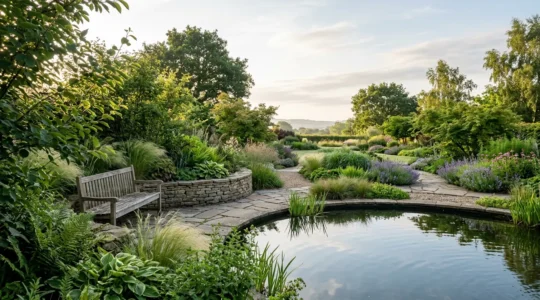
How to Design a Garden That Reduces Stress Measurably in Just 15 Minutes a Day
The key to a stress-reducing garden isn’t adding more calming elements, but engineering a sensory environment that actively regulates your nervous system. Psychological safety (prospect-refuge) and engineered sound are more effective at reducing stress than simply having an open lawn…
Lire la suite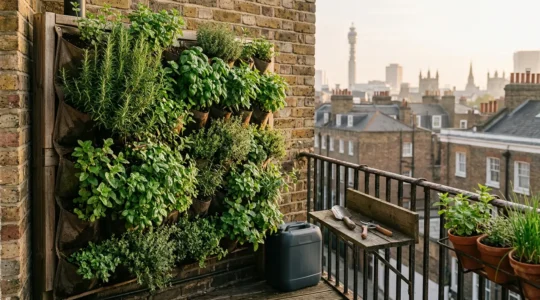
How to Grow 20 Herb Varieties on a 2 m² London Balcony
In summary: Treat your balcony’s weight limit as a strict « structural budget » to avoid serious safety risks. Automated, solar-powered watering systems are essential for holiday-proofing your garden and ensuring consistent moisture. The choice between fabric and modular planters is a…
Lire la suite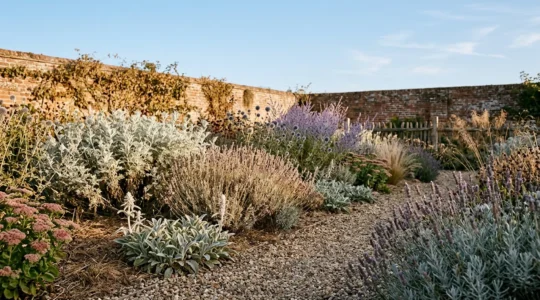
How to Create a Colourful Border That Survives a 6-Week UK Hosepipe Ban?
The key to a garden that thrives through a UK hosepipe ban is not just choosing ‘drought-tolerant’ plants, but fundamentally shifting your gardening mindset from constant nurturing to building strategic resilience. Conventional mulching and watering can actively harm plants adapted…
Lire la suite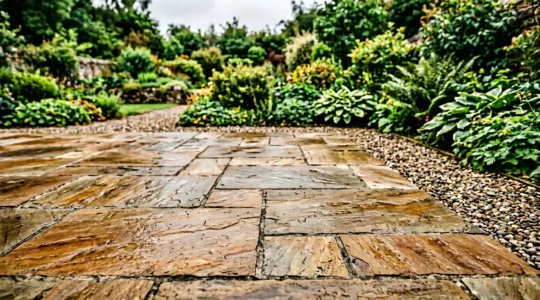
How to Prevent Indian Sandstone From Turning Green Every British Winter?
Contrary to popular belief, a pressure washer and chemical cleaner are only temporary fixes for a green patio; the root cause is structural, not superficial. True prevention lies in understanding the stone’s porosity and ensuring structural integrity from the sub-base…
Lire la suite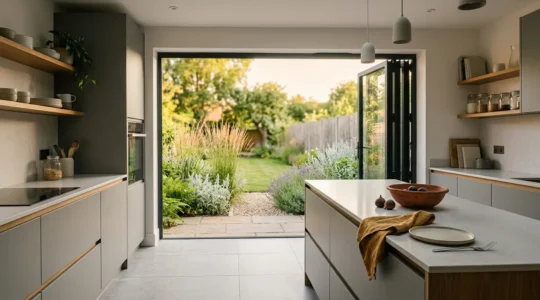
How to Perfectly Match Your Garden Palette to Your Open-Plan Kitchen Extension
In summary: Create a seamless transition by focusing on a ‘visual gradient’ of texture and tone, not just direct colour matching. Prioritise year-round foliage colour (greys, bronzes, golds) over fleeting flowers to maintain the visual link for 12 months. Manage…
Lire la suite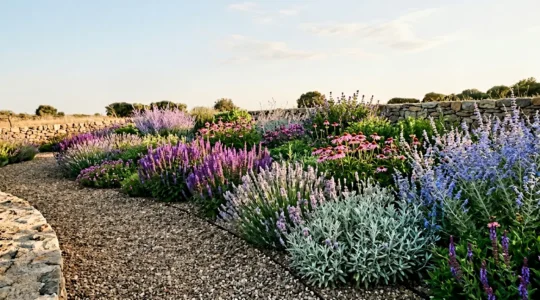
How to Cut Garden Water Use by 50% Without Sacrificing Colour in Summer?
In summary: Build a ‘hydrological foundation’ with compost to make your soil a water-retaining sponge. Install a large water butt and connect it to a drip irrigation system for targeted watering. Choose plants with built-in drought adaptations, like silver leaves…
Lire la suite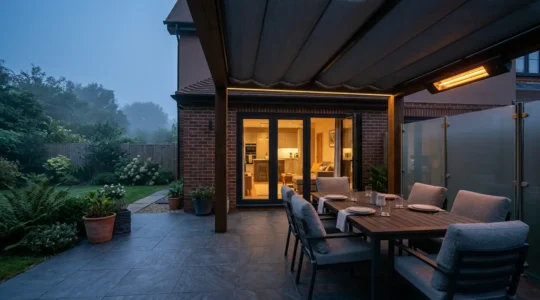
How to Use Your Patio 8 Months a Year Despite British Weather?
Your patio’s potential is being wasted not by the rain, but by a misunderstanding of how wind, heat, and water behave in the UK climate. Managing wind chill and using high thermal mass materials is more critical than air temperature….
Lire la suite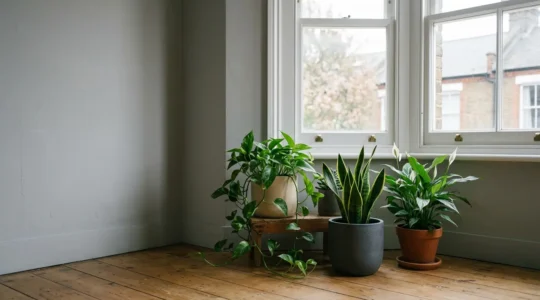
How to Keep Indoor Plants Alive in a North-Facing London Flat?
The persistent failure of houseplants in urban flats isn’t a personal failing, but a misunderstanding of the home’s unique micro-environment. Success depends more on managing factors like London’s hard water chemistry and low seasonal light than on having a « green…
Lire la suite