Interior Decoration
Interior decoration transforms the way we experience our homes, turning empty rooms into spaces that reflect personality, support daily activities, and enhance wellbeing. Yet many homeowners find themselves overwhelmed by contradictory advice, fleeting trends, and the sheer volume of decisions required to create a cohesive interior. Whether you’re refreshing a single room or planning a whole-home transformation, understanding the fundamental principles behind successful decoration empowers you to make confident choices that stand the test of time.
This comprehensive resource explores the core aspects of interior decoration, from selecting enduring design styles and planning functional layouts to choosing materials wisely and investing your budget where it matters most. Rather than chasing every passing trend, you’ll discover how to build a solid foundation of knowledge that allows you to create spaces that feel both current and personal, practical and beautiful.
Understanding Design Styles and Aesthetic Choices
Choosing a design direction serves as the visual roadmap for your entire home, yet many people struggle to define their aesthetic beyond vague preferences. Think of a design style as a visual language—once you understand its grammar and vocabulary, you can speak it fluently throughout your space without constant second-guessing.
Balancing Trends With Timelessness
The allure of on-trend interiors is undeniable, but wholesale adoption of every current aesthetic can prove financially draining and emotionally exhausting. Studies suggest homeowners who refresh their interiors annually to match trending styles may spend several thousand pounds on items that quickly lose appeal. The solution isn’t to ignore trends entirely, but to apply them strategically as accent layers over a timeless foundation. Invest in classic furniture silhouettes and neutral architectural finishes, then introduce trend-led elements through cushions, artwork, or small accessories that can be easily updated without major expense.
Adapting Styles to Your Architecture
Every property has inherent architectural character that influences which design styles feel harmonious rather than forced. Pairing contemporary minimalist aesthetics with Victorian terrace proportions, for instance, requires thoughtful adaptation—perhaps retaining original cornicing and ceiling heights whilst introducing clean-lined furniture and restrained colour palettes. Similarly, adding industrial elements to a 1930s semi-detached home works best when you warm the rawness of metal and concrete with layered textiles, warm timber tones, and considered lighting that prevents the space from feeling austere.
Smart Space Planning and Furniture Sizing
Even the most beautiful furniture becomes problematic when it disrupts how you move through and use your space. Effective space planning begins with honest assessment of how rooms function in daily life, not how they appear in idealized magazine spreads.
One of the most common decorating mistakes involves selecting sofas that physically overwhelm the room. A statement three-seater might look magnificent in the showroom, but if it blocks doorways or forces awkward traffic patterns around it, it undermines the room’s functionality. Before purchasing any major furniture piece, measure not just the item itself but the clearance zones around it—aim for at least 80-90cm of walkway space to allow comfortable movement. Use masking tape on the floor to map out furniture footprints before committing to a purchase.
Open-plan kitchen-diners present particular challenges, as a single space must accommodate multiple activities without feeling chaotic. The key lies in creating distinct zones through furniture arrangement, rugs that define areas, and varied lighting that allows different sections to operate independently. Rather than pushing all furniture against walls, use a sofa or bookshelf to create a visual boundary between cooking and relaxing zones.
Materials and Finishes That Define Character
The surfaces that wrap your rooms—flooring, walls, architectural details—fundamentally shape how a space feels, yet they’re often treated as mere backdrops. Choosing materials thoughtfully establishes lasting character that transcends temporary styling.
Flooring for Durability and Atmosphere
Flooring decisions affect both practical performance and aesthetic warmth. In high-traffic or moisture-prone areas like hallways and kitchens, durability must guide your choice. Engineered oak offers the warmth and character of natural timber with greater dimensional stability than solid wood, whilst luxury vinyl tile (LVT) provides excellent water resistance and comfort underfoot at a lower price point. The best choice depends on your specific conditions: a rainy-climate hallway benefits from LVT’s waterproof properties, whereas a formal dining room might justify the investment in engineered hardwood for its visual richness.
Paint Finishes and Architectural Features
Paint sheen dramatically influences how architectural details read in varying light conditions. Cornicing, ceiling beams, and other original features often require contrast in finish rather than colour to make them prominent. In north-facing rooms that receive cooler, indirect light, a matte finish on walls combined with eggshell or satin on woodwork creates subtle definition without harsh contrast. Conversely, south-facing spaces can handle stronger sheen variation without appearing stark. When working with lower ceilings and dark beams, consider a lighter tone for the beams themselves—counterintuitively, painting them closer to the ceiling colour often makes them feel like intentional detail rather than oppressive weight.
Layering Lighting for Flexibility
Lighting transforms the same room from energizing workspace to relaxing retreat, yet many homes rely on a single central ceiling fixture that illuminates everything equally and flatters nothing. Layered lighting combines three types of illumination to create flexible, functional spaces.
Begin with ambient lighting that provides overall illumination—this might be recessed ceiling spots, pendant fixtures, or wall-mounted uplighters. Add task lighting focused on specific activities: desk lamps for work areas, under-cabinet strips in kitchens, or reading lights beside seating. Finally, incorporate accent lighting that highlights architectural features, artwork, or creates atmospheric pools of light through table lamps and floor lamps. This approach is particularly crucial in multi-functional rooms serving as lounge, office, and dining area. Installing different light sources on separate circuits or using smart bulbs allows you to activate only the lighting needed for each activity, dramatically altering the room’s character throughout the day.
Working With Your Property’s Architecture
Every home carries architectural DNA that offers both opportunities and constraints. Rather than fighting against these inherent characteristics, successful decoration works in dialogue with them.
Period Properties and Original Features
Victorian terraces, Georgian townhouses, and similar period properties often contain hidden treasures—fireplaces concealed behind plasterboard, ceiling beams obscured by lowered ceilings, or decorative cornicing buried under layers of paint. Revealing these features can restore character, but timing matters. In renovation projects, expose hidden elements before rewiring and plastering, as electrical work may require channelling walls anyway. However, be mindful of visual balance: too many competing features can make Georgian rooms feel cluttered rather than elegant. Sometimes selective revelation—highlighting one stunning fireplace whilst leaving a simpler one covered—creates stronger impact than exposing everything.
Making New-Builds Feel Individual
Recently constructed properties often suffer from generic finishes and predictable layouts that make them feel interchangeable. The all-grey palette favoured by many developers can leave interiors feeling soulless despite substantial construction costs. Combat this through strategic personalization: replace builder-grade carpets with characterful flooring, introduce one hero furniture piece with distinctive personality, and layer warm metallics (brass, copper, aged bronze) that add depth to neutral schemes. Even modest additions like picture rails, distinctive door furniture, or a statement light fixture in the entrance hall establish individuality within a modest budget.
Budget-Conscious Decorating Priorities
Limited budgets demand strategic allocation, yet many homeowners distribute funds evenly across all elements rather than creating intentional focal points. The concept of a hero piece—one significant investment item that anchors an entire room—often delivers greater impact than multiple mid-range purchases.
Consider whether your budget achieves more through one exceptional sofa that becomes the room’s centrepiece, or through spreading the same amount across adequate seating plus numerous trendy accessories. Quality foundations typically justify the investment:
- Flooring: You walk on it daily, it’s expensive to replace, and it affects every subsequent decorating decision
- Substantial seating: A well-made sofa can serve you for fifteen years; a cheap one may need replacing within five
- Window treatments: They control light, privacy, and energy efficiency whilst framing your entire view of the room
Conversely, accessories, cushions, and small decorative objects can be sourced more economically and updated frequently without major investment. When renovating room by room over extended periods, establish a cohesive colour palette and flooring strategy at the outset, even if you implement it gradually. This prevents the disjointed appearance that arises when each room becomes a separate decorating experiment with no relationship to its neighbours.
Renovation Timing and Practical Sequencing
The order in which you tackle decoration and renovation tasks significantly affects both results and costs. Understanding the logical sequence prevents expensive mistakes and repetitive work.
For structural changes like installing steel beams for open-plan conversions, the sequence is critical: structural work first, then first-fix electrical and plumbing, followed by plastering and decorating, with flooring and finally soft furnishings completing the process. Installing concrete flooring before steelwork, for example, risks damaging your new floor during structural installation. Similarly, when planning to replace flooring in new-build properties, coordinate this with your NHBC warranty period—major defects typically manifest within the first two years, so scheduling flooring replacement just after warranty expiration prevents damaging new surfaces if issues require remedial work.
Interior decoration rewards thoughtful planning more than impulsive action. By understanding design principles, respecting your architecture, investing strategically, and sequencing work logically, you create spaces that support your lifestyle whilst expressing authentic personality. The articles throughout this section explore each of these themes in greater depth, offering specific solutions to the common challenges that arise when transforming houses into homes.
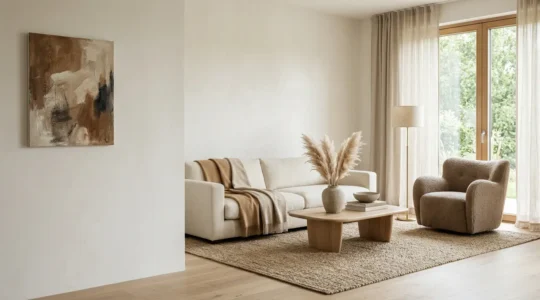
How to Create a Minimalist Living Room That Still Feels Warm and Inviting
The key to a warm minimalist living room isn’t adding more ‘cosy’ items, but the soulfulness of what you choose to keep and how you honour the space around it. Warmth is created through a dialogue of textures (wood, linen,…
Lire la suite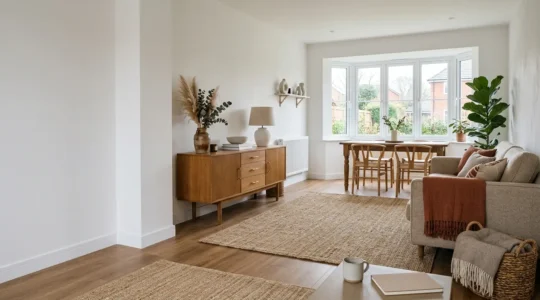
How to Make a Cookie-Cutter New-Build in the UK Feel Unique Within Budget?
The secret to transforming a generic new-build isn’t about spending more on decor, but investing smarter in foundational elements that build character from the ground up. Prioritise flooring and a single ‘hero’ furniture piece to add lasting value and define…
Lire la suite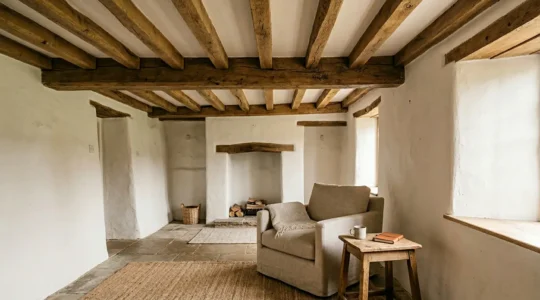
How to Highlight Original Ceiling Beams Without Darkening a Low-Ceilinged Cottage?
The key to celebrating dark beams in a low-ceiling cottage isn’t to paint them white, but to architecturally manage light and shadow to create an illusion of height and space. Treat the ceiling and walls as continuous « planes of light »…
Lire la suite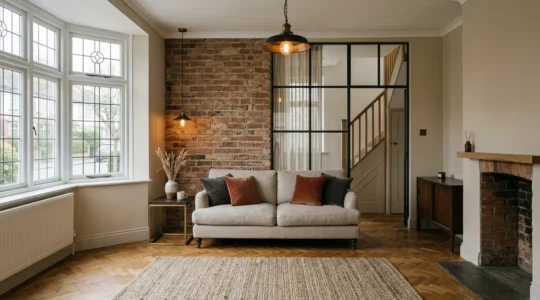
How to Add Industrial Edge to a 1930s Semi Without Making It Feel Cold?
The common belief that adding soft furnishings makes an industrial interior ‘warm’ is a fundamental misunderstanding; true, lasting warmth in a period UK home comes from a technical mastery of acoustics, materiality, and light. Harshness in industrial spaces is primarily…
Lire la suite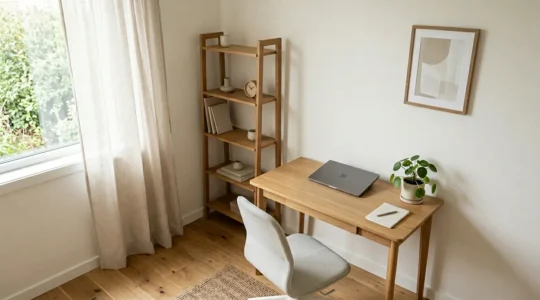
How to design a stylish home office in a small UK spare room
Tired of your spare room feeling like a chaotic compromise between a guest space and a functional office? The secret isn’t just buying multi-functional furniture; it’s about intentional design. This guide moves beyond generic tips to show you how to…
Lire la suite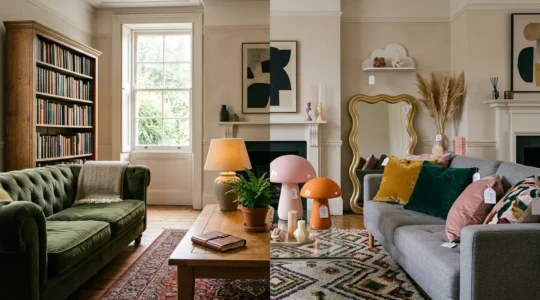
Why Following Every Decor Trend Costs You £2,000 a Year in Wasted Purchases?
The real reason your home feels dated and your budget is drained isn’t because you follow trends, but because you lack a strategic framework for them. Most decor trends have a lifecycle of less than a year, making major investments…
Lire la suite