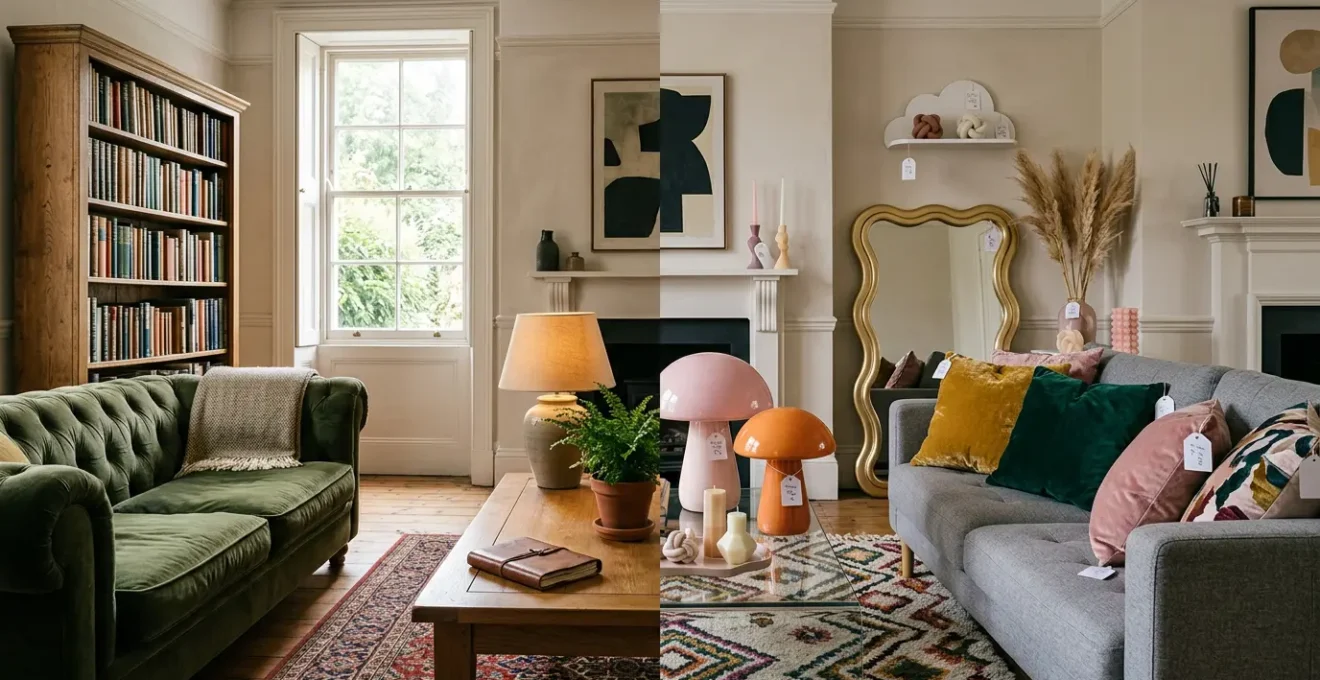
The real reason your home feels dated and your budget is drained isn’t because you follow trends, but because you lack a strategic framework for them.
- Most decor trends have a lifecycle of less than a year, making major investments in them financially ruinous.
- The key is the « 80/20 Decor Rule »: Allocate 80% of your budget to timeless, foundational furniture and 20% to low-cost, high-impact trend accents.
Recommendation: Instead of chasing the next big thing, invest in one « hero » furniture piece that anchors your home’s style and use trends as personality-filled, replaceable accessories.
There’s a specific, sinking feeling many homeowners know well. You’ve spent months, and a significant chunk of your budget, finally getting your living room to look just like that perfect pin on Pinterest. Yet, within a year, it already feels… off. The « colour of the year » now seems jarring, the bouclé is everywhere, and you’re left with an expensive, sinking realisation that you’re back at square one. As a London-based stylist for over 15 years, I see this costly cycle constantly. Clients come to me frustrated, feeling their home is a revolving door of purchases that never quite settles into a cohesive, personal sanctuary.
The common advice is to simply « buy timeless pieces » or « find your personal style, » but this is unhelpful when you’re bombarded with new aesthetic movements daily. The truth is, the problem isn’t the trends themselves—they can be a wonderful source of inspiration and joy. The problem is the lack of a strategy. The constant pressure to adopt every new look, from « dopamine dressing » for your walls to the latest viral furniture shape, leads to a disjointed home and a depleted bank account. It’s a trap that costs the average UK household dearly in wasted purchases.
But what if the solution wasn’t to become a design hermit, immune to all trends? What if the key was to become a savvy ‘trend manager’? This guide is built on that single premise. It’s not about ignoring trends, but about creating a robust framework to engage with them intelligently. We’ll explore how to distinguish between fleeting fads and lasting style, how to allocate your budget for maximum impact and longevity, and how to filter inspiration through the lens of your actual life. It’s time to stop letting trends dictate your home and start building a space that truly reflects you, on your terms and within your budget.
This article provides a complete framework for breaking the trend cycle. We’ll deconstruct why trends fade, establish a powerful budgeting rule, and offer practical steps for creating a unique and lasting interior, whether you live in a Victorian terrace or a modern new-build.
Summary: How to Escape the Costly Decor Trend Cycle
- Why Does Your « On-Trend » Living Room Already Look Dated After Just One Year?
- How to Match Japandi Aesthetics to a Victorian Terrace Without Clashing?
- Statement Sofa or Trend Cushions: Where Should Your £1,500 Budget Go?
- The Pinterest Trap That Makes 70% of UK Living Rooms Feel Impersonal
- When to Update Decor Before Selling: The 6-Month Rule UK Estate Agents Recommend
- How to Choose One Hero Furniture Piece That Anchors Your Entire Ground Floor?
- Why Does Your All-White Room Feel Clinical Despite Expensive Furniture?
- How to Make a Cookie-Cutter New-Build in the UK Feel Unique Within Budget?
Why Does Your « On-Trend » Living Room Already Look Dated After Just One Year?
The primary reason your meticulously curated, on-trend room feels obsolete so quickly is the brutal speed of the modern trend lifecycle. What begins in high-end design galleries and niche influencer feeds is rapidly democratised, mass-produced, and ultimately, discounted. The perceived exclusivity and novelty evaporate, leaving you with an item that screams « last year. » In fact, recent analysis suggests the average lifespan of an interior design trend before it reaches market saturation is a shockingly short 10 months. This accelerated cycle is the engine of « fast decor, » encouraging constant consumption.
Consider the recent trajectory of so-called « micro-trends. » The ‘Mushroom’ decor theme, featuring fungi-inspired shapes and motifs, is a perfect example. While it lasted longer than average, Google searches for the term still dropped by a staggering 33.47% between early 2024 and 2025. Similarly, the broader maximalist trend saw a 23.78% decline in the same period. This shows that even more significant macro-trends eventually peak and decline, leaving early adopters feeling behind the curve.
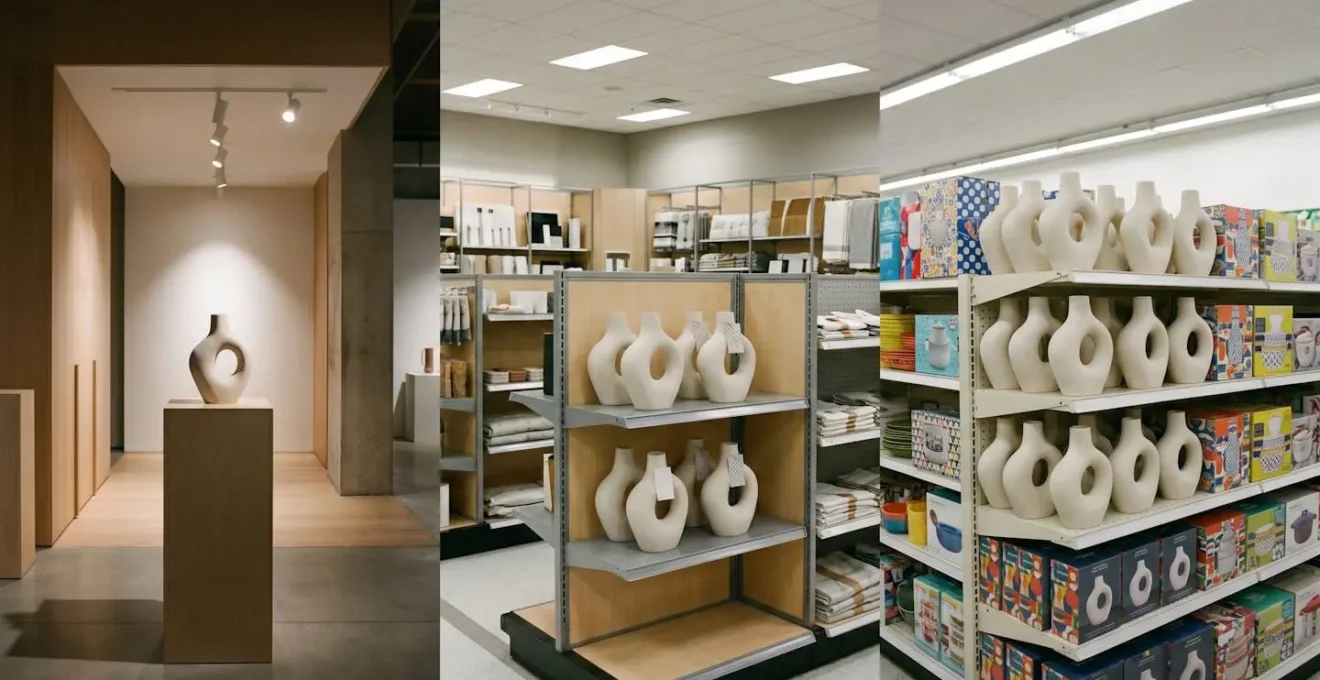
This journey from luxury to mainstream is a one-way street. Once a specific colour, pattern, or material is readily available in budget stores, its aspirational value is gone. Investing heavily in these fleeting trends means you are essentially buying an item with a built-in expiration date. The key isn’t to predict the next trend but to build a foundation that is immune to this cycle, allowing you to engage with trends in a low-risk, high-reward way.
How to Match Japandi Aesthetics to a Victorian Terrace Without Clashing?
One of the biggest mistakes I see homeowners make is attempting to directly copy a trend into a home where it has no architectural context. Trying to force the pale, minimalist aesthetic of Japandi into a classic British Victorian terrace with its ornate cornices, dark floorboards, and intricate fireplaces often results in a space that feels confused and soulless. The secret isn’t a direct copy-paste; it’s translation. You must honour the home’s inherent character first.
A successful design marries the soul of the building with the principles of the chosen aesthetic. Instead of fighting the Victorian features, use them as your anchor. The goal is to ask, « How can the Japandi principles of natural materials, functionality, and wabi-sabi imperfection *enhance* what is already here? » This approach respects the history of the space while introducing a contemporary feel. For instance, rather than ripping out original dark tiles, you can complement them with the rich tones of ebonised wood, a key material in Japanese design. This creates a dialogue between the styles, not a conflict.
To do this effectively, I guide my clients through a simple three-step method for adapting any trend to a period British home.
Your Action Plan: The 3-Step Method for Adapting Trends to Period Homes
- Architectural Anchoring: Identify and preserve the home’s timeless features first. Ornate ceiling roses, original fireplaces, and sash windows are the non-negotiable ‘anchors’ of the room’s design. The home’s character must always lead, not the trend.
- Material Consistency: To avoid a fussy, cluttered look, use a minimal palette of high-quality materials throughout the space. For example, applying the same limestone to the lower ground floor, landscaping, and bathroom creates a sense of cohesive flow, while using consistent oak for flooring, joinery, and the staircase provides a unifying thread.
- Translation, Not Transcription: Don’t copy minimalist Japanese interiors literally. Instead, translate the core principles. Use natural materials that complement Victorian features. For example, select dark ebonised wood tones to enhance original floor tiles rather than fighting them with pale oak that suits a modern new-build better.
By following this method, you create a space that feels layered and authentic. The Japandi influence becomes a subtle layer that brings calm and modernity, but it never overpowers the home’s intrinsic, timeless charm.
Statement Sofa or Trend Cushions: Where Should Your £1,500 Budget Go?
Let’s talk numbers. The H1 of this article isn’t hyperbole; chasing trends is an expensive habit. With the average UK homeowner spending a significant amount on home updates, the question becomes: where is that money best spent for both immediate joy and long-term value? The answer lies in a simple framework I call the 80/20 Decor Rule. It’s a powerful budgeting strategy that protects you from trend-driven waste.
The rule is this: allocate 80% of your budget to foundational, timeless, high-use pieces and reserve only 20% for personality pieces that reflect current trends. Your foundation pieces are the workhorses of your home: the sofa you sit on every day, the dining table that hosts family meals, the bed you sleep in. These items should be chosen for quality, comfort, and classic design, not because they feature a fleeting « it » colour or shape. The 20% is your « play » money for trend-led items like cushions, throws, vases, and prints that provide an instant, low-commitment refresh.
This approach shifts your mindset from cost to value, specifically « cost-per-use. » A £1,200 sofa from a quality UK brand like Loaf or John Lewis that you love and use for ten years has an excellent cost-per-use. A £1,200 « statement » sofa in a trendy but impractical shape that you despise in two years is a financial disaster. The table below, based on market analysis of the home decor industry, breaks down this strategic allocation for a typical £1,500 redecorating budget.
| Budget Allocation | Foundation Pieces (80% – £1,200) | Personality Pieces (20% – £300) |
|---|---|---|
| Purpose | High-quality, high-use, timeless investment | High-impact, low-commitment novelty |
| Value Metric | Cost-Per-Use over 10 years | Impact-Per-Pound immediate visual effect |
| Example Items | Quality sofa (£1,200 from Loaf, Sofa.com, premium John Lewis) | Trend cushions, throws, art (under £300 from H&M Home, Rockett St George, Etsy UK) |
| Replacement Cycle | 8-12 years | 1-3 years (seasonal/trend-driven) |
| ROI | Long-term comfort and style foundation | Instant aesthetic refresh, satisfies novelty desire |
By investing in the foundation, you create a stable, high-quality canvas. The 20% allows you to experiment with checkerboard prints or scalloped edges without regret. When you tire of them, you can swap them out for a minimal cost, and your beautiful, comfortable sofa remains.
The Pinterest Trap That Makes 70% of UK Living Rooms Feel Impersonal
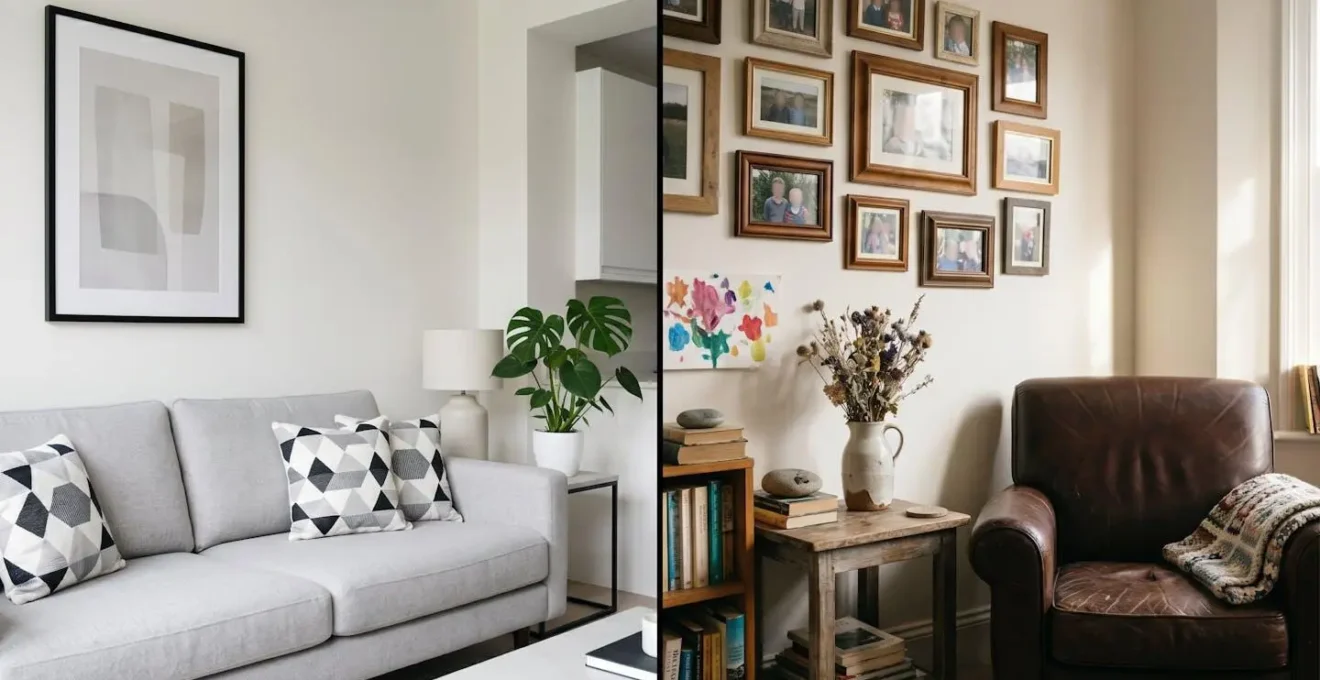
Pinterest is an incredible tool for discovery, but it’s also the primary engine of the « impersonal interior » epidemic. With 79% of UK users interested in the home decor category and billions of pins saved, it’s easy to see how a few dominant aesthetics can create a sea of homogenous living rooms. The trap isn’t just seeing the same grey sofas and monstera plants; it’s pinning aspirational images that have no connection to the reality of your own home and life.
This creates a profound disconnect. That sun-drenched, all-white Californian living room looks stunning on your screen, but it will feel cold and sterile when recreated with the cool, northern light typical of many UK homes. That pristine linen sofa is beautiful in a child-free, pet-free show home, but utterly impractical for a busy family. When we decorate based on these decontextualized images, the result is a room that doesn’t feel like ours. It’s a stage set, and it lacks the warmth and soul that come from a space designed for its actual inhabitants.
To escape this trap, you need to use Pinterest as a tool, not a rulebook. This means applying a strict filter to every single image you consider pinning. Instead of just asking « Is this beautiful? », you must ask « Is this right for *me*? ». To make this practical, I give my clients a simple checklist to vet every piece of inspiration before it makes it onto their board.
Your Action Plan: The 3 L’s Filter for Smarter Pinning
- Lifestyle Check: Before pinning, ask ‘Does this fit my actual lifestyle?’ Be brutally honest about kids, pets, your tolerance for cleaning, and how you truly use the space. That minimalist coffee table with one art book looks serene, but where will you put your mugs, remotes, and magazines?
- Layout Assessment: Ask ‘Does this work with my room’s layout?’ Get out the tape measure. A grand, oversized sofa might look great in a spacious American loft on Pinterest, but it will overwhelm a British Victorian reception room. Pin ideas that solve your specific spatial challenges, like awkward corners or low ceilings.
- Light Reality: Ask ‘Does this suit my natural light conditions?’ Pay close attention to the quality of light in pinned images. If your room is north-facing and gloomy, pinning bright, south-facing interiors is setting yourself up for disappointment. Search specifically for « north-facing living room ideas » to find palettes that work with your light, not against it.
Beyond this filtering, actively seek out and pin things that tell your story. Replace generic art prints with works from local UK artists or beautifully framed family photos. The goal is to build a mood board that reflects your life, not just a collage of someone else’s.
When to Update Decor Before Selling: The 6-Month Rule UK Estate Agents Recommend
The pressure to follow trends intensifies when preparing to sell your home. It’s tempting to pour money into renovations, believing a trendy kitchen or bathroom will secure a higher price. This can be a costly mistake. Indeed, a 2022 report showed that American homeowners reported a 20% increase in median renovation spending, reaching the equivalent of £14,000. But not all spending delivers a return, especially in the savvy UK property market.
The « 6-Month Rule » is a principle UK estate agents often advise: any significant, trend-led update you make should be something you can personally enjoy for at least six months before listing. If you’re purely renovating for sale, you must shift your focus from personal taste and trends to strategic neutrality and return on investment (ROI). The goal is not to create your dream home, but a clean, bright, and welcoming blank canvas that allows potential buyers to envision their own lives there. A bold, trendy feature wall might excite you, but it could easily polarise buyers and become a reason they offer less, knowing they’ll have to repaint.
So, where should you put your money for the best pre-sale return? Agents agree on a clear hierarchy of updates, prioritising fixes and freshness over expensive, taste-specific installations.
Your Action Plan: The Pre-Sale Renovation ROI Hierarchy
- Tier 1 – Highest ROI (Cost: £200-£500): A professional deep clean and thorough decluttering offer the best return, bar none. This includes carpets, windows, and depersonalising by removing family photos. This creates an immediate impression of a well-maintained home with minimal investment.
- Tier 2 – Strong ROI (Cost: £500-£1,500): A strategic paint refresh using agent-approved neutral colours is next. Shades known to sell well in the UK market, like Farrow & Ball’s ‘Elephant’s Breath’ or Little Greene’s ‘Slaked Lime’, work wonders. Also, fix all minor repairs like leaky taps and scuffed skirting boards.
- Tier 3 – Moderate ROI (Cost: £1,500-£3,000): Update worn flooring in high-traffic areas and refresh kitchen and bathroom hardware. Replacing tired cabinet handles, taps, and re-grouting tiles can modernise a space without the cost of a full refit.
- Tier 4 – Lowest ROI (Avoid): A full new kitchen or bathroom rarely returns its investment, as buyers often prefer to choose their own. Likewise, trendy feature walls or luxury upgrades that exceed the neighborhood standard can be money down the drain.
Thinking like a buyer, not a homeowner, is the key. Your money is best spent on creating an atmosphere of space, light, and impeccable maintenance, allowing the home’s best features to shine through without the distraction of your personal, trend-led choices.
How to Choose One Hero Furniture Piece That Anchors Your Entire Ground Floor?
If the 80/20 rule dictates that you invest in foundational pieces, the next logical question is: where do I start? The most effective strategy I recommend to clients overwhelmed by choice is to focus on identifying and investing in a single « hero piece. » This is one item of furniture so well-chosen for its function, scale, and style that it acts as a design anchor for your entire ground floor, creating a cohesive thread that ties disparate spaces together.
In the UK, where open-plan living and period conversions are common, creating this visual flow is critical. Furniture is the dominant force in our interiors; it led with 31.5% of the United Kingdom’s home decor market share in 2024, highlighting its importance. A hero piece gives you a clear ‘Style Signature’—a specific material, colour, or form—that you can then reference subtly in other rooms. This is far more effective than trying to make every single item a statement.
So how do you choose this piece and use it to create cohesion? The process involves defining its criteria and then pulling its ‘thread’ throughout your space.
Your Action Plan: The Thread of Cohesion Method
- Define Hero Piece Criteria: Your hero piece must be (1) highly functional and used daily, (2) perfectly scaled to your primary living space (not too big or too small), and (3) possess a clear ‘Style Signature.’ This could be a material like reclaimed oak, a colour like deep navy velvet, or a form like curved lines.
- Pull the Main Thread: Once chosen, subtly reference its Style Signature elsewhere. If your hero dining table is reclaimed oak, use oak photo frames in the hallway, an oak-rimmed mirror in the lounge, or an oak knife block in the kitchen. The reference should be a quiet echo, not a loud shout.
- Apply to Your Home’s Layout: In a Victorian terrace open-plan conversion, the hero is often the dining table that visually unifies the kitchen and living zones. For a 1930s semi with separate rooms, you might create flow by choosing a consistent console table style or a signature armchair design that appears in both the living room and a snug.
By focusing your main investment on one perfect hero piece, you simplify all other decorating decisions. It becomes your North Star, guiding your choices for smaller items and ensuring that even as you layer in your 20% of trend-led accessories, the entire space feels grounded, intentional, and harmoniously connected.
Why Does Your All-White Room Feel Clinical Despite Expensive Furniture?
It’s one of the most common and frustrating design dilemmas I encounter. A client has invested in beautiful, expensive furniture, painted everything a pristine shade of white, and yet the room feels cold, sterile, and unwelcoming—more like a clinic than a home. The assumption is that the furniture is wrong, but 99% of the time, the problem isn’t the furniture at all. It’s the complete lack of texture, layers, and warmth.
This issue is particularly prevalent in the UK. We get a lot of cool, grey, northern light, which can make a pure white room feel flat and bleak. Without a variety of textures to catch that light in different ways, the space has no depth or shadow. An all-white room relies entirely on texture and layering to feel inviting. Think of a cozy white wool jumper versus a cold, smooth plastic sheet—both are white, but they feel entirely different. Your room needs to feel more like the jumper.
This is where the « 20% » of your 80/20 budget comes into play. It’s not just for trends; it’s for the essential personality and comfort layers. You don’t need new furniture; you need to dress the furniture and the room itself. The solution is to introduce a rich tapestry of materials and subtle variations in tone. This includes:
- Textural Variety: Mix materials with different tactile qualities. Pair a smooth leather sofa with a chunky knit throw, a rough-hewn wooden coffee table, and soft velvet cushions. Add a natural fibre rug, like jute or sisal, to ground the space.
- Layered Lighting: A single overhead light is the enemy of ambiance. Create warmth with a layered lighting scheme: a main pendant, a floor lamp for reading, and a table lamp for a soft glow in a corner. Ensure your bulbs have a warm temperature (around 2700K).
- Tonal Whites: Not all whites are created equal. Instead of one flat white, use a palette of closely related off-whites, creams, and very pale greys. This creates subtle depth and stops the room from feeling one-dimensional.
- Personal & Natural Elements: The final layer is you. Add stacks of books, a vase of fresh (or high-quality faux) greenery, personal photos, and handmade ceramics. These items break up the monotony and tell a story, transforming the space from a sterile box into a warm, lived-in home.
By focusing on these sensory layers, you can transform a clinical white room into a sophisticated, serene, and deeply personal sanctuary without replacing a single piece of expensive furniture.
Key Takeaways
- The rapid, sub-12-month trend cycle is the main driver of wasted decor spending and dated interiors.
- Adopt the 80/20 Decor Rule: 80% of your budget on timeless foundation pieces (sofa, bed, dining table) and 20% on low-cost, trend-led accents (cushions, art, throws).
- Filter all inspiration through the « 3 L’s »: Does it suit your Lifestyle, room Layout, and natural Light? This prevents you from copying impractical ideas.
How to Make a Cookie-Cutter New-Build in the UK Feel Unique Within Budget?
The « blank canvas » of a new-build home is both a blessing and a curse. While it’s free of the quirks and repair needs of an older property, it can also feel utterly devoid of character. The sea of beige carpets, standard-issue light fittings, and plain white walls creates a generic box that feels anything but personal. The temptation is to throw a lot of trendy furniture at the problem, but the real solution lies in adding architectural illusion and layered personality on a budget.
The most effective approach is to tackle the developer’s « spec » systematically. Small, strategic changes can have a disproportionate impact on how the space feels, making it seem more bespoke and considered. I advise clients to work through a tiered « hit list, » starting with the quickest, cheapest wins and moving up to more significant interventions as the budget allows. This prevents you from feeling overwhelmed and ensures every pound spent is actively fighting the « cookie-cutter » effect.
Furthermore, if you are buying off-plan, you have a unique opportunity to be strategic. The « Developer Spec Sheet Hack » is to decline overpriced cosmetic upgrades (like paint, basic flooring, or kitchens) which can be done for 30-50% less and with more personalisation after you move in. Instead, use your upgrade budget on things that are difficult and expensive to retrofit, like extra electrical sockets or moving a non-load-bearing wall.
Your Action Plan: The Character Injection Hit List for New-Builds
- Level 1 – Quick Wins (£200-£500): Swap every single developer-standard light fitting for a characterful alternative from places like Pooky or Rockett St George. Replace all cabinet and door handles with premium or vintage-style hardware. These small touchpoints have a massive impact on the perception of quality.
- Level 2 – Visual Anchors (£500-£1,200): Add a large-scale statement rug to define the living area and inject colour and pattern. Install wall-to-wall curtains in a quality fabric to soften the hard edges of the room and add a touch of luxury. Paint a single accent wall in a rich, sophisticated colour to break the monotony.
- Level 3 – Architectural Illusions (£1,200-£2,500): Install modern wall panelling (available as DIY kits from UK stores like B&Q and Screwfix) to add dimension and a sense of history. You can also add a simple stick-on dado or picture rail for instant architectural interest. Creating a faux chimney breast with an electric fire provides a much-needed focal point.
By layering these elements, you are systematically erasing the developer’s generic stamp and replacing it with your own. It’s about adding the « bones » and « soul » that a new-build lacks, transforming it from a house into a unique, character-filled home.
Ultimately, creating a home you love for the long term is not about having an unlimited budget or renouncing trends entirely. It’s about taking control. By applying a clear financial framework like the 80/20 rule and filtering inspiration through the reality of your life, you can build a space that is both timelessly comfortable and personally expressive. This is your foundation for a home that evolves with you, rather than against you.