Designer Furniture
Designer furniture represents far more than expensive seating or decorative storage. It embodies a philosophy where material quality, construction integrity, and aesthetic longevity converge to create pieces that often outlast their mass-produced counterparts by decades. While a £500 sofa might serve its purpose for three years, a well-constructed designer piece priced at £3,000 can remain functional and beautiful for fifteen years or more—a distinction rooted not in branding, but in fundamental differences in how these items are made.
Understanding designer furniture requires looking beyond price tags to examine what actually justifies the investment. The dovetail joints hidden inside drawers, the type of leather that develops character rather than cracks, the FSC-certified hardwoods that resist weathering—these details separate temporary furnishings from lasting assets. Whether you’re considering a bespoke built-in wardrobe, a modular sofa system, or a sculptural statement chair, the same principles apply: material authenticity, construction methods, and design integrity determine whether a piece truly qualifies as designer-grade.
What Separates Designer Furniture From Mass-Market Alternatives
The distinction between designer furniture and standard retail offerings isn’t merely aesthetic—it’s structural. Mass-market pieces typically prioritize rapid production and low cost, often using engineered wood composites faced with thin veneers, stapled joints, and foam that compresses within months. Designer furniture, by contrast, employs solid hardwoods, full-grain leather, and resilient natural fibres, assembled using joinery techniques developed over centuries.
Consider the humble drawer: a budget sideboard uses dowels or staples to hold corners together, connections that loosen with humidity changes and regular use. A designer piece features hand-cut or CNC-milled dovetail joints—interlocking teeth that actually strengthen under load. This single detail can mean the difference between a drawer that lasts five years and one still functioning flawlessly after fifty.
The same principle applies to upholstery. Bonded leather—essentially leather scraps glued to a fabric backing—peels and flakes within a few years. Full-grain vegetable-tanned leather, standard in quality designer pieces, develops a rich patina and becomes more supple with age. The £200 price difference between these materials represents decades of additional lifespan.
Bespoke and Custom Designer Solutions
Commissioning custom furniture offers advantages that extend beyond mere aesthetic preference, particularly when architectural constraints make standard dimensions impractical.
When Custom-Made Makes Financial Sense
Bespoke furniture might seem extravagant, but specific scenarios make it surprisingly cost-effective. Period properties with non-standard dimensions—like 1920s bay-window bedrooms—rarely accommodate flat-pack wardrobes properly. The gaps, the awkward angles, the wasted space all represent functional compromises that custom joinery eliminates entirely.
A well-specified bespoke built-in wardrobe for under £3,000 delivers storage tailored precisely to your space, constructed from materials you’ve selected, with hardware that matches your aesthetic. That same budget spent on ready-made furniture often results in multiple compromise purchases that never quite fit properly.
The Brief That Prevents Costly Revisions
Custom furniture projects frequently exceed budget through change orders—modifications requested after work begins. A detailed joinery brief prevents this by specifying dimensions, materials, finish, hardware, and installation requirements upfront. Including photographs, material samples, and detailed measurements eliminates ambiguity that leads to expensive mid-project corrections, potentially saving £500 or more in revision fees.
Lead Times and Seasonal Planning
Skilled joiners and furniture makers typically operate with 8-12 week lead times, extending to 14-16 weeks during autumn as clients prepare for year-end installations. Understanding these timelines prevents disappointment and allows you to benefit from potentially better pricing during quieter summer months when workshops have more capacity.
Materials That Signal Quality and Longevity
Material selection fundamentally determines how designer furniture performs and ages. Recognizing quality markers prevents costly misunderstandings about what you’re actually purchasing.
Understanding Solid Wood vs. Engineered Alternatives
The label « solid wood » appears frequently in furniture descriptions, but retail standards allow this term even when only visible surfaces use solid timber, with hidden structural elements in chipboard or MDF. Genuine solid-wood construction means structural frames, panels, and supports all use dimensional lumber—costlier and heavier, but exponentially more durable.
MDF and birch plywood both serve legitimate purposes: MDF provides dimensional stability in painted finishes and humid environments like bathrooms, while birch plywood offers superior strength-to-weight ratios for shelving and cabinet backs. The issue arises when these engineered products substitute for solid wood in structural applications where their moisture sensitivity and lower impact resistance become liabilities.
Leather Types and Their Aging Characteristics
Leather selection profoundly affects how upholstered designer furniture ages. Aniline leather—dyed without surface pigmentation—shows the hide’s natural grain and develops beautiful patina, but stains easily and may prove impractical for families with young children. Pigmented leather adds a protective surface coating that resists stains while sacrificing some of aniline’s character development.
The tanning method matters equally: vegetable-tanned leather uses tree bark tannins in a slow process that produces leather with distinctive aroma and superior aging properties, while chrome-tanned leather—the industry standard for speed and cost—offers less character development but greater initial uniformity.
Sustainable Hardwoods for Outdoor Furniture
FSC-certified teak remains the premium choice for outdoor furniture, but verify the certification independently—the country-of-origin label alone doesn’t guarantee sustainable harvesting. Indonesian plantation teak grows faster and costs less than Burmese old-growth, but its less dense grain weathers differently and may require more frequent maintenance.
Iroko, sometimes called « African teak, » offers comparable weather resistance from renewable sources, making it an increasingly popular alternative for coastal gardens where salt air accelerates deterioration of lesser materials.
Recognizing Craftsmanship Indicators
Quality designer furniture reveals its construction integrity through details most buyers never examine. Knowing what to look for transforms showroom visits from aesthetic browsing to informed evaluation.
Hand-stitched leather upholstery appears less uniform than machine stitching, with slight spacing variations that actually indicate skilled work. These seams distribute stress more evenly and allow for repairs that machine-stitched pieces cannot accommodate. In a showroom, look for slightly irregular stitch spacing—perfect uniformity signals automated production.
Dovetail joints in drawers and case goods represent the gold standard for corner connections. Hand-cut dovetails show subtle asymmetry between pins and tails, with spacing that varies slightly—a mark of craftsmanship, not defect. CNC-milled dovetails achieve perfect uniformity at lower cost while maintaining most of the structural benefits. Both vastly outperform dowelled or stapled construction, though the £200 premium for hand-cut work mainly reflects labour time rather than meaningful durability differences.
Testing furniture in-store without appearing suspicious requires subtlety: gently lift one corner of case goods to assess weight (solid wood weighs substantially more than veneered composite); open drawers fully and observe whether they glide smoothly without binding (quality drawer slides); press firmly on upholstered arms and seats to evaluate foam resilience and frame rigidity (budget foam compresses easily and stays compressed).
The bespoke furniture marker most revealing of quality is maker identification—genuine British furniture makers typically include maker’s marks, stamps, or labels inside drawers or under cushions. Anonymous pieces, regardless of retailer claims about provenance, should prompt scrutiny about actual country of manufacture.
Investment Value vs. Depreciation Trends
Designer furniture pricing perplexes buyers unfamiliar with what drives long-term value retention. Not all expensive furniture qualifies as sound investment—some premium pieces depreciate rapidly while others hold or increase in value.
Iconic designs with established provenance—original Eames loungers, authentic Arne Jacobsen Egg chairs, vintage Chesterfields from recognized makers—often appreciate because supply remains fixed while demand grows among collectors. The £5,000 premium for an authentic Eames over a licensed reproduction reflects not just quality differences but future resale potential: originals maintain 70-80% of purchase price after a decade, while most reproductions lose 60% in the same period.
Trend-driven designer pieces represent the opposite scenario. Furniture heavily influenced by momentary aesthetic fashions—specific colour palettes, exaggerated proportions, or novelty materials—typically loses 60% of retail value within five years as tastes shift. Before committing four figures to a statement chair, consider whether its appeal derives from timeless proportions and quality materials or from its alignment with current interior design trends.
Timing purchases strategically substantially affects value. London design showrooms typically offer end-of-line discounts of 30-40% in January and July as new collections arrive. Garden centres slash outdoor furniture prices by 40-60% in September as seasonal demand collapses. For modular ranges, February often brings promotions as retailers clear winter inventory.
Justifying a £4,000 designer sofa to a budget-conscious partner requires reframing the conversation from upfront cost to cost per year of service: £4,000 for 15 years equals £267 annually, while £500 for 3 years equals £167 annually—narrower than it first appears, especially considering the superior comfort and aesthetic satisfaction throughout ownership.
Balancing Comfort With Aesthetic Impact
Statement furniture creates visual focal points, but design drama shouldn’t compromise functionality. The reality that a Wishbone chair looks stunning but causes back pain after dinner-length seating illustrates why evaluating both dimensions matters before purchase.
Comfort testing in showrooms requires adequate time—sit for at least 10-15 minutes, not the 30-second trial most buyers conduct. Lumbar support, seat depth, and arm height all affect sustained comfort differently than initial impression suggests. A chair comfortable for two hours of reading may prove torturous for extended dinner parties; understanding your primary use case prevents expensive regret.
Sculptural coffee tables and side tables pose different challenges: their artistic silhouettes may dominate small spaces or fail to provide adequate practical surface area. In a 20 m² room, a sculptural table measuring 120 cm across can anchor the space beautifully or make movement awkward depending on surrounding furniture scale and room proportions.
Curved versus angular silhouettes affect spatial perception substantially. Boxy new-build living rooms—typically rectangular with low ceilings—feel softer and more spacious with curved furniture profiles. The same principle applies in reverse: period properties with existing architectural curves benefit from angular furniture that provides visual contrast.
Proportion mistakes plague designer furniture placement more than any other error. An oversized armchair suited to a country house reception room overwhelms a compact flat, making the space feel cramped despite the furniture being objectively smaller than necessary. Before purchasing statement pieces, measure not just available floor space but the visual volume—ceiling height and sightlines matter as much as square metres.
Caring for Specific Designer Furniture Materials
Proper maintenance extends designer furniture lifespan dramatically, but each material demands specific care approaches.
Velvet Upholstery Maintenance
Velvet’s luxurious pile creates the same vulnerability that makes it beautiful—the crushed-looking sitting marks that appear after a single use. Cotton velvet shows these marks more prominently but maintains colour better in south-facing rooms; polyester velvet resists crushing better but fades faster under UV exposure. Regular steaming—ideally during humid months—helps restore pile orientation, though permanent crushing eventually occurs with all velvet types.
Window placement critically affects velvet longevity: direct sunlight fades most velvet within 18-24 months. Red wine on cotton velvet requires immediate blotting with cool water, working from outside the stain inward to prevent watermarking the surrounding fabric.
Leather Conditioning Cycles
Winter heating dramatically lowers indoor humidity, causing leather to dry and eventually crack. Conditioning leather sofas every 3-4 months during heating season prevents this deterioration. Position leather furniture at least 90 cm from radiators—closer placement accelerates drying beyond what conditioning can counteract.
Outdoor Furniture Weatherproofing
Teak outdoor furniture requires no protection but benefits from periodic oiling if you prefer maintaining golden colour over allowing natural silver-grey patina development. The myth that greying indicates deterioration causes owners to sand away the protective surface layer that weathers naturally—avoid this unless removing actual damage.
Rattan furniture demands vigilant maintenance: weatherproof coatings only delay moisture penetration, not prevent it. Autumn humidity combined with falling temperatures creates ideal conditions for mould growth under cushions. Remove and store cushions indoors from September through March, and position rattan furniture under eaves where possible to minimize direct rain exposure.
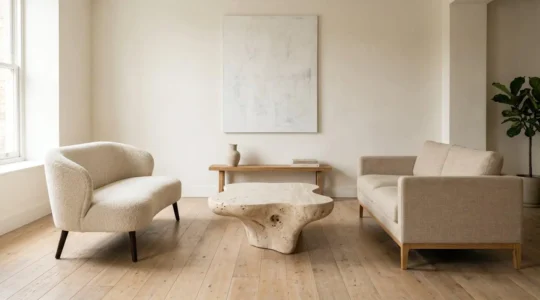
How to Balance a Sculptural Coffee Table With Functional Seating in 20 m²?
Contrary to common advice, you don’t need to choose smaller furniture for a compact space; you need to curate it like a gallery. The perceived size of furniture (its visual weight) matters more than its actual dimensions. Treating negative space…
Lire la suite
How to Truly Verify FSC-Certified Teak: An Auditor’s Guide for UK Buyers
Verifying FSC teak goes far beyond spotting a logo; it demands an auditor’s mindset to scrutinise the supply chain and ensure what you’re buying is both legal and genuinely ethical. Illegal Burmese « blood teak » continues to infiltrate markets, making origin…
Lire la suite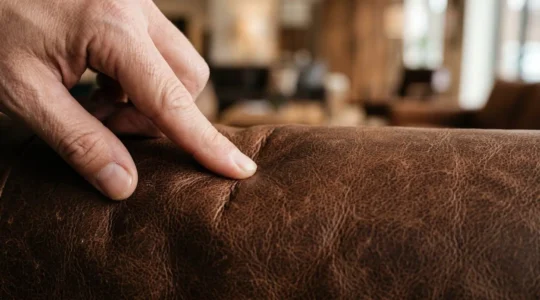
How to Tell Full-Grain From Bonded Leather on a UK Showroom Floor?
Contrary to showroom claims, the ‘Genuine Leather’ tag often hides the lowest quality. True value is found in the hide’s natural story, not its marketing label. Full-grain leather proudly displays imperfections like scars and pores; this is the ultimate sign…
Lire la suite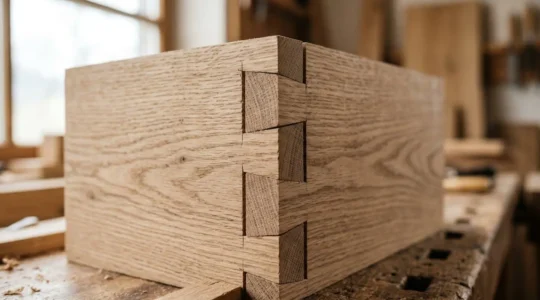
How to Spot Quality Dovetails That Signal a Drawer Built to Last 50 Years?
Tired of furniture that falls apart? The frustration with wobbly drawers and failing joints ends when you learn to see furniture not as a consumer, but as a craftsman. The secret isn’t just looking for ‘solid wood’ or ‘dovetails,’ but…
Lire la suite
How to Verify Genuine Hand-Stitched Leather on a UK High-Street Armchair?
Verifying a ‘hand-stitched’ UK armchair is an investigation into quality signals, not a simple label check. Deceptive marketing terms like ‘Designed in the UK’ or ‘Assembled in Britain’ often hide overseas mass production. True craftsmanship is revealed in hidden details,…
Lire la suite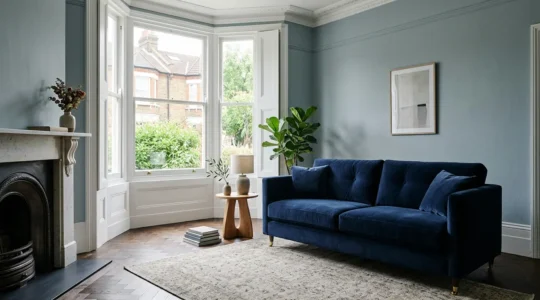
How to Keep Velvet Sofas Looking Pristine With Pets in a UK Home?
The belief that you must choose between a beautiful velvet sofa and a happy pet is a myth; the secret lies in understanding fabric science, not in using endless throws. Permanent marks are often caused by low-density cushion foam, not…
Lire la suite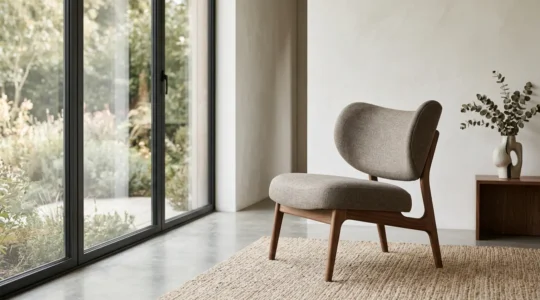
How to Choose a Statement Chair That Still Feels Comfortable After 2 Hours?
The belief that a statement chair must sacrifice comfort for style is a design myth. True comfort is not about softness; it’s about ergonomic science, specifically how a chair distributes pressure across your body. Visual impact is determined less by…
Lire la suite
How to Justify a £4,000 Designer Sofa to a Partner Who Prefers IKEA?
Justifying a designer sofa isn’t about taste; it’s about demonstrating its superior long-term financial value and performance over cheaper, disposable alternatives. A £3,000 sofa can have a « cost-per-year-of-use » 3-4 times lower than a £500 one due to its 15+ year…
Lire la suite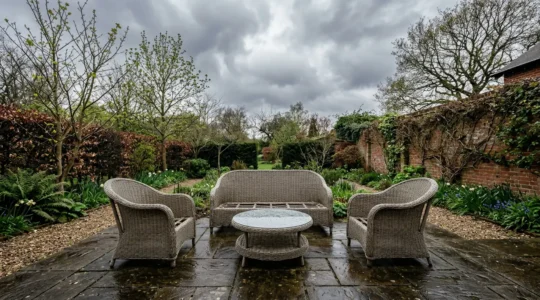
How to Keep Your Garden Furniture Looking New After 5 British Winters
The « weatherproof » label on your garden furniture is a marketing term, not a guarantee against the damp UK climate; true longevity comes from understanding the specific materials you are buying. Your cushions fail because of the foam inside, not just…
Lire la suite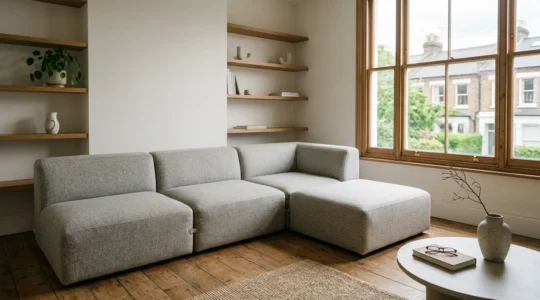
How to Furnish a 45 m² London Flat That Changes Layout Every 6 Months?
Furnishing a transient London flat isn’t about style; it’s about mastering a system of mobile assets that protects your money and your sanity. Your furniture’s true value lies in its durability through multiple moves and its resale price on the…
Lire la suite