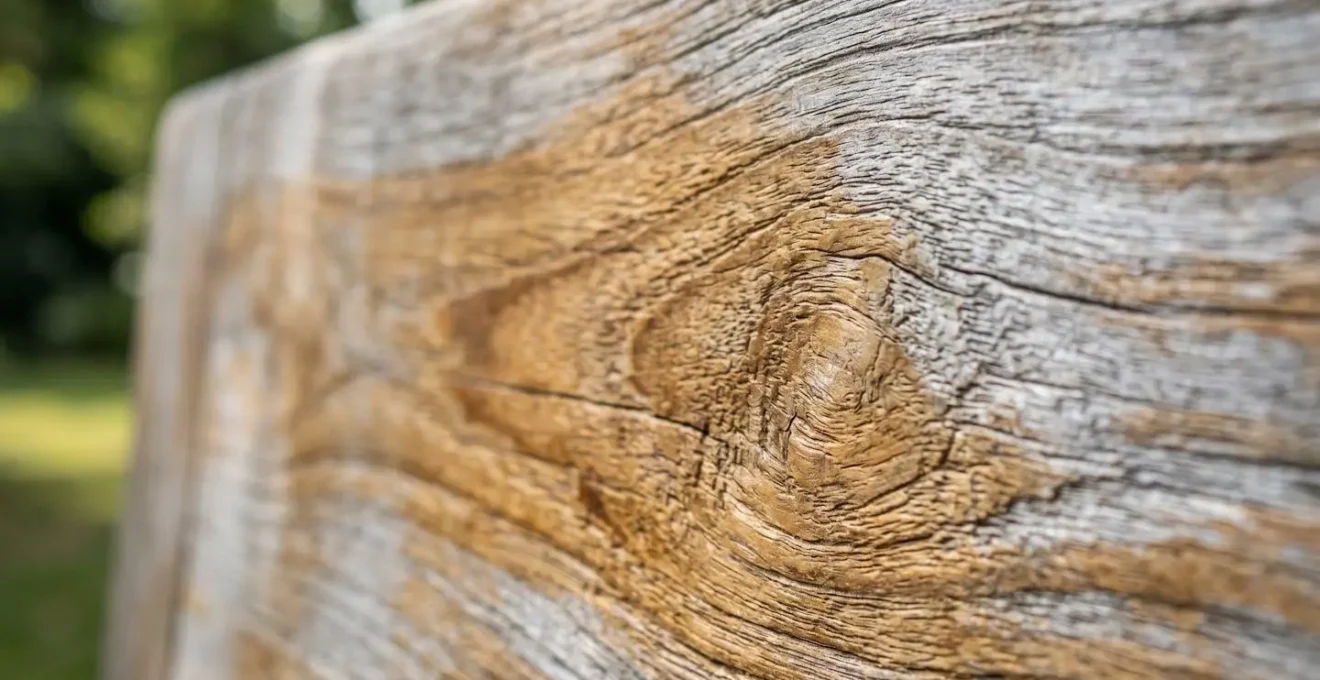
Verifying FSC teak goes far beyond spotting a logo; it demands an auditor’s mindset to scrutinise the supply chain and ensure what you’re buying is both legal and genuinely ethical.
- Illegal Burmese « blood teak » continues to infiltrate markets, making origin verification under UK Timber Regulations (UKTR) non-negotiable.
- True sustainability involves not just ethical sourcing but also proper, non-toxic maintenance and embracing natural aging processes like the silvery-grey patina.
Recommendation: Always demand the FSC Chain of Custody (CoC) certificate number for your specific furniture batch and cross-reference it on the FSC’s official database before purchase.
For the eco-conscious buyer, the FSC logo on a piece of teak garden furniture should be a mark of reassurance. It promises sustainability, ethical sourcing, and peace of mind. Yet, in a market rife with greenwashing and complex global supply chains, a healthy dose of scepticism is not just wise; it’s necessary. The common advice is to « look for the logo, » but what happens when that logo is misused, or the chain of custody it represents is compromised? The comfortable illusion of ethical consumption can shatter, leaving you unknowingly complicit in environmental or social damage.
This is where the real work begins. The uncomfortable truth is that some teak, particularly from regions like Myanmar, is so deeply tied to conflict and illegality that it’s often dubbed « blood teak. » Verifying authenticity isn’t a passive checkbox exercise. It requires a shift in perspective—from a consumer to an investigator. This guide is not about simply accepting a label at face value. It’s about empowering you with an auditor’s toolkit to probe deeper, ask the right questions, and make a truly informed choice. It’s about understanding the forensic details, from the density of the wood’s growth rings to the legal intricacies of the UK Timber Regulation (UKTR).
We will dissect the critical differences between wood sources, explore genuinely safe maintenance, and compare teak to its alternatives through the uncompromising lens of supply chain integrity. By the end, you won’t just see a logo; you’ll understand the rigorous process of due diligence required to give it meaning. This is your guide to becoming a guardian of your own ethical standards.
To navigate this complex topic, we have structured this guide to address the most pressing questions an informed buyer should ask. The following sections will provide the evidence and tools needed to conduct your own due diligence with confidence.
Summary: An Auditor’s Guide to Verifying FSC-Certified Teak
- Why Does Indonesian Plantation Teak Weather Differently From Burmese Old-Growth?
- How to Oil Teak Garden Furniture With Non-Toxic Products Safe for Pets?
- Teak or Iroko: Which Sustainable Hardwood Lasts Longer in a UK Coastal Garden?
- The Teak Greying Myth That Makes Owners Sand Away Protective Surface Layers
- When Do UK Garden Retailers Receive Fresh FSC-Certified Teak Shipments?
- Why Does Your Lawn Need Feeding Every Spring Despite Composting All Year?
- How to Winterise Teak Loungers Without a Garden Shed or Garage?
- How to Keep Rattan Garden Furniture Looking New After 5 British Winters?
Why Does Indonesian Plantation Teak Weather Differently From Burmese Old-Growth?
The distinction between Indonesian plantation teak and old-growth Burmese teak is not merely a matter of geography; it’s a fundamental difference in biology, ethics, and legality. From an auditor’s perspective, these are two entirely different materials. Old-growth teak, harvested from slow-growing trees in natural forests, is incredibly dense. In contrast, analysis shows that while plantation teak averages 10-12 growth rings per inch, old-growth teak can have 20-25. This density, combined with decades of maturation, results in a higher concentration of natural oils and silica.
As the J. Gibson McIlvain Company, a long-time timber specialist, explains, this material difference has practical consequences:
Old growth Teak sourced from Myanmar has a higher silica content than plantation Teak; this higher silica content helps old growth Teak have a higher waterproof quality than plantation Teak.
– J. Gibson McIlvain Company, Teak Wood Supply – What Is Teak?
However, any perceived advantage in quality is completely overshadowed by a critical legal and ethical reality for UK buyers. Since the 2021 military coup, all timber exports from Myanmar are considered to be financing the ruling junta, rendering them ‘blood teak’. Under the UK Timber Regulation (UKTR), importing this wood is illegal. This isn’t a theoretical risk. In a landmark 2024 case, UK luxury yacht builder Sunseeker International was fined £358,759 for importing illegal Burmese teak, a situation the court described as a ‘systemic failure’ in due diligence. This definitively places all Burmese teak in the highest-risk category, making its presence in any new furniture a giant red flag for illegality.
How to Oil Teak Garden Furniture With Non-Toxic Products Safe for Pets?
Once you’ve ethically sourced your furniture, the eco-protective duty of an auditor shifts to its maintenance. Many commercially available « teak oils » are a misleading cocktail of solvents and varnishes, often containing petroleum-based distillates like naphtha, which is toxic to pets and the environment. The goal is to protect the wood, not to introduce harmful chemicals into your garden ecosystem. A true, non-toxic approach focuses on replenishing the wood’s natural oils with pure, safe alternatives.
The safest choices are pure tung oil or refined linseed oil (not boiled linseed oil, which can contain metallic driers). To be absolutely certain of pet safety, look for products that are certified compliant with the UK/EU ‘toy safe’ standard EN 71-3. This certification ensures that the product’s chemical migration levels are safe enough for a child’s toy, and by extension, for a curious pet that might lick or chew the furniture.
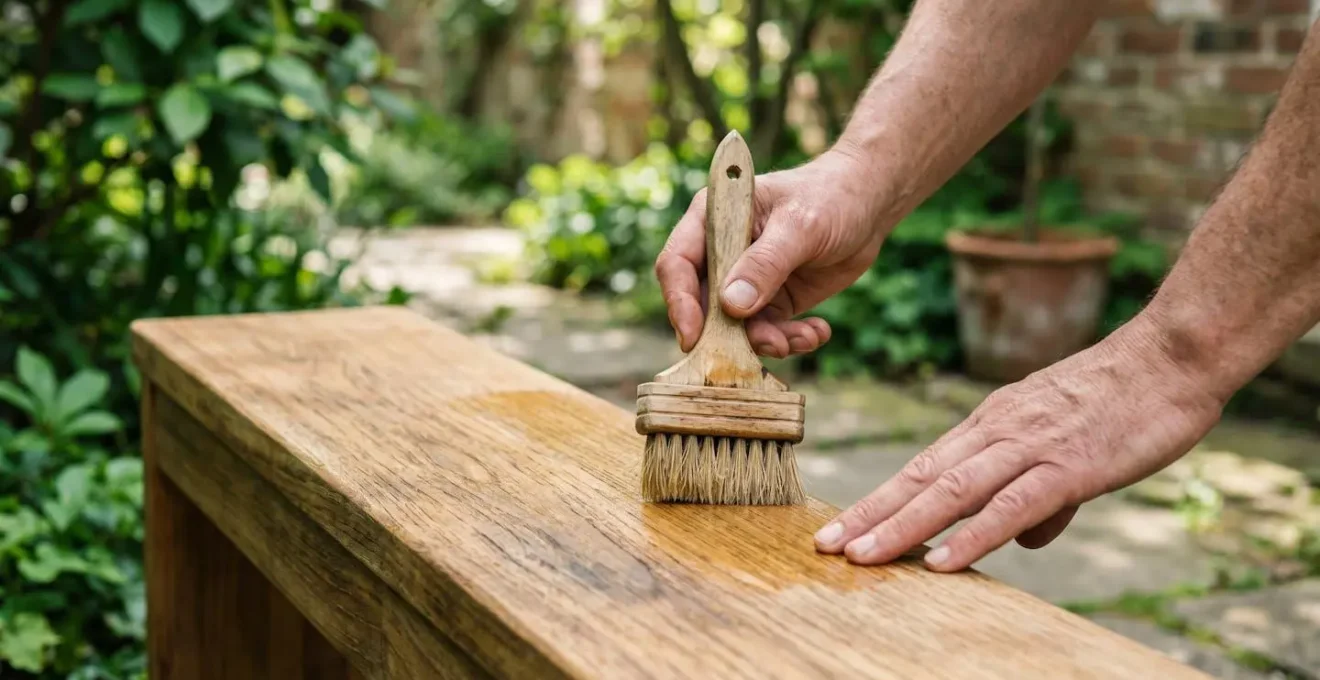
The application process is just as important as the product choice. This must be done in a pet-free zone, allowing for adequate curing time, which is longer in the UK’s humid climate. A 24-hour drying time cited on a product label may be insufficient; it is safer to allow at least 2-3 days of initial drying before reintroducing the furniture to areas accessible by pets. Finally, the risk of spontaneous combustion from oil-soaked rags is real. They must be soaked in soapy water before disposal in an outdoor metal bin.
Teak or Iroko: Which Sustainable Hardwood Lasts Longer in a UK Coastal Garden?
When considering alternatives to teak, Iroko (often called African Teak) is frequently suggested. It’s a dense, durable hardwood that also performs well outdoors. However, for the sceptical buyer in a demanding UK coastal environment, the comparison must be filtered through the rigorous lens of durability and, most importantly, supply chain integrity. While both can be FSC-certified, their supply chains have vastly different levels of maturity and risk. FSC-certified Indonesian teak comes from a long-established system, whereas the infrastructure in Iroko’s origin countries in West Africa is less developed, presenting higher risks under UKTR due diligence.
The Forest Stewardship Council (FSC) itself has highlighted these issues. In a 2022 investigation into teak supply chains, they found significant traceability gaps. As the FSC noted, this is a serious problem for verification:
Several supply chains ending in Europe could not be traced back to the original forest where the timber was sourced from.
– Forest Stewardship Council (FSC), FSC Investigation Report: Teak Supply Chains Show Concerning Integrity Risks
These integrity risks are a core concern. For a buyer focused on verifiable ethics, a less mature supply chain means more work and more uncertainty. In terms of coastal performance, teak’s high silica content gives it a slight edge in resisting salt spray. The following table breaks down the key audit points when comparing the two.
| Criterion | Indonesian FSC Teak | West African FSC Iroko |
|---|---|---|
| FSC Supply Chain Maturity | Established certification infrastructure in Indonesia; majority of FSC-certified teak FMUs located in Latin America and Indonesia | Less mature FSC infrastructure in West African origin regions (Nigeria, Ghana, Cameroon) |
| Chain of Custody Transparency | Processing primarily in Vietnam, China, Indonesia with documented CoC; however, FSC 2022 investigation found concerning volume mismatches and traceability gaps in some supply chains | Iroko from origin regions deemed higher-risk under UKTR due diligence; FSC launched investigation into African teak (Afrormosia/Iroko) supply chains in 2023 citing integrity concerns |
| UK Coastal Durability (Salt/Moisture) | High silica content provides superior salt spray resistance and moisture performance in maritime climates (Cornwall, Scottish coast) | Slightly less oily than teak; requires occasional sealing for maximum weather resistance; higher susceptibility to surface checks/cracks in fluctuating UK maritime conditions |
| UKTR Risk Classification | Lower regulatory risk when FSC-certified from Indonesian plantations; Burmese teak is illegal under UK sanctions | Higher UKTR risk due to West African origin countries’ logging governance challenges; requires enhanced due diligence |
The Teak Greying Myth That Makes Owners Sand Away Protective Surface Layers
One of the most persistent myths in teak care is that the transition to a silvery-grey colour is a sign of decay that must be fought with aggressive sanding and constant oiling. This is fundamentally wrong. In fact, an auditor’s perspective reveals this « patina » is a natural, protective feature, not a flaw. The greying process is a surface-level oxidation caused by exposure to UV rays and rain. It creates a beautiful, low-maintenance finish that acts as a natural barrier, protecting the structurally sound golden-brown wood underneath.
Aggressively sanding away this patina each year is a Sisyphean task that is not only laborious but also counter-productive. You are physically removing the wood’s own protective layer and thinning the furniture over time. As timber experts clarify, this aging is purely cosmetic and harmless:
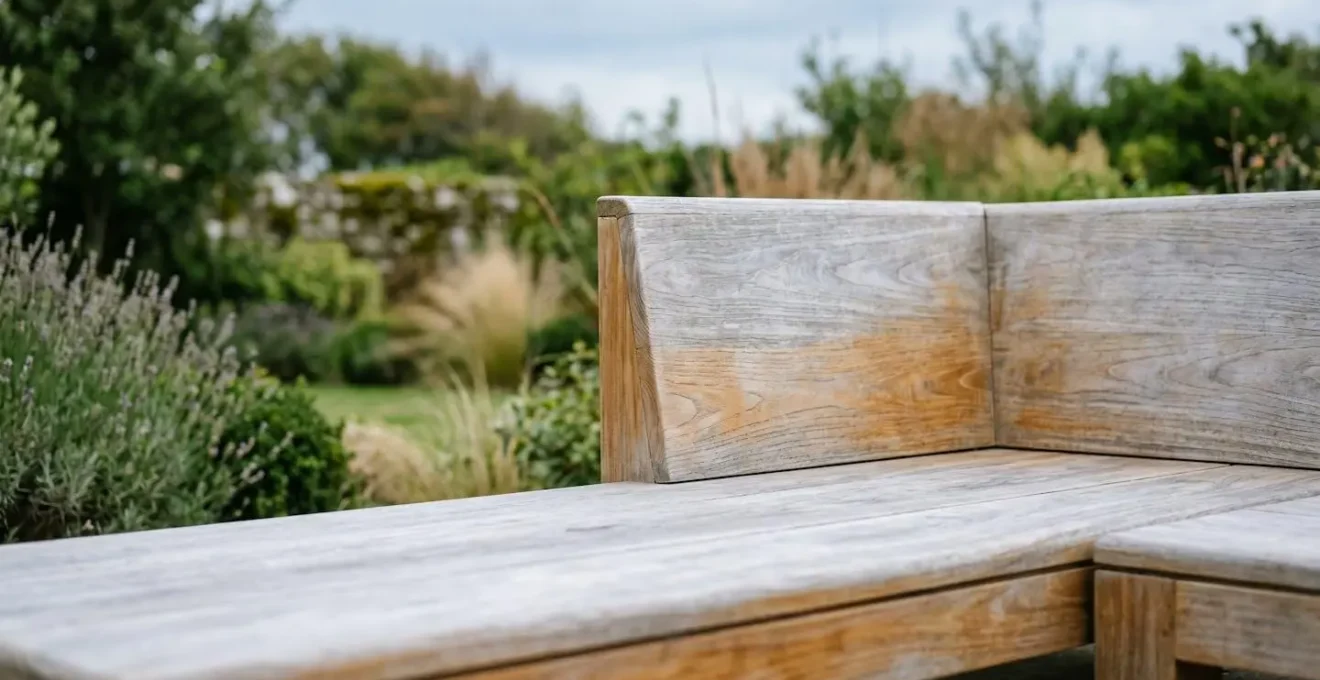
The only part of the teak impacted by this cosmetic aging is the surface layer of molecules. Embracing the silver patina is the most eco-protective and low-effort approach to teak ownership. It celebrates the wood’s natural lifecycle and frees you from the cycle of purchasing chemical treatments. A simple annual cleaning with a soft brush and mild soapy water is all that is required to remove surface dirt, allowing the elegant silver-grey to shine. This is the ultimate expression of sustainable maintenance: doing less, not more.
When Do UK Garden Retailers Receive Fresh FSC-Certified Teak Shipments?
Timing your purchase can be a strategic part of your audit. The bulk of new teak furniture stock arrives in the UK between February and April. This timing aligns with the end of harvest and manufacturing seasons in countries like Indonesia, positioning retailers for the spring and summer rush. Buying during this window increases your chances of getting « fresh » stock that hasn’t been sitting in a warehouse or on a shop floor for an extended period, potentially predating a supplier’s current FSC certificate.
However, an arrival date alone is not proof of authenticity. This is where you must actively deploy your auditor’s toolkit. When in the store, your role is to perform a spot-check on the product’s chain of custody. You are not just a customer; you are the final checkpoint in a long supply chain. Being prepared with a specific set of questions can cut through sales-speak and get to the verifiable facts. The goal is to obtain the FSC Chain of Custody (CoC) certificate number for that specific batch of furniture, which can then be verified in real-time on the FSC’s public database.
Your Action Plan: Verifying Fresh FSC Teak Stock at UK Retailers
- Question 1: The Timing Inquiry – Ask sales staff directly: ‘Is this from your new season’s shipment, and when did it arrive at your warehouse?’ This establishes a timeline for the stock’s journey.
- Question 2: The Certificate Demand – Request the key document: ‘Can you provide the FSC Chain of Custody certificate number for this specific batch?’ If they cannot or will not, this is a major red flag.
- Question 3: The Post-Brexit Check – Ask about customs clearance: ‘Has this stock cleared the new UK customs timber checks introduced in January 2021?’ This confirms it has passed through UKTR scrutiny.
- Question 4: The Validity Window – Once you have the code, check the FSC database (info.fsc.org) to ensure the certificate was valid at the time the timber was imported and sold, not just today.
- Question 5: The Physical Inspection – Look for freshness indicators: a rich golden-brown colour, a slight natural sheen from oils, and minimal surface checking (tiny cracks), which suggest recent manufacture and proper storage.
Why Does Your Lawn Need Feeding Every Spring Despite Composting All Year?
The auditor’s mindset of understanding systems and natural processes extends beyond just your furniture. A truly eco-protective garden is a holistic system, and the health of your lawn is a key indicator. Many diligent composters are perplexed when, despite adding rich organic matter to their garden beds, their lawn still looks lacklustre and requires a specific spring feed. The reason lies in the fundamentally different nutritional cycles of a lawn versus a garden bed.
Your lawn is a monoculture of grass plants that are in a constant state of stress and regeneration. Every time you mow, you remove a significant portion of the plant’s foliage, which it then expends energy and nutrients to regrow. This cycle rapidly depletes soil nutrients, particularly nitrogen, which is crucial for lush, green leaf growth. While your compost is excellent for improving soil structure and providing a slow-release source of broad-spectrum nutrients, it often doesn’t contain enough readily available nitrogen to meet the intense, immediate demands of a lawn waking from winter dormancy.
A dedicated spring lawn feed is formulated with a higher ratio of nitrogen (the ‘N’ in N-P-K) to provide this specific, targeted boost. Think of your compost as the long-term savings account for your soil’s health, building its overall resilience and structure. The spring feed, in contrast, is like a targeted energy gel for an athlete, providing the specific fuel needed for peak performance at a critical time. Choosing an organic, slow-release granular feed over a synthetic liquid one better aligns with the eco-protective principle, nourishing the soil food web rather than just force-feeding the plant.
How to Winterise Teak Loungers Without a Garden Shed or Garage?
Protecting your ethically sourced teak through the harsh UK winter is the final act of stewardship each year. For many, especially in urban areas, the luxury of a garage or garden shed for storage is unavailable. This does not mean your furniture must be left to the mercy of the elements. The solution is not to create an impermeable, suffocating seal, but to facilitate airflow and drainage—the two most critical factors in preventing mould, mildew, and freeze-thaw damage.
The primary enemy during a damp UK winter is not the cold itself, but trapped moisture. Non-breathable PVC or plastic tarps are the worst option; they trap condensation against the wood, creating a perfect environment for mould. The correct approach involves a combination of elevation, breathable covers, and strategic placement. By raising the furniture off the damp ground and ensuring water can run off rather than pool, you mitigate the biggest risks. This method, which can be executed on a patio, balcony, or in a small courtyard, ensures your furniture survives the winter and is ready for the first signs of spring.
Here is a step-by-step technique for effective outdoor winterisation:
- Select Breathable Covers: Invest in high-quality 600D polyester covers that explicitly state they are ‘breathable’ and feature built-in ventilation panels to prevent moisture build-up.
- Elevate Furniture Feet: Place small, weather-resistant blocks (teak offcuts, composite pieces, or purpose-made risers) under each leg. This 2-3 inch clearance prevents the legs from sitting in puddles and absorbing water.
- Create a Drainage Angle: Subtly tilt the loungers by placing slightly larger blocks under the feet at one end. A 2-3 degree angle is enough to ensure rain and melting snow run off immediately.
- Find a Sheltered Spot: Position the covered furniture against the most sheltered wall of your house, ideally under a roof eave and away from the prevailing south-westerly winds.
- Ensure Runoff Flow: Check that the angled furniture directs water away from your house’s foundation and that it won’t create a new puddle directly underneath.
Key Takeaways
- Verification is an active audit: Always demand and check the FSC Chain of Custody (CoC) number.
- Source is everything: Indonesian plantation teak is legally and ethically distinct from high-risk, illegal Burmese teak.
- Embrace the patina: The silvery-grey aging of teak is a natural protective layer, not a flaw to be sanded away.
How to Keep Rattan Garden Furniture Looking New After 5 British Winters?
The principles of diligent, preventative maintenance you apply to your teak are equally valid for other garden furniture, such as synthetic rattan. While high-quality PE rattan is incredibly durable and UV-resistant, its appearance after several damp UK winters is often dictated by the health of its underlying metal frame and the cleanliness of its woven surfaces. Green algae and black mould can thrive in the crevices of the weave, and hidden corrosion on the frame can compromise the furniture’s structural integrity.
An annual deep clean and inspection should be part of your garden stewardship routine. The real threat during a UK winter isn’t the plastic rattan itself, but the corrosion of the frame (especially if it’s powder-coated steel rather than aluminium) and the build-up of organic matter in the weave. A gentle but effective cleaning solution is key; harsh chemicals can degrade the plasticisers in the rattan, making it brittle over time. A simple mixture of one part white vinegar to four parts warm water is acidic enough to kill mould and algae without damaging the material or harming nearby plants.
The inspection process is crucial. You must look for the early warning signs of frame failure. On steel frames, this will be small orange-brown spots of rust, particularly at weld joints. On aluminium frames, it presents as a chalky white powder of oxidation. Catching and treating these spots early is the single most important step in ensuring your rattan furniture lasts. This proactive approach elevates maintenance from a chore to a strategic act of preservation, ensuring all elements of your garden remain in prime condition.
Ultimately, becoming a truly eco-conscious buyer means embracing the role of a diligent steward. It’s a commitment that starts with rigorous verification before a purchase and continues with mindful, protective care for the life of the product. To put these principles into practice, begin by evaluating your next potential purchase not as an object, but as a story with a supply chain that you have the power to investigate.