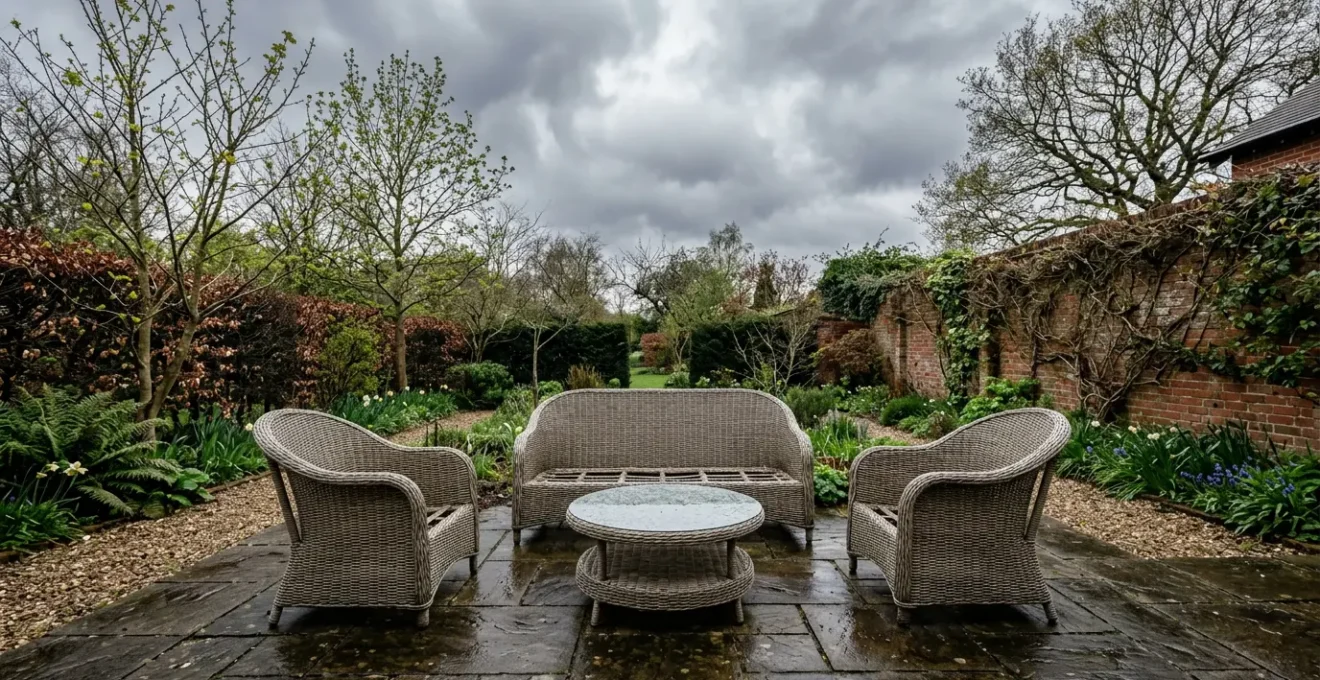
The « weatherproof » label on your garden furniture is a marketing term, not a guarantee against the damp UK climate; true longevity comes from understanding the specific materials you are buying.
- Your cushions fail because of the foam inside, not just the fabric outside. Only reticulated foam offers true quick-dry performance.
- Your metal frame corrodes not from rain, but from galvanic reactions at the screws. Aluminium is superior to steel, but only if assembled correctly.
Recommendation: Stop replacing your set every few years. Use this buyer’s guide to invest once in furniture engineered to withstand British conditions, focusing on material science over marketing promises.
There’s a familiar, frustrating cycle for many UK homeowners. You invest in a beautiful garden furniture set, lured by promises of being « all-weather » and « showerproof. » For one glorious summer, it’s the centrepiece of your patio. Then autumn arrives, and by the following spring, you’re greeted by the dispiriting sight of green-tinged, mouldy cushions, a frame showing tell-tale signs of rust, and wood that has gone from golden to grey and splintered. You followed the common advice: you covered it, you cleaned it, maybe you even managed to drag the cushions into an already full shed.
The core problem isn’t your maintenance routine. It’s that the standard advice fails to address the specific challenges of the relentless, damp, and variable British climate. The advice to « buy weatherproof » is the biggest platitude of all, as the term has no standard definition and is often used to describe furniture that is, at best, water-resistant for a short period. The real secret to longevity doesn’t lie in a generic cover or an annual scrubbing; it lies in the material science of what you buy in the first place. As an outdoor furniture buyer for a national retailer, I’ve seen firsthand which materials fail and which endure.
But what if the key to a lasting investment wasn’t just about choosing between teak and aluminium, but understanding the hidden components like the foam inside the cushion or the type of screw used in the frame? This guide is designed to give you that professional buyer’s perspective. We will move beyond the superficial tips and delve into the specific material choices and maintenance techniques that genuinely protect your investment against five or more punishing British winters. We’ll deconstruct why « weatherproof » cushions still grow mould, how to protect wood without a garage, and how to spot a genuinely durable frame.
This article provides a structured path to becoming an informed buyer, moving from the most common points of failure to the hallmarks of a quality, long-term investment. The following sections break down the critical knowledge you need to protect your furniture or make your next purchase the last one for a very long time.
Summary: A professional buyer’s guide to choosing and maintaining garden furniture for UK longevity
- Why Does Your « Weatherproof » Sofa Cushion Turn Mouldy Every Autumn?
- How to Winterise Teak Loungers Without a Garden Shed or Garage?
- Powder-Coated Steel or Aluminium: Which Frame Resists Coastal Salt Air Best?
- The Budget Cushion Mistake That Leaves You Sitting on Soggy Foam After Rain
- When Do UK Garden Centres Slash Outdoor Furniture Prices by Up to 60%?
- Why Is Your South-Facing Patio Still Too Cold for Evening Dining in May?
- Teak or Iroko: Which Sustainable Hardwood Lasts Longer in a UK Coastal Garden?
- How to Verify FSC-Certified Teak Authenticity When Buying Outdoor Furniture?
Why Does Your « Weatherproof » Sofa Cushion Turn Mouldy Every Autumn?
The single greatest point of failure for outdoor seating in the UK is the cushions. You buy a set advertised as « showerproof, » yet every autumn, those familiar dark spots of mould and mildew appear. The reason is a simple, damp truth: the « weatherproof » label almost always refers to the outer fabric cover, not the foam core inside. While a water-resistant coating can repel a light shower, it does nothing to prevent ambient moisture and condensation from the humid British air from penetrating the seams and zippers. Once moisture is inside, standard closed-cell foam acts like a sponge, trapping water and creating the perfect dark, damp breeding ground for mould spores.
This is where understanding material science becomes a crucial consumer protection tool. The only true solution to this problem is not a better fabric, but a different kind of foam. High-end, genuinely all-weather furniture uses reticulated foam, an open-cell material with a porous structure. Water flows straight through it rather than being absorbed. When paired with a breathable fabric base on the cushion, it allows the entire cushion to drain and dry in a fraction of the time. The difference is stark and is the primary distinguisher between a £500 set and a £2,000 set that will actually last.
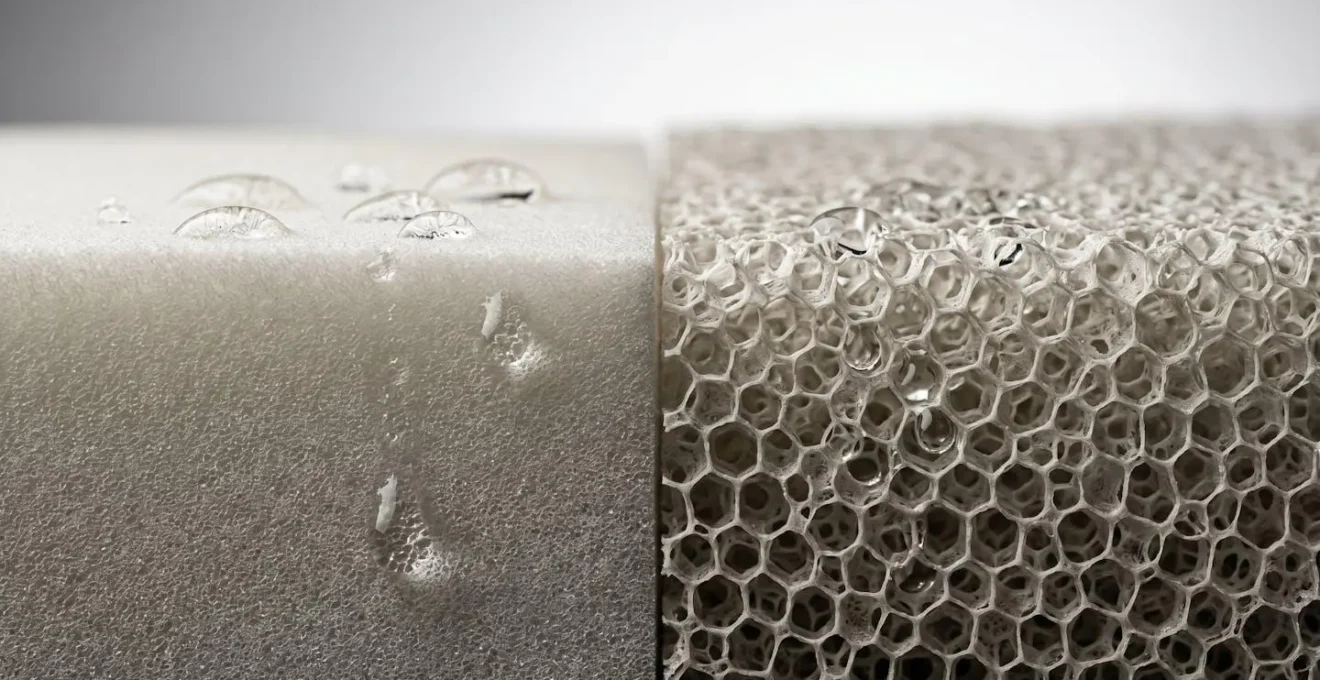
As you can see, the structure is completely different. The fabric is only half the story; according to UK outdoor furniture specialists, the British climate provides an ideal environment for mould growth, and fabric resistance is merely a degree of protection, not immunity. Without a quick-drying foam core, even the best fabric will eventually succumb to mildew when moisture is trapped inside. When buying, always ask the retailer: « Is this reticulated foam? » If they don’t know, you have your answer about the set’s true longevity.
How to Winterise Teak Loungers Without a Garden Shed or Garage?
For homeowners without the luxury of a large shed or garage, the question of how to protect wooden or rattan furniture over winter is a pressing one. The common instinct is to either leave it exposed to the elements or wrap it tightly in a generic plastic tarp. Both are costly mistakes. Leaving high-quality wood like teak exposed isn’t a disaster—it will weather to a silvery-grey patina—but it accelerates wear. The bigger error, however, is using non-breathable protection.
Tarps trap moisture underneath, creating a damp, humid microclimate that’s a perfect breeding ground for mould and mildew. You absolutely must invest in breathable covers made specifically for garden furniture.
– The Log Company, Protecting Outdoor Wood Furniture in the UK guide
This trapped microclimate is far more damaging than rain and frost alone. It encourages rot in wood and rattan, and causes powder-coated metal frames to blister. The correct solution is to invest in a purpose-made, breathable furniture cover. Look for covers made from high-quality materials that actively prevent this moisture build-up. As a buyer, I look for specific features: the best garden furniture covers are made of polyester with PVC backing and water-taped seams, ensuring they are both showerproof and, crucially, breathable. These covers allow water vapour to escape while keeping rain out.
Before covering, ensure the furniture is completely clean and dry. Any dirt, bird droppings, or food particles left on the surface will fester into mould under the cover. For wooden loungers, a simple scrub with soapy water and a thorough rinse is sufficient. For rattan, use a soft brush to get into the weave. Wait for a dry, sunny day to ensure the furniture is bone-dry before putting the cover on. This combination of a clean, dry piece of furniture and a high-quality breathable cover is the key to successfully winterising your investment outdoors, no shed required.
Powder-Coated Steel or Aluminium: Which Frame Resists Coastal Salt Air Best?
When selecting metal garden furniture, particularly for coastal areas, the choice between steel and aluminium seems simple. Aluminium is the clear winner for its inherent rust-proof properties. However, the real-world failure of many aluminium sets reveals a more complex problem: galvanic corrosion. This is an electrochemical process that occurs when two dissimilar metals are in contact in the presence of an electrolyte—like the salt-laden air of a British coastal town. The most common culprit? Stainless steel screws and fasteners used on an aluminium frame.
While the powder coating provides an initial barrier, any small chip or scratch around a screw hole exposes the two metals. The aluminium, being less noble, will sacrificially corrode at an accelerated rate, causing the powder coating to bubble and flake away, exposing more of the frame. This is why you see corrosion starting at the joints and welds, not in the middle of a frame section. While all corrosive environments are a challenge, according to corrosion research on coastal environments like Florida’s, these zones present the most aggressive atmospheric conditions for metals.
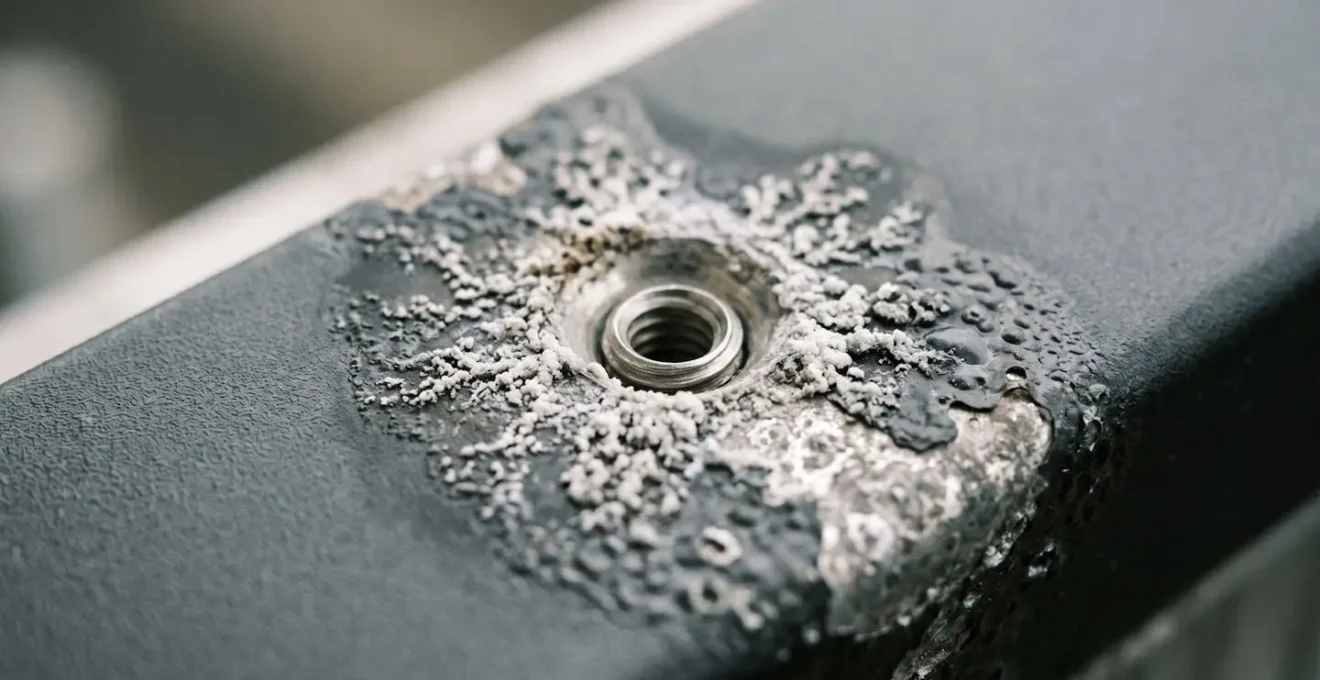
The visual evidence is undeniable. The white, chalky substance is aluminium oxide, the result of the frame literally dissolving itself to protect the stainless steel fastener. Steel frames, while heavier and prone to rust if the coating is breached, don’t suffer from this specific electrochemical failure mode. For a coastal environment, a high-quality, thickly coated steel frame can sometimes outperform a poorly assembled aluminium one.
Case Study: Galvanic Corrosion on a Marine Craft
A boat owner with a 2019 model featuring a powder-coated aluminium T-top reported significant corrosion bubbling around the stainless steel screws after just two years in a marine environment. The manufacturer resolved the issue by providing nylon insulators to place between the screws and the frame, physically separating the dissimilar metals and stopping the galvanic corrosion. This demonstrates that the assembly detail is as critical as the base material choice.
The Budget Cushion Mistake That Leaves You Sitting on Soggy Foam After Rain
We’ve established that the foam core is the real culprit in mouldy cushions, but the outer fabric still plays a critical role in a cushion’s performance and feel. The most common budget mistake is choosing furniture with cushions made from materials unsuited for the outdoors, regardless of any « showerproof » chemical treatment applied to them. Manufacturers of low-cost sets often use standard polyester, linen, or even cotton-blend fabrics because they are cheap and available in many colours.
This choice is a form of planned obsolescence. As experts in outdoor textiles confirm, these materials are fundamentally flawed for UK outdoor use.
Generally, fabrics like cotton, linen, and a standard polyester aren’t advisable for outdoor cushions, as they’re prone to retaining moisture, which can result in mold formation. On the contrary, consider materials such as acrylic and olefin.
– F&J Outdoors, Expert Advice for Preventing Mold on Outdoor Cushions
These materials are hygroscopic, meaning they naturally absorb and hold onto moisture from the air, not just from rain. This creates a perpetually damp environment, leading to a heavy, soggy cushion that takes days to dry and rapidly develops a musty smell and mildew. The alternative, used in high-quality sets, are solution-dyed synthetic fabrics. Materials like acrylic or olefin are engineered to be hydrophobic (repelling water) and resistant to UV degradation. The term « solution-dyed » is key; it means the colour pigment is part of the fibre itself, not a dye applied to the surface. This is why they resist fading and are far more resistant to mould. In fact, according to outdoor furniture mildew prevention experts, premium marine-grade fabrics have a much lower likelihood of mould growth because the thread itself is colorized. When you see a price that seems too good to be true for a large, comfortable-looking sofa set, the savings have almost certainly been made on the foam and the fabric.
When Do UK Garden Centres Slash Outdoor Furniture Prices by Up to 60%?
For the savvy buyer who has done their material research, timing the purchase is the final step to securing the best value. As a retailer, I can tell you that outdoor furniture discounting follows a predictable annual rhythm driven by weather, holidays, and the need to clear floor space. Forget waiting for Black Friday; the real bargains are found in specific, strategic windows.
The key is to think like a store manager. When are they most desperate to get rid of large, bulky stock? The first major clearance hits during the August Bank Holiday weekend. This is the last big sales opportunity of the summer, and retailers need to start making space for autumn and Christmas inventory. Expect initial discounts of 20-40% here. The real sweet spot, however, comes in late September and early October. This is when you’ll find the best deals on ex-display floor models. These sets may have minor cosmetic scuffs, but they are often high-end models that can be secured for a deep discount if you’re willing to inspect them carefully and arrange your own transport.
The most powerful, if unpredictable, trigger is the weather. I call it the « First Sustained Autumnal Rain » trigger. A solid week of miserable, cold rain in October is a psychological signal for retailers that the season is definitively over. It prompts immediate, deep discounts on any remaining stock to avoid the cost of storing it. Set up online alerts for your target brands to catch these flash sales. Finally, for those planning ahead, the counter-intuitive window of January to February offers a unique opportunity. High-end retailers offer pre-season discounts for spring delivery to secure early sales and manage their cash flow. You can often get a new, boxed set for a significant discount if you’re prepared to wait.
Why Is Your South-Facing Patio Still Too Cold for Evening Dining in May?
It’s a common source of British summertime disappointment: you have a perfect, south-facing patio that gets sun all day, yet the moment the sun dips in the late afternoon, an unmistakable chill descends, making evening dining in May or even June a shivering affair. The sun has been on it for hours, so why is it so cold? The answer lies not in the sun’s direction, but in two invisible environmental factors: thermal mass and wind chill.
A south-facing orientation guarantees maximum solar exposure, but if your patio surface is made of thin wooden decking or is directly exposed to the wind, it has very little thermal mass. Thermal mass is the ability of a material to absorb, store, and later radiate heat. Dense materials like thick stone flags, brick walls, or concrete absorb the sun’s energy throughout the day and slowly release it in the evening, creating a pocket of radiant warmth. A lightweight wooden deck, by contrast, heats up quickly but has no capacity to store that heat; it cools down the instant it’s in shadow. This effect is compounded by wind chill. Even a gentle breeze can strip away the layer of warm air on your skin, making 15°C feel like 10°C.
So, how does this relate to your furniture? It means your furniture selection must actively work to counteract these factors. Choosing a dining set with a built-in gas fire pit table is the most direct solution, providing both radiant heat and a focal point. Beyond that, think in terms of creating a « room » outdoors. Use furniture with high backs or add planters to act as a windbreak. And never underestimate the power of textiles. Simply having a storage box filled with thick, woollen throws can be the difference between retreating indoors and enjoying another hour under the stars. Your cold patio isn’t a lost cause; it just needs a more thoughtful approach to creating and retaining warmth.
Teak or Iroko: Which Sustainable Hardwood Lasts Longer in a UK Coastal Garden?
For the buyer seeking the ultimate in longevity and classic aesthetics, tropical hardwoods are the pinnacle choice. In the UK market, this decision often comes down to two primary contenders: Teak and Iroko. Both are dense, durable, and more sustainable alternatives to unlawfully harvested hardwoods when properly certified. However, for the uniquely challenging environment of a UK coastal garden, with its high moisture and salt content, the subtle differences between them become significant. While Iroko is often harder and denser, Teak possesses a « secret weapon » that gives it a distinct advantage in longevity: an extremely high natural oil and silica content.
This oil acts as a built-in, perpetual water and pest repellent. It’s the reason Teak has been the material of choice for marine decking for centuries. It’s so effective that according to hardwood furniture material experts, Teak’s durability from its high oil content makes it almost impervious to the elements, while Iroko requires more regular maintenance to maintain its appearance. Iroko relies on calcium carbonate deposits for its durability, which are effective but not as resilient as Teak’s oils in the face of constant moisture fluctuation. This difference also manifests in how the woods weather over time. Teak ages to a consistent, highly desirable silvery-grey patina. Iroko can sometimes weather to a darker, more inconsistent, or blotchy grey, which some owners find less appealing.
The following table, based on an in-depth analysis of the two woods, breaks down the key properties for a coastal application.
| Property | Teak | Iroko |
|---|---|---|
| Natural Oil Content | Extremely high – built-in protective barrier | Lower oil content, relies on calcium carbonate deposits |
| Water Resistance | Superior – ideal for marine and high-moisture environments | Excellent, but slightly less than teak in coastal conditions |
| Weathering Aesthetic | Consistent silvery-gray patina, highly desirable | Can weather to darker, sometimes inconsistent or blotchy gray |
| Dimensional Stability | Superior – minimal warping, checking, or cracking | Good, but more movement (expansion/contraction) in moisture fluctuations |
| Hardness & Density | Hard and dense | Often surpasses teak in hardness and density |
| Maintenance Requirement | Low – natural oils provide protection | Moderate – requires more frequent sealing in harsh coastal climates |
For a low-maintenance, long-term investment in a harsh UK coastal garden, Teak is the superior, albeit more expensive, choice. Its inherent properties are simply better suited to repel the specific challenges of that environment.
Key Takeaways
- « Weatherproof » is a marketing term; true all-weather cushions require open-cell reticulated foam, not just water-resistant fabric.
- Cheap tarps trap moisture and accelerate mould and rot. A breathable, purpose-made cover is essential for winterising furniture outdoors.
- In coastal areas, the biggest threat to aluminium frames is galvanic corrosion from steel screws. Check the fasteners and assembly quality.
How to Verify FSC-Certified Teak Authenticity When Buying Outdoor Furniture?
Having decided on a premium hardwood like Teak, one final, crucial step remains: ensuring its sustainable and legal origins. The Forest Stewardship Council (FSC) logo is the most recognized mark of responsibly sourced timber. However, as a buyer, I must warn you that the logo alone is not sufficient proof. The supply chain for tropical hardwoods is complex, and unethical suppliers have been known to use the logo fraudulently. Verifying authenticity is not just an ethical obligation; it’s a way to guarantee you’re getting the quality you’re paying for, as genuine FSC-certified suppliers are typically more reputable across the board.
The problem of false claims is real. In response to potential issues, the Forest Stewardship Council itself conducts integrity investigations, which have found instances of non-certified timber entering supply chains. This makes consumer vigilance essential. You must go beyond passively spotting the logo and actively verify the seller’s credentials. Fortunately, the FSC provides the tools to do this in a few simple steps. It’s a process that any reputable retailer will welcome, and any hesitation from a seller should be treated as a major red flag.
This verification process is your ultimate protection against « greenwashing » and ensures your significant investment supports responsible forestry and a legitimate supply chain. It empowers you to move from a passive consumer to an accountable stakeholder.
Your Action Plan: The 4-Step FSC Teak Authentication Process
- Locate the FSC license code: Look for the FSC logo accompanied by a license code in the format FSC-C###### on product labels, tags, or documentation. The logo alone is meaningless without this specific code.
- Use the FSC Public Certificate Search: Go to the official database at info.fsc.org and enter the company’s license code. Verify that their certification is active and that its scope specifically covers the types of products you are buying (e.g., « outdoor furniture »).
- Request the Chain of Custody (CoC) number: For high-value sets, ask the retailer to provide their CoC certificate number. A truly certified seller can print this on your invoice as proof that every company in the supply chain is certified.
- Apply the red flag checklist: Be suspicious of sellers with blurry FSC logos, no visible license code, or evasiveness when asked for their CoC number. If the price for certified teak seems too good to be true, it almost certainly is.
Now equipped with the knowledge of a professional buyer—from identifying superior materials to verifying their sustainable origins—your next step is to apply this critical lens to your own garden or your next purchase. Begin by auditing your current set against these principles to understand its vulnerabilities, and use this guide as your checklist when investing in a future that promises durability and peace of mind.