
Justifying a designer sofa isn’t about taste; it’s about demonstrating its superior long-term financial value and performance over cheaper, disposable alternatives.
- A £3,000 sofa can have a « cost-per-year-of-use » 3-4 times lower than a £500 one due to its 15+ year lifespan versus a 3-5 year lifespan.
- Timeless design and superior construction mean quality pieces retain 40-60% of their resale value, making them a household asset, not just an expense.
Recommendation: Shift the conversation from « price » to « performance » and « asset value » by focusing on the unseen construction quality, material durability, and long-term financial metrics.
The scene is a familiar one in many households across the UK. You’ve spent weeks scrolling, visiting showrooms, and have finally found it: the perfect sofa. It has the ideal lines, the fabric is sublime, and it would transform your living room. Then, your pragmatic partner looks at the price tag and utters the sentence that ends the dream: « But… we can get one at IKEA for a tenth of that. » It’s a classic standoff between the heart’s desire for design and the mind’s focus on the bottom line. The usual arguments about aesthetics or comfort often fall on deaf ears when faced with a spreadsheet-driven mindset.
This common negotiation usually stalls because both sides are speaking different languages. One speaks of visual impact and a « feeling, » while the other speaks of cost and practicality. The standard advice—to compromise or simply agree to disagree—misses the most powerful point. What if the most pragmatic, financially sound, and logical argument is actually in favour of the £4,000 sofa? This isn’t about winning an argument; it’s about reframing the entire conversation. It’s about moving from a debate over « spending » to a shared understanding of « investing. »
The key is to translate design value into the language of long-term assets, performance metrics, and calculable return on investment. This guide will provide you with the diplomatic framework and hard data needed to have that conversation effectively. We will deconstruct the true cost of « cheap » furniture, identify the tangible markers of quality that justify a higher price point, and explore strategies to make a significant furniture purchase a smart, mutually-agreed-upon decision for your home’s future and your finances. It’s time to build a case so compelling that even the most dedicated IKEA enthusiast will see the logic.
To navigate this complex but rewarding conversation, this article breaks down the essential arguments and evidence. From understanding the hidden anatomy of a quality sofa to identifying the financial traps of trend-chasing, each section provides a new tool for your negotiation toolkit.
Summary: How to Justify a £4,000 Designer Sofa to a Partner Who Prefers IKEA?
- Why Does a £3,000 Sofa Last 15 Years While a £500 One Collapses in 3?
- How to Choose a Designer Armchair That Survives Toddlers and Still Looks Elegant?
- Eames Lounge Original or Vitra Replica: Is the £5,000 Difference Worth It?
- The Designer Trend Trap That Loses 60% of Resale Value in 5 Years
- When Do London Design Showrooms Offer End-of-Line Discounts Up to 40%?
- Statement Sofa or Trend Cushions: Where Should Your £1,500 Budget Go?
- Why Does a DIY Kitchen Extension Sometimes Lower Your Valuation?
- Why Following Every Decor Trend Costs You £2,000 a Year in Wasted Purchases?
Why Does a £3,000 Sofa Last 15 Years While a £500 One Collapses in 3?
The most powerful tool in this negotiation is shifting the focus from purchase price to cost-per-year-of-use. A £500 sofa that needs replacing in four years costs you £125 per year. A £3,000 sofa that lasts 15 years costs £200 per year, but if it lasts 20, that drops to £150. The gap narrows considerably, and that’s before factoring in the hassle of disposal and replacement. The reason for this longevity gap isn’t magic; it’s engineering. The true value of a designer sofa is in its unseen anatomy—the parts you can’t see but will definitely feel when they fail on a cheaper model. It is a fact that budget sofas last 3-5 years, while high-quality hardwood frame sofas last 20+ years.
The core difference lies in materials and construction methods. A budget sofa often uses particle board or softwood, stapled together. These materials are susceptible to moisture and warping, and the joints are weak points doomed to loosen. A high-end sofa, by contrast, typically features a kiln-dried hardwood frame—a process that removes moisture to prevent warping and ensures stability for decades. Joints are not merely stapled; they are dowelled, screwed, and corner-blocked, creating a rigid structure that withstands the stress of daily life. This is the difference between a disposable item and a piece of generational furniture.
This quality extends to the suspension and cushions, which dictate both comfort and durability. Budget options use basic springs or webbing that sag over time, and low-density foam that quickly flattens, leaving permanent impressions. A premium piece often uses an 8-way hand-tied spring system, where each spring is tied to its neighbours and the frame, providing balanced, lasting support. The cushions are filled with high-resilience foam that bounces back for years, often wrapped in down for extra comfort. These aren’t just features; they are performance metrics that guarantee a better user experience for a much longer time.
To illustrate the stark contrast in build quality, it’s helpful to compare the failure points directly, as detailed in an analysis of sofa construction.
| Construction Element | Budget Sofa (£500) | Designer Sofa (£3,000+) | Lifespan Impact |
|---|---|---|---|
| Frame Material | Particle board / softwood | Kiln-dried hardwood (oak, maple, ash) | 15-20 years difference |
| Joint Construction | Stapled or glued only | Dowelled, screwed, and corner-blocked | Structural integrity 10x better |
| Suspension System | Sinuous springs or webbing | 8-way hand-tied springs | Superior support and longevity |
| Cushion Core | Low-density polyfoam (1.5 density) | High-resilience foam + down (2.5+ density) | Maintains shape 3x longer |
| Upholstery Stitching | Chain stitch (unravels easily) | Lockstitch with reinforced seams | Prevents fabric deterioration |
The intricate craftsmanship of a superior suspension system is a perfect example of this hidden value. The image below shows the detail involved in a hand-tied system, something you’ll never find in a mass-produced piece.

As you can see, the value isn’t just in the surface-level design. It’s in the hundreds of small, deliberate choices made during construction that result in a product that performs better and lasts significantly longer. This is the foundation of the argument: you’re not paying for a brand name, you’re paying for superior engineering.
How to Choose a Designer Armchair That Survives Toddlers and Still Looks Elegant?
The arrival of children or pets can often feel like a death sentence for beautiful furniture. This is a key point of hesitation for a pragmatic partner: « Why spend thousands on an armchair that will be ruined by crayons or sticky fingers? » This is where the conversation must pivot to performance materials and serviceability. A truly well-designed piece isn’t fragile; it’s resilient. Modern textile technology has created « performance fabrics » that are central to this argument. Materials like Crypton or high-grade performance velvets are engineered to be stain-resistant, moisture-wicking, and incredibly durable, often with a ‘double rub’ count exceeding 50,000, which is commercial-grade.
Choosing the right material is a practical decision, not an aesthetic compromise. While a natural bouclé or aniline leather might look appealing in a showroom, they are notoriously poor performers in a high-traffic family home. A protected top-grain leather or a polyester-based performance velvet, however, offers a luxurious feel while being far more forgiving of daily life. The ability to wipe away a spill or clean a stain without lasting damage is a performance feature that has tangible, long-term value. It prevents the need for costly professional cleaning or, worse, premature replacement.
The following table provides a clear, data-driven « forgiveness index » to help make an informed, practical choice that satisfies both the desire for elegance and the need for durability.
| Material Type | Crayon Resistance | Chocolate/Food Stains | Red Wine | Pet Claws | Overall Durability Rating |
|---|---|---|---|---|---|
| Performance Velvet (Polyester) | Excellent – wipes clean | Very Good – spot cleaning works | Good – immediate blotting required | Very Good – tight weave resists snags | 9/10 |
| Crypton/Performance Fabric | Excellent – moisture-resistant | Excellent – stain-repellent coating | Excellent – liquids bead up | Excellent – 50,000+ double rubs | 10/10 |
| Microfiber/Microsuede | Good – requires mild soap | Very Good – dirt-resistant | Fair – absorbs quickly if not treated | Very Good – resists pet hair accumulation | 8/10 |
| Aniline Leather | Poor – absorbs oils and marks | Fair – stains easily without treatment | Poor – immediate professional cleaning needed | Poor – scratches visibly | 4/10 |
| Top-Grain Leather (Protected) | Very Good – wipes with damp cloth | Very Good – non-porous surface | Good – surface treatment helps | Fair – shows scratches but develops patina | 7/10 |
| Bouclé (Natural Fiber) | Fair – textured weave traps debris | Fair – requires professional cleaning | Poor – absorbs liquids | Poor – loops snag easily | 3/10 |
Beyond the fabric, a smart investment is one that can be maintained and repaired. Unlike fast furniture designed for landfill, high-quality pieces are often designed with serviceability in mind. Can you buy replacement cushion covers? Does the brand offer re-stuffing services? Is the wooden frame made of a species that can be refinished if scratched? These questions transform the purchase from a single transaction into a long-term relationship with a durable asset. Answering them before you buy is a key part of a pragmatic approach.
Action Plan: Assessing Repairability
- Ask the retailer if replacement slipcovers or cushion covers are available for purchase separately and verify the price point.
- Confirm whether the brand offers cushion restuffing services or provides specifications for compatible foam replacements.
- For wooden elements, inquire if refinishing services are available or if the wood species can be professionally restored.
- Check if the manufacturer provides repair guides, replacement hardware kits, or authorized repair partners in your region.
- Request warranty details specifically covering the structural frame, upholstery fabric, and cushion core separately—not just a general warranty.
Eames Lounge Original or Vitra Replica: Is the £5,000 Difference Worth It?
When the debate moves to iconic designs, the « original versus replica » question is inevitable and provides a perfect microcosm of the entire value discussion. Why pay £7,000 for an original Eames Lounge Chair when a visually similar replica costs £1,700? The answer lies in one word: asset. An authentic, licensed piece of designer furniture is not just a consumer good; it is a tangible asset that retains, and can even appreciate in, value over time. A replica, no matter how well made, is a disposable good whose value plummets to near zero the moment it leaves the showroom.
The financial data is clear. Vintage furniture market analysis shows original Eames Lounge Chairs retain 50-60% of their average resale value, with certain finishes being even more sought after by collectors. This transforms the purchase from a pure expense into a capital investment. You are effectively « parking » a portion of the cost in an item that can be sold later, recouping a significant part of the initial outlay. A replica has no secondary market value, making its effective cost 100% of its purchase price upon depreciation.
Furthermore, the value of an original lies in its guaranteed quality and serviceability, which is a crucial point for a pragmatic mind. Authentic pieces from manufacturers like Herman Miller or Vitra are built to the exact, uncompromising specifications of the original designer. They are designed for multi-generational use.
Case Study: The Vintage Herman Miller Eames Chair Market Premium
A 1960s Herman Miller Eames Lounge Chair in intact condition can cost more than a new model (currently listed at £7,000+ new). Collectors value the original construction quality, with the chair designed for multi-generational use. Authentic pieces retain original value when properly maintained, while even high-end replicas (£1,700-£2,000) depreciate immediately upon purchase. Crucially, original Herman Miller chairs allow for official updates including shock mount replacement and cushion renewal, services entirely unavailable for replicas, making the original a genuine investment piece rather than simply furniture.
This case study highlights the critical difference: an original is an serviceable asset, while a replica is a sealed unit. When a shock mount fails on a replica, the chair is often rendered useless. On an original, it’s a standard repair that preserves the chair’s function and value for another generation. This is the ultimate pragmatic argument: the original is the more economically sound choice over the long run because it is built to last and, more importantly, built to be repaired.
The Designer Trend Trap That Loses 60% of Resale Value in 5 Years
Not all expensive furniture is a good investment. This is a crucial point of agreement to build with a skeptical partner. The biggest financial pitfall in furniture buying is the « trend trap »: investing heavily in a piece that is defined by a fleeting fashion. A curved, bouclé-covered sofa might be the height of style today, but in five years it could look as dated as avocado-coloured appliances. When an item’s primary value is its trendiness, its value depreciation is brutally fast. The goal is to separate timeless design from transient trends.
Timeless pieces often share several characteristics: they are based on classic silhouettes (like a Chesterfield or a mid-century form), they feature neutral colours and materials, and their proportions are balanced and ergonomic. They look at home in a variety of settings and have already proven their staying power for decades. Trendy pieces, by contrast, often feature exaggerated proportions, « it » colours of the season, and materials that are heavily featured on social media and in fast-fashion homeware stores. According to furniture resale market data, premium designer brands can retain 40-60% of their value, but this only applies if the piece itself isn’t a victim of a short-lived trend. A timeless designer piece holds value; a trendy designer piece loses it almost as fast as a budget item.
Before any major purchase, applying a « Timeless vs. Trendy Litmus Test » is a pragmatic exercise you can do together. It removes subjective taste from the equation and provides a logical framework for assessing a piece’s long-term viability.
- Origin: Is the shape rooted in a classic design period (e.g., Mid-Century Modern, Art Deco) that has been relevant for over 50 years? Or did you first see it on TikTok last year?
- Colour and Material: Is the base colour a versatile neutral (grey, navy, cognac)? Is the fabric a perennial classic like linen or leather, or a current « must-have » texture like teddy fabric or bouclé?
- Proportions: Are the proportions classic and human-scaled, or are they extreme (e.g., ultra-low to the ground, comically oversized arms)?
- Saturation: Is this exact style suddenly available in every high-street homeware store? If so, the trend is likely already at its peak and heading for a decline.
Investing in a piece that passes this test is a shared strategy for protecting your investment. The goal is to acquire a « hero » piece with a timeless form that will serve as a solid foundation for years, allowing you to update the room’s look with less expensive, trend-driven accessories like cushions and throws.
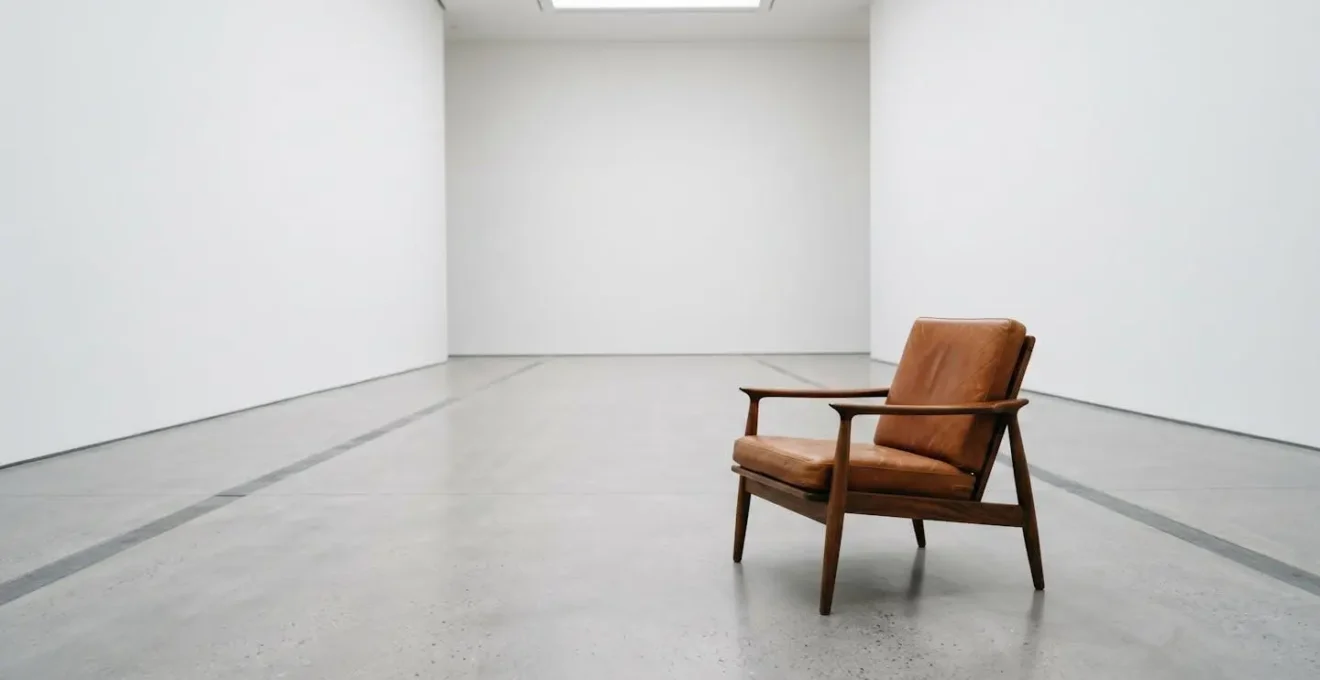
The chair above, with its classic mid-century lines, exemplifies a timeless investment. Its value is in its form and function, not in its adherence to a fleeting trend. This is the type of piece that holds its value and its appeal, making it a wise choice for any household budget.
When Do London Design Showrooms Offer End-of-Line Discounts Up to 40%?
A willingness to pay for quality does not mean a willingness to overpay. A fantastic point of collaboration in your negotiation is to agree on the « what » (a high-quality piece) and then work together on the « how » (getting it at the best possible price). For a pragmatic partner, demonstrating that you are strategic about the purchase can make all the difference. High-end furniture retail in design hubs like London operates on a predictable seasonal calendar, and timing your purchase can lead to substantial savings.
Showrooms need to clear floor space for new collections, creating predictable sale periods. The two most significant moments are post-major design festivals and at the start of the new year. In the UK, the London Design Festival in September is a key event. In the weeks that follow (late September to October), showrooms often clear out ex-display models or end-of-line stock to make way for the newly launched collections. Similarly, the January to February period is a prime time for sales as manufacturers prepare for spring introductions at major European trade shows like Salone del Mobile.
Beyond these primary windows, there are other strategic times to hunt for a deal. The traditional summer sales in July and August are also effective, as foot traffic in major cities can decrease. By creating a shared « shopping calendar, » you turn the purchase into a strategic project rather than an impulsive splurge. This list can form the basis of your joint plan.
- Late September – October: Post-London Design Festival clearance. The best time for ex-display models.
- January – February: Pre-new season inventory clearance.
- July – August: Traditional summer sales period.
- Late November – December: Year-end and pre-Christmas clearance events.
Another powerful strategy is to explore the nearly-new market. Many people sell high-end furniture due to moving or redecorating, often at a significant discount. Platforms specializing in pre-owned designer furniture can be a goldmine. As one guide on smart pricing points out, used furniture in excellent condition often sells for 40-50% of its original price. This strategy allows you to acquire the build quality and longevity of a top-tier piece at a mid-range price point—a win-win for both the design-lover and the pragmatist.
Statement Sofa or Trend Cushions: Where Should Your £1,500 Budget Go?
This question gets to the heart of a smart home investment strategy: budget allocation. When funds are finite, where do you get the most long-term value? The answer, according to furniture industry experts, is unequivocal. Your primary investment should always be in the « hero » pieces that receive the most use and have the greatest impact on a room’s function and comfort—namely, your sofa and armchairs. According to furniture industry value analysis, the £1,500-£3,000 price range represents a ‘Value Zone’ where you get a significant leap in construction quality and an 8-15 year lifespan without the diminishing returns of the very highest price brackets.
It is far wiser to allocate the majority of your budget to a single, high-quality statement sofa and live with minimal or second-hand accessories for a while, than to spread the budget thinly across a dozen mediocre items. A great sofa provides a solid foundation that elevates everything around it. A cheap sofa, conversely, can drag down the look of an entire room, no matter how expensive the cushions are. The strategy is to invest in the frame, and rent the trend. Spend on the structure that will last a decade or more, and use inexpensive, easily replaceable items like cushions, throws, and small decor objects to reflect current trends.
This approach offers a brilliant compromise, especially for those working with a mid-range budget. It satisfies the desire for a well-made, comfortable, and durable core piece while allowing for stylistic updates without breaking the bank. For the truly budget-savvy, this logic can be taken a step further with a « second-hand frame » strategy.
The Second-Hand Designer Frame Strategy
Strategic buyers are investing their full budget (e.g., £1,500) into structurally perfect but cosmetically tired classics from top-tier brands (like Ligne Roset or B&B Italia) sourced from second-hand platforms. A handcrafted solid wood frame holds its value for decades. By focusing on structural integrity (solid hardwood, stable joints) and planning for future reupholstery (typically £300-£600), buyers acquire furniture with a 15-25 year lifespan at 40-60% below the new retail price. This approach prioritizes the invisible structure over the visible surface, treating the furniture as a long-term asset.
This case study demonstrates the ultimate pragmatic approach to high-end design. It’s about looking past the surface and investing in the « good bones » of a piece. It’s a testament to the idea that a limited budget is best spent on quality that will endure, rather than on the fleeting appeal of newness.
Why Does a DIY Kitchen Extension Sometimes Lower Your Valuation?
The principle at play here is « over-personalisation » and « contextual mismatch, » and it’s a powerful cautionary tale to share with a pragmatic partner. Just as a poorly executed extension can detract from a property’s value, a piece of furniture—no matter how expensive or well-made—can psychologically lower the perceived value of a room if it’s the wrong fit. This is a critical point that resonates with a budget-conscious mindset: the goal is to enhance the overall space, not just to own a specific object.
The most common mistake is a mismatch of scale or style. Many designer sofas, particularly those from Italian brands, are designed for large, open-plan loft spaces. Placing an oversized, low-slung sofa in a typical UK living room (which averages around 4m x 5m) can be a disaster. It can overwhelm the space, block circulation paths, and make the entire room feel smaller and more cluttered. Similarly, a hyper-modern sofa with chrome legs can create a sense of visual discord in a Victorian terrace with period features, undermining the character of the home.
In these situations, the sofa’s high price tag becomes a liability. It highlights the poor decision-making and makes the room feel « wrong. » A cheaper, more appropriately scaled and styled piece would have been a better investment for the overall appeal of the room. This concept is a frequent challenge for interior designers.
The Scale and Period Mismatch Problem in UK Homes
As noted in design publications like Livingetc, interior designers frequently encounter situations where expensive designer sofas ‘lower the perceived value’ of a room due to stylistic mismatch. A hyper-modern Italian sofa with ultra-low proportions in a Victorian terrace with original cornicing and sash windows creates a visual discord that makes the space feel smaller and less cohesive. The furniture’s monetary value becomes irrelevant when it fails to enhance the space—a pragmatic consideration that resonates particularly with budget-conscious partners evaluating whether the room’s overall appeal justifies the individual piece’s cost.
This is a point of total agreement. The right designer sofa is one that not only has superior build quality but also respects and enhances the architectural context of your home. It’s about finding the intersection of quality, style, and—crucially—appropriateness. The most expensive choice is not always the best choice, and acknowledging this demonstrates that your goal is a better home, not just a fancier price tag.
Key Takeaways
- Frame the debate around « cost-per-year-of-use » to demonstrate the long-term financial sense of a durable purchase over a disposable one.
- Prioritise investment in timeless, structurally sound « hero » pieces like sofas, and use inexpensive, replaceable accessories to engage with current trends.
- The true value of a designer piece is in its unseen construction (kiln-dried hardwood frames, 8-way hand-tied springs, high-resilience foam) and its serviceability.
Why Following Every Decor Trend Costs You £2,000 a Year in Wasted Purchases?
The final and perhaps most compelling argument for investing in a quality sofa is to calculate the hidden cost of the alternative: the « fast fashion » approach to home decor. The strategy of « buy cheap and replace it when we’re tired of it » seems financially prudent on the surface, but it represents a constant, significant drain on household finances. This is the cycle of buying dozens of small, trendy, and ultimately disposable items that provide a fleeting sense of newness but have zero long-term value.
Think about the annual churn of cushions, throws, vases, prints, and small side tables from trend-led retailers. Each purchase might only be £20, £30, or £50, but they add up. It is not uncommon for this constant « refreshing » to quietly amount to £1,500-£2,000 per year. This is money that is effectively incinerated. These items have no resale value and a very short lifespan, both in terms of style and physical durability. As furniture depreciation studies show, fast-fashion furniture from budget retailers loses value rapidly, becoming almost worthless within a few years.
The crucial step is to reframe this equation. That £2,000 spent on a collection of disposable goods over the course of a year is the same £2,000 that could have been a substantial down payment on, or the outright purchase of, a single piece of high-quality, timeless furniture. A piece that will not only last for 15 years but will also bring a higher level of daily comfort and satisfaction, and retain a portion of its value. It’s the difference between lighting a pile of small bills on fire every year versus placing a larger bill into a long-term savings account.
By shifting the budget from a continuous stream of low-value purchases to a single, high-value investment, you are not spending more money; you are simply allocating it more intelligently. You are trading the temporary high of constant consumption for the lasting satisfaction of enduring quality. This is the ultimate pragmatic choice: to stop the financial leak of disposable decor and invest in an asset that pays dividends in comfort, style, and value for years to come.
The conversation about a designer sofa is rarely just about the sofa. It’s about shared values, financial priorities, and how you want to build your home together. By approaching it not as a battle of wills but as a collaborative project in financial planning and asset acquisition, you can find a solution that respects both the desire for beauty and the need for pragmatic, long-term value.