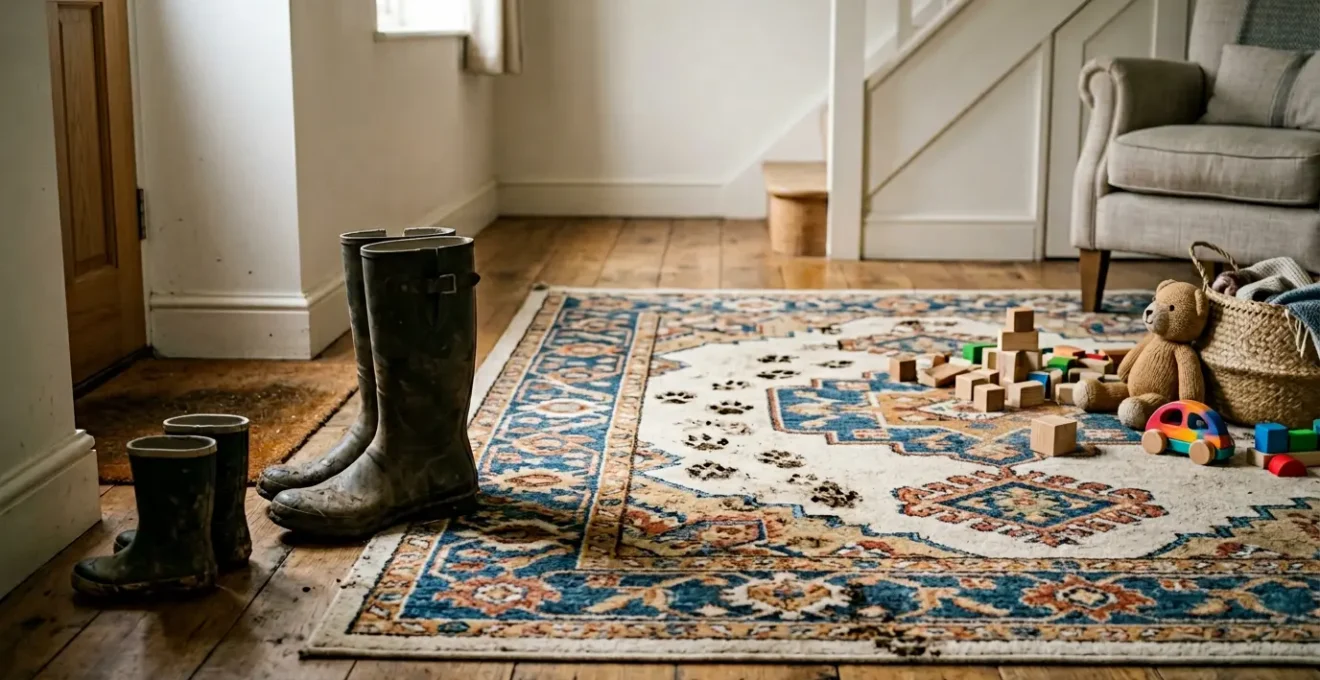
The secret to a family-proof rug isn’t finding an indestructible material, but choosing one that ages gracefully by understanding its core properties.
- Fibre science, not just the material name, dictates how a rug handles spills, moisture, and wear.
- Construction quality (like knot density) is a better predictor of lifespan in a busy hallway than the pattern or colour.
Recommendation: Shift your focus from simply hiding stains to selecting for structural integrity, repairability, and materials that suit your home’s specific environment.
The scene is a familiar one in many UK homes. You’ve invested in a beautiful new rug, picturing it as the centrepiece of your living room. Weeks later, it’s a battlefield map of muddy paw prints, a juice-box spill, and the faint, persistent aroma of damp dog. The default advice is often simplistic: choose dark colours, opt for synthetic materials, or resign yourself to a life of constant, panicked cleaning. This leads many to believe that a stylish home and a busy family life are mutually exclusive.
While practical, this advice often misses the point. It treats a rug as a disposable item to be protected, rather than a functional piece of decor designed for a real, lived-in home. The common solutions are reactive, focusing on hiding the inevitable mess. But what if the key wasn’t about concealment, but about informed selection? What if understanding the fundamental properties of the textiles themselves could lead to a choice that is not only beautiful but resilient?
This guide moves beyond the surface-level tips. We’re adopting the mindset of a professional textile buyer. The true path to a long-lasting rug lies in understanding the science of its fibres, the mechanics of its construction, and the specific environmental challenges of your home. It’s about choosing a rug that doesn’t just survive family life but can actually thrive, ageing gracefully and telling the story of your home for years to come.
This article will explore the critical questions you should be asking before you buy. From the hidden reasons your natural fibre rug smells strange in autumn to the best times of year to find a bargain, we will provide a strategic framework for your next purchase.
Summary: A Practical Guide to Indestructible Home Textiles
- Why Does Your Jute Rug Smell Musty Every Autumn in Your Conservatory?
- How to Remove Red Wine From a Wool Rug Without Calling a £150 Cleaner?
- Hand-Knotted or Power-Loomed: Which Rug Style Lasts 25 Years in a Hallway?
- The Non-Slip Pad Mistake That Causes 15% of UK Home Falls Involving Rugs
- When Do Turkish and Moroccan Rug Prices Drop for UK Buyers?
- Why Does Your Velvet Cushion Show Permanent Sitting Marks After One Week?
- Why Does Linen Bedding Feel Cool in Summer but Cosy in Winter?
- How to Keep Velvet Sofas Looking Pristine With Pets in a UK Home?
Why Does Your Jute Rug Smell Musty Every Autumn in Your Conservatory?
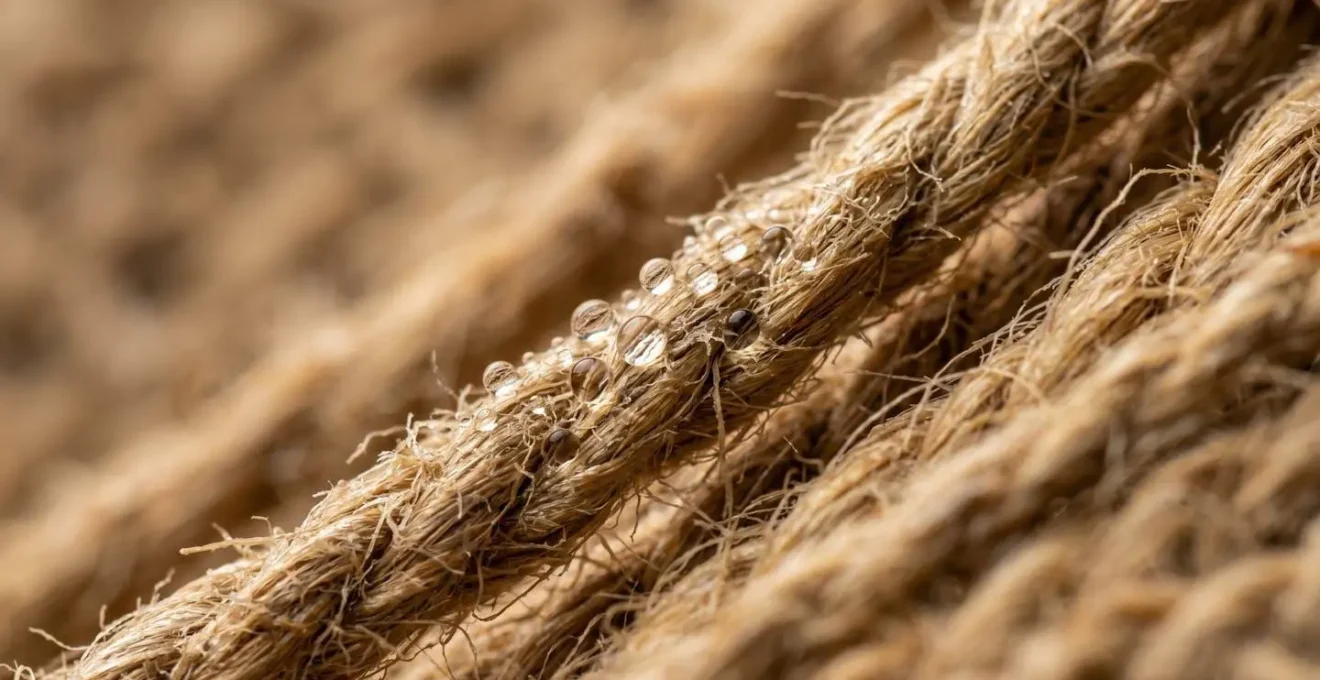
That earthy, musty smell emanating from your jute or sisal rug as the weather turns isn’t a sign that it’s dirty; it’s a sign of basic biology. Natural plant fibres like jute are incredibly popular for their rustic, eco-friendly aesthetic, but they have a crucial characteristic that is often overlooked in the damp UK climate: they are hygroscopic. This means they readily absorb moisture from the air, a feature that becomes a problem in a high-humidity space like a conservatory during a cool, damp autumn.
As the temperature drops outside, the air inside a conservatory can hold a surprising amount of moisture. This humid environment is the perfect breeding ground for mould and mildew. Your jute rug acts like a sponge, and jute is hygroscopic and inherently absorbent, which makes it particularly susceptible to developing that tell-tale musty odour. The very structure of the fibre that gives it a beautiful, natural texture is what traps this moisture.
To combat this, the solution is environmental control. A good quality desiccant dehumidifier (brands like Meaco are excellent for the lower temperatures in UK conservatories) set to maintain a relative humidity of 50-55% is the most effective fix. This prevents the rug from absorbing excess moisture in the first place. Additionally, always use a breathable rug pad to encourage airflow beneath the rug, preventing moisture from getting trapped against a cold floor. If the battle is constant, consider polypropylene indoor/outdoor rugs that mimic the natural look without the moisture issue.
How to Remove Red Wine From a Wool Rug Without Calling a £150 Cleaner?
The red wine spill is a classic home-ownership horror story. The panic, the frantic dabbing, the sinking feeling as the stain seems to set in. With wool rugs, the stakes are even higher due to their cost and natural composition. However, wool has a secret weapon: lanolin and a unique protein structure that make it surprisingly stain-resistant, *if* you act quickly and correctly. The key is to work with the fibre, not against it.
The a leading UK rug cleaning expert, explains the science simply. As Art of Clean Rug Cleaning Cambridge notes in their guide, « Red Wine on a Wool Rug: What Happens Next? », the issue is chemistry:
Red wine contains tannins… the same pigments that make it stain your teeth. On wool, those tannins can bond deeply unless they’re broken down safely.
– Art of Clean Rug Cleaning Cambridge, Red Wine on a Wool Rug: What Happens Next?
Breaking those bonds without damaging the delicate wool fibre is a race against the clock. Aggressive rubbing will permanently embed the stain, and hot water can set it like a dye. The correct response is a methodical, calm process focused on lifting and neutralizing. Having a plan ready before disaster strikes is the difference between a minor incident and a major expense. Keep a small « emergency kit » with a clean white cloth, salt, and white vinegar handy.
Your First 60 Seconds: Emergency Red Wine Stain Protocol
- Blot (0-15 seconds): Immediately blot the spill with a clean, dry white cloth or paper towel. Do not rub. Your goal is to absorb as much liquid as possible. Rubbing pushes the tannins deeper into the wool’s protein fibres.
- Dilute (15-30 seconds): Gently apply a small amount of cold water or carbonated water (soda water) to the stain. Cold water helps dissolve the tannins without setting them.
- Lift (30-45 seconds): Cover the damp area generously with table salt. The salt will draw the wine out of the wool fibres, absorbing the colour as it works. Leave it for several minutes until it looks dry or discoloured, then vacuum it up.
- Neutralise (45-60 seconds): Dab the area with a solution of equal parts white vinegar and water. This helps to neutralize the stain. Always blot, never scrub. Follow up by blotting with a clean cloth dampened with plain water.
- Test & Dry: Always patch test any cleaning solution on an inconspicuous area first. Once the stain is gone, place a dry towel on the area and weigh it down to absorb any remaining moisture, helping the rug dry flat.
Hand-Knotted or Power-Loomed: Which Rug Style Lasts 25 Years in a Hallway?
A hallway is the most demanding environment for any rug. It’s a narrow channel of relentless foot traffic, a landing strip for muddy boots, and the first impression for any visitor. When choosing a rug for this space, the question isn’t about pattern, but about structural endurance. The primary distinction comes down to how the rug is made: hand-knotted versus power-loomed (or machine-made).
A power-loomed rug is created by a machine that punches fibres into a backing material, often held in place with latex. They are fast to produce and affordable, making them a great option for low-traffic areas or if you like to change your decor frequently. However, in a hallway, the pile can quickly crush, and the fibres can pull out as the adhesive backing degrades over time. They wear out.
A hand-knotted rug, by contrast, is a feat of engineering. Each tuft of wool is wrapped and knotted around the foundational warp and weft threads. This creates a far more secure and resilient structure. There is no glue; the rug’s integrity comes from its thousands of individual knots. This is why a quality hand-knotted rug doesn’t just wear out; it wears *in*. It develops a patina, a character that speaks to its history. This is the essence of ‘graceful ageing’.
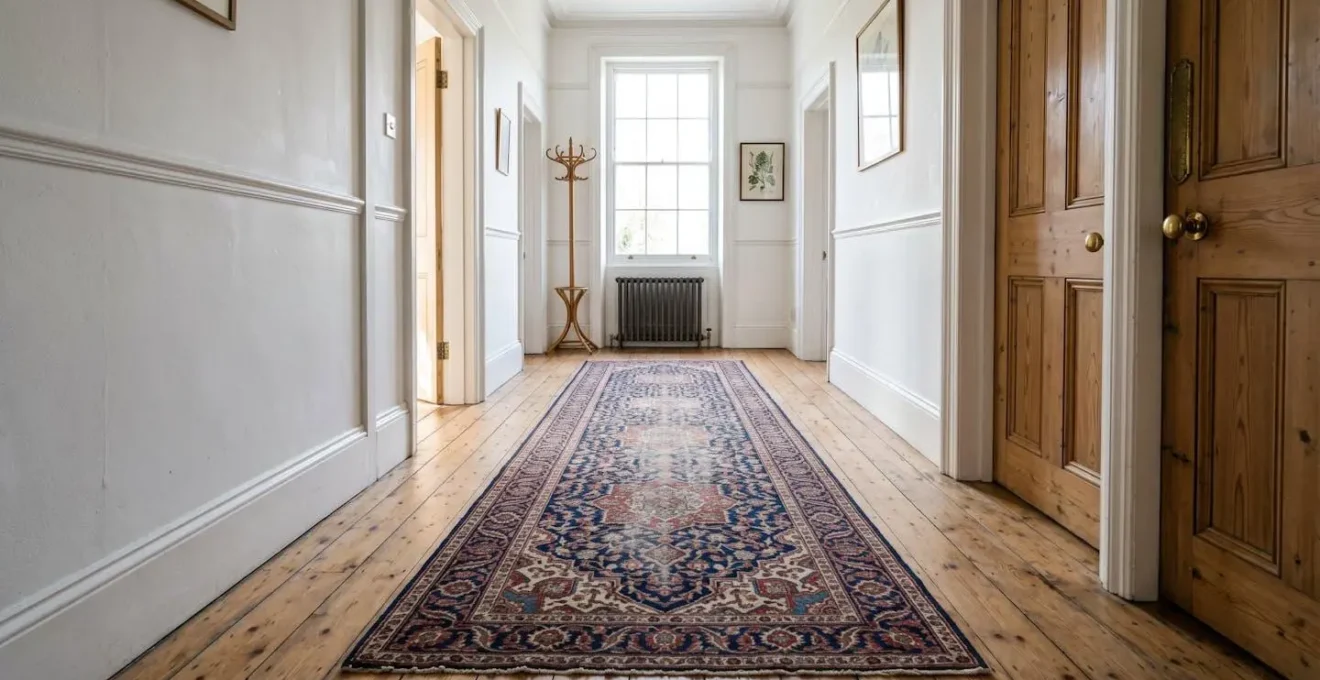
The quality and durability of a knotted rug can be quantified by its knot density, measured in Knots Per Square Inch (KPSI). While not the only factor, it’s a strong indicator of the time, skill, and material invested. A higher KPSI means a denser, more durable pile that will better resist crushing and wear. For a high-traffic hallway, you should be looking for a rug in the medium-to-good range. A rug’s quality is measurable, with knot density ranges from 25 to over 1,000 KPSI where a rating of 120-330 KPSI is considered a good, durable standard for most homes.
The Non-Slip Pad Mistake That Causes 15% of UK Home Falls Involving Rugs
While we focus on a rug’s durability against stains and traffic, its most critical safety feature is often an afterthought: its grip. A rug that slips on a hard floor is more than an annoyance; it’s a significant hazard. UK home safety data consistently shows that slips, trips, and falls are a leading cause of home accidents, and a sliding rug is a common culprit. The solution seems simple—buy a non-slip pad—but this is where a costly and dangerous mistake is made.
The critical error is assuming all rug pads are created equal. Using the wrong type of pad can not only be ineffective but can permanently damage your flooring. PVC-coated pads, for example, can react with the finish on original Victorian pine floorboards, while standard rubber pads can leave a yellow stain on luxury vinyl tiles (LVT) like Amtico or Karndean. This isn’t just an aesthetic issue; a pad that degrades or fails to grip properly is a safety failure.
Choosing the right pad is an essential part of your rug investment. It protects your floor, extends the life of your rug by absorbing impact, and most importantly, keeps your family safe. The material of the pad must be specifically matched to the type of flooring in your home. For most UK homes with hard floors, a dual-function pad made of natural felt and rubber is the gold standard. The felt side grips the rug, providing cushioning, while the natural rubber side grips the floor without causing chemical reactions.
This chart, based on guidance from UK flooring experts, outlines the correct pairings to ensure both safety and the protection of your floors. As this recent comparative analysis shows, compatibility is key.
| UK Flooring Type | Safe Rug Pad Materials | Materials to AVOID | Recommended Pad Type |
|---|---|---|---|
| Victorian Pine Floorboards (Original) | Natural rubber, Felt | PVC-coated pads (can damage wood finish) | Felt + natural rubber dual-function pad |
| Luxury Vinyl Tile (Amtico/Karndean) | Felt, Non-staining rubber | Standard rubber (can cause yellow discoloration) | Felt-based cushion pad or certified non-staining rubber |
| Modern Laminate | Felt, PVC-coated, Rubber | None (laminate is generally compatible) | Thin gripping pad for high-traffic hallways |
| Engineered Wood | Natural rubber, Felt | Plastic-based pads in humid conditions | Breathable felt + rubber combination |
| Ceramic/Porcelain Tile | Any type suitable | None (tile is non-reactive) | Thick cushion pad for comfort under living room furniture |
When Do Turkish and Moroccan Rug Prices Drop for UK Buyers?
Finding a high-quality, hand-knotted Turkish or Moroccan rug is an investment. These pieces are celebrated for their beauty, comfort, and remarkable durability, making them a top choice for family homes. Indeed, interior design professionals with extensive family home testing give Moroccan wool rugs a score of 8-10/10 for kid and pet-friendliness. But an investment doesn’t mean you have to pay the absolute top price. By understanding the UK retail calendar, you can time your purchase strategically to find significant savings.
Retail is a cyclical business driven by seasons, trade shows, and stock management. The price of a rug isn’t static; it fluctuates based on the retailer’s need to make space for new inventory. Ignoring these cycles means you could be paying a premium. The key is to buy when retailers are most motivated to clear out old stock. Here are the four key periods for UK buyers to watch:
- January Sales (Early Jan): This is the biggest and most obvious sale period. Major retailers like John Lewis and independent stores alike offer substantial discounts to clear out stock after the Christmas rush and make way for spring collections.
- Post-Domotex Window (Late Jan – Feb): Domotex, the world’s leading trade fair for floor coverings, happens in Germany in January. UK importers who attend will be looking to clear warehouse space for the new lines they’ve just ordered. This is a great time to find deals from specialist rug importers.
- Spring Transition (Late Feb – Mar): As new spring collections physically arrive in stores, there’s a final push to sell off any remaining heavier, darker autumn/winter stock, including cosy, deep-pile Moroccan rugs.
- End of Summer Clearance (Late Aug – Sep): Retailers clear out lighter, summer-themed stock in preparation for the autumn rush, when home decoration spending traditionally picks up in the UK. This is often a quieter, but still valuable, sale period.
An insider tip for UK buyers in the post-Brexit era is to prioritise purchasing from importers with stock already landed in the UK. This insulates you from volatile shipping costs and unexpected import duties, ensuring the price you see is the price you pay.
Why Does Your Velvet Cushion Show Permanent Sitting Marks After One Week?
The principles of durability we’ve explored with rugs—fibre science and construction—apply to all textiles in your home, including upholstery. A common complaint with velvet is « crushing, » where the fabric develops what look like permanent marks or shadows after only a short period of use. This isn’t a defect; it’s an inherent characteristic of any pile fabric, just like a shag rug.
Velvet is constructed with a dense, short pile, where the fibres stand upright to create its signature soft, lustrous surface. When you sit on a cushion, the pressure and heat from your body push these fibres in different directions. This is what creates the « bruising » or shading effect. Light reflects differently off the crushed fibres compared to the upright ones, creating a visible pattern. In most cases, this is temporary and a hallmark of true velvet.
The problem of *permanent* crushing happens for two reasons. First, low-quality construction, where the pile is not dense enough to support itself, causing the fibres to flop over and stay that way. Second, the fibre composition. Natural fibres like cotton or silk have less « memory » or resilience than some synthetics. A high-quality polyester or performance velvet is engineered for higher « crush recovery, » meaning the fibres are more likely to spring back to their original position. To revive a crushed velvet cushion, gentle steaming (with a handheld steamer held several inches away) and brushing with a soft brush in the direction of the pile can often relax the fibres and restore the surface.
Why Does Linen Bedding Feel Cool in Summer but Cosy in Winter?
The unique thermal properties of linen are another perfect example of « fibre science » in action. Much like we examined the hygroscopic nature of jute, understanding the physical structure of the linen fibre explains its remarkable ability to regulate temperature. It’s a quality that makes it highly prized for bedding and clothing, feeling refreshingly cool in a summer heatwave and comfortably warm on a chilly winter night.
The secret lies in the structure of the flax fibre from which linen is made. At a microscopic level, linen fibres are hollow. This structure is the key to its dual-action performance. In hot weather, the fibres are excellent at wicking moisture away from the skin. The hollow core allows air to circulate freely, creating a breathable fabric that absorbs perspiration and releases it into the air, producing a cooling effect. It’s a natural high-performance fabric.
In cold weather, the same hollow structure works as a natural insulator. It traps a layer of air within the fibres, which is then warmed by your body heat. This trapped air acts as a buffer against the cold, helping you stay warm and cosy without the bulk of other materials. This is why a linen duvet cover can feel so comfortable year-round. It’s not magic; it’s the intelligent application of a material perfectly suited to its purpose. The principle is the same as using a wool rug for its insulating properties on a cold floor—the material’s natural structure is doing the work.
Key Takeaways
- Fibre Science is Key: Understand the inherent properties of a material—is it absorbent like jute, insulating like linen, or resilient like wool?
- Construction Equals Durability: How a textile is made (e.g., hand-knotted vs. machine-made) is a better predictor of its lifespan than its surface appearance.
- Embrace Graceful Ageing: Shift your mindset from preventing any sign of wear to choosing materials that develop a beautiful patina over time.
How to Keep Velvet Sofas Looking Pristine With Pets in a UK Home?
A velvet sofa with pets might sound like a recipe for disaster, but by applying the strategic principles we’ve discussed, it can be a surprisingly practical and stylish choice. The challenge combines three elements: the pile of velvet, the wear-and-tear from pets (claws and fur), and the need for easy cleaning. Success comes from making smart choices at the point of purchase, not just during cleaning.
First, not all velvet is created equal. For a home with pets, a performance velvet or a high-quality polyester velvet is a far better choice than a delicate cotton or silk velvet. These synthetic options are engineered for durability and stain resistance. Crucially, look for a velvet with a short, dense pile and a flat weave. The tight weave makes it much harder for cat or dog claws to snag and pull the threads, a common problem with looser weaves. The short pile means there’s less material to trap fur and dander, making it significantly easier to clean.
Maintenance is about routine and the right tools. A weekly vacuum with a soft brush attachment is essential for removing surface-level fur and dust. For spills or muddy paw prints, the rules we learned for wool rugs apply: blot, don’t rub. Use a damp cloth and a mild, upholstery-safe cleaning solution. A rubber-bristled brush or a simple rubber glove, lightly dampened, is remarkably effective at gathering and lifting stubborn pet hair from the velvet’s surface. By choosing the right type of velvet and establishing a simple cleaning routine, you can absolutely enjoy the luxury of this fabric in a busy, pet-filled home.
By adopting this strategic, informed approach to selecting textiles, you empower yourself to create a home that is not only stylish and comfortable but also perfectly equipped to handle the beautiful chaos of family life.