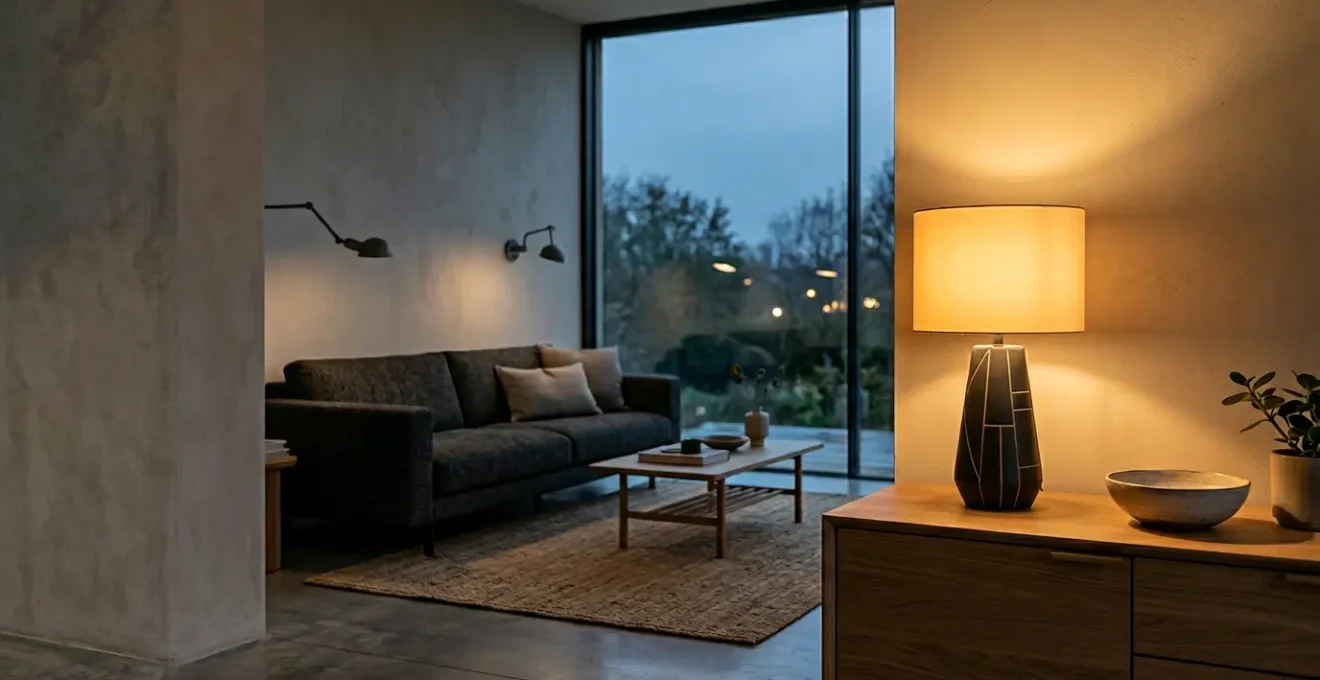
In summary:
- Your home’s lighting is a primary cause of body clock disruption, especially for those with irregular schedules.
- A strategic « light prescription »—managing spectrum, intensity, and timing—can actively realign your circadian rhythm.
- This involves using energising blue-rich light in the morning and calming, amber light in the evening.
- Automated systems and simple « light hygiene » habits can turn your home into a supportive environment for restorative sleep.
For shift workers and frequent travellers, the feeling of being perpetually out of sync is a constant battle. You try to manage sleep, but your own home might be your biggest adversary. Standard interior lighting, designed for simple visibility, often ignores a fundamental biological truth: light is the most powerful signal governing your body’s internal clock. We are told to dim lights before bed or avoid screens, but this advice barely scratches the surface of a complex, 24-hour biological process.
The conventional approach to lighting is purely aesthetic. But what if we treated light not as decoration, but as a form of medicine for our circadian rhythm? The key isn’t just to make a room look « warm » or « cool, » but to deliver a precise ‘light prescription’—the right spectrum, at the right intensity, at the right time—to actively support your body’s natural cycle of sleep and wakefulness. This is the core of chronobiology-informed design: using environmental entrainment to combat the physiological stress of a demanding schedule.
This guide moves beyond generic tips. We will dissect the science of how light impacts your hormones, explore how to create a dynamic lighting system that automates your « spectral diet, » and provide actionable protocols to reclaim control over your environment. We’ll examine specific technologies, from bulbs to dimmers, and establish routines that protect your investment in both smart lighting and your own health. It’s time to stop fighting your body clock and start designing a home that works with it.
This article provides a complete framework for transforming your home lighting. Explore the sections below to understand the science, choose the right tools, and implement a strategy that supports your well-being around the clock.
Summary: A Strategic Guide to Circadian Lighting
- Why Does Your Bright Bathroom Light Sabotage Your Sleep Routine?
- How to Choose a Bulb That Shifts From Energising Blue to Relaxing Amber Automatically?
- Philips Hue or LIFX: Which System Offers Better Circadian Automation in the UK?
- The Tablet-in-Bed Mistake That Overrides Your Circadian Lighting Investment
- When Should You Adjust Morning Light Settings as UK Daylight Hours Change?
- When Is the Best Time of Day to Spend 15 Minutes in Your Garden for Stress Relief?
- Why Does Warm Light at 9 PM Help You Sleep Better Than Cool White?
- How to Set Up Dimmers That Automatically match Your Morning and Evening Routines?
Why Does Your Bright Bathroom Light Sabotage Your Sleep Routine?
Your wind-down routine may be perfect—a warm bath, no screens, a good book—but it can all be undone by a single, final action: flicking on a standard bathroom light. Most bathrooms are equipped with bright, cool-white lighting designed for high-visibility tasks like applying makeup or shaving. While effective for the morning, this type of light is a potent circadian disruptor at night. It bombards your eyes with blue-spectrum light, sending a powerful « daytime » signal to your brain precisely when it should be preparing for sleep by producing melatonin.
The physiological impact is significant and measurable. Your brain interprets this blast of bright light as morning sun, triggering a suppression of the sleep-hormone melatonin. In fact, research published in the International Journal of Endocrinology demonstrates that exposure to daylight-white bathroom light can slash evening melatonin levels by nearly 40% compared to exposure to warmer, yellow light. This single environmental cue effectively tells your body, « It’s not time to sleep yet, » delaying sleep onset and potentially reducing sleep quality.
For a shift worker, whose body clock is already under strain, this is a critical point of failure in their light hygiene. To counteract this, a dual-mode lighting strategy is essential. Your bathroom needs two distinct personalities: a bright, alert mode for the morning and a gentle, sleep-promoting mode for the evening. This can be achieved through a layered approach:
- Evening Mode: Utilise low-intensity bulbs with a very warm colour temperature (under 2200K) that mimic the amber hues of a sunset.
- Night-time Mode: For middle-of-the-night visits, motion-activated LED strips under a vanity or a single low-level nightlight (under 50 lux) can provide enough light to see without waking your brain.
- Fixture Choice: Reduce glare by replacing highly reflective chrome fixtures with those in matte black, brass, or bronze finishes, which absorb more light and prevent harsh reflections.
By treating your bathroom lighting with the same seriousness as your bedroom environment, you close a major loophole in your circadian health strategy.
How to Choose a Bulb That Shifts From Energising Blue to Relaxing Amber Automatically?
The foundation of an effective circadian lighting scheme is the bulb itself. The goal is to find a light source that can replicate the sun’s natural daily progression, shifting from a bright, blue-enriched light in the morning to a dim, amber-rich light in the evening. This is where « tunable white » or « full-colour » smart bulbs become a therapeutic tool rather than a novelty. These bulbs allow you to control two key variables: brightness (intensity) and colour temperature (spectrum).
Colour temperature is measured in Kelvin (K). A lower Kelvin value (e.g., 2000K-2700K) produces a warm, amber or orange light, similar to a candle or sunset. A higher Kelvin value (e.g., 4000K-6500K) produces a cool, blue-white light that mimics midday sunlight. Your « spectral diet » involves consuming high-Kelvin light in the first half of the day to promote alertness and cortisol production, and switching exclusively to low-Kelvin light in the hours before bed to allow for melatonin production.
This paragraph introduces a complex concept. To well understand it, it is useful to visualize its principal components. The illustration below breaks down this process.
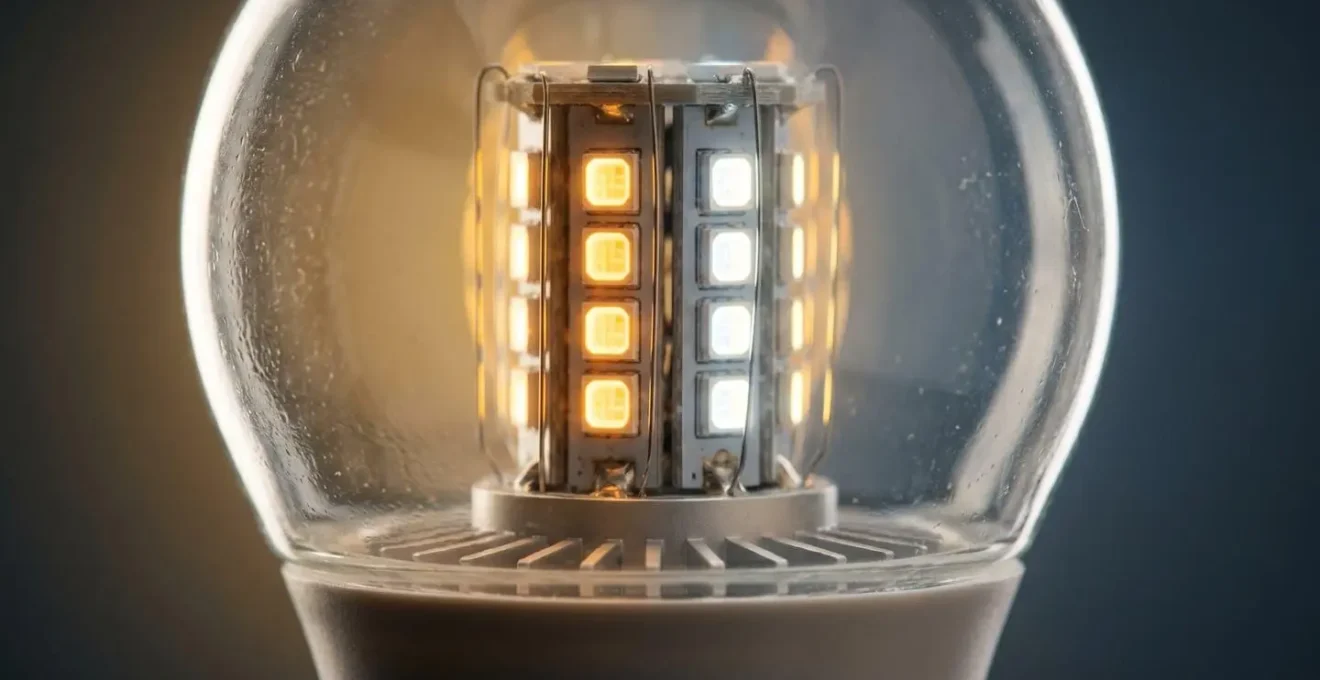
As this image illustrates, a single bulb can contain the full range needed for a healthy light prescription. The choice of spectrum is not merely aesthetic; a 2026 study in Scientific Reports found that cool white LED lamps caused a 12.3% melatonin suppression, while warm white LEDs at the same brightness caused only a 3.6% suppression. This highlights the critical importance of the amber end of the spectrum for evening light hygiene.
When selecting a bulb, look for models specifically advertised as « tunable white » or that offer a wide Kelvin range (ideally 2000K to 6500K or broader). The key is to find a system that allows for this transition to happen automatically, removing the need for manual adjustment and ensuring your environment is always aligned with your biological needs.
Investing in bulbs that can automate this spectral shift is the single most effective upgrade for aligning your home with your body clock.
Philips Hue or LIFX: Which System Offers Better Circadian Automation in the UK?
Once you’ve committed to a dynamic lighting strategy, the next step is choosing an ecosystem. For UK homes, Philips Hue and LIFX are two of the leading contenders, but they offer different approaches to automation and scalability. The best choice depends on your technical comfort, the size of your home, and your ultimate goal. Philips Hue operates on a Zigbee mesh network via a required « Bridge, » while LIFX bulbs connect directly to your home’s Wi-Fi.
This fundamental difference has major implications. The Hue Bridge creates a separate, dedicated network for your lights, which is extremely reliable and avoids congesting your Wi-Fi, making it ideal for whole-home setups with many bulbs. LIFX’s hub-free design is simpler to start with for a single room but can strain a home Wi-Fi network if you scale up to dozens of devices. For larger UK properties or those with thick stone walls, Hue’s mesh technology often provides more stable coverage.
For circadian automation, both systems offer native features. Hue has a « Natural Light » scene that automatically adjusts colour temperature and brightness throughout the day based on your location. LIFX offers a similar « Day & Dusk » feature. However, Hue’s third-party app integration is generally deeper, allowing for more granular control via platforms like Apple HomeKit or Home Assistant for those who want to build truly customized « light prescriptions. » As tech reviewers at Wirecutter have noted, LIFX excels in brightness and hub-free convenience, making it a powerful choice for targeted areas.
The following comparison breaks down the key differences to help you make an informed decision for a UK-based setup. This data is based on a recent comparative analysis of smart lighting systems.
| Feature | Philips Hue | LIFX |
|---|---|---|
| Hub Requirement | Requires Bridge (~$60) | No hub – direct Wi-Fi |
| Connectivity | Zigbee mesh (avoids Wi-Fi congestion) | Wi-Fi 2.4GHz (can congest on large networks) |
| Brightness Output | 800 lumens | 1100 lumens |
| Circadian Features | Natural Light scenes, extensive automation via app | Day & Dusk automation, simpler interface |
| Third-Party Integration | Deep integration (Home Assistant, IFTTT, HomeKit) | Good integration but less granular control |
| Bulb Ecosystem | Extensive (A19/E27, GU10 spotlights, lightstrips, filament) | Strong but fewer GU10 options for UK fittings |
| Best For | Whole-home setups (10+ bulbs), larger UK homes | Individual rooms, power users, maximum brightness |
| Scalability | Up to 150 bulbs with Bridge Pro | Limited by Wi-Fi router capacity |
Ultimately, Hue is often the more robust and scalable choice for a whole-home circadian system, while LIFX offers superior brightness and simplicity for smaller, more targeted applications.
The Tablet-in-Bed Mistake That Overrides Your Circadian Lighting Investment
You can invest hundreds of pounds in a sophisticated, automated circadian lighting system, only to completely negate its benefits with one common habit: using a tablet or smartphone in bed. The issue is one of proximity and intensity. The light from a screen held close to your face can deliver a more potent and disruptive circadian signal than the ambient lighting in the entire room. It’s a concentrated dose of the wrong kind of light at the worst possible time.
The numbers are stark. A comfortable, sleep-promoting evening room might be lit to an intensity of 20-60 lux. However, according to display technology research, a standard tablet or phone screen emits between 300 and 400 nits (a measure of luminance roughly equivalent to lux at that proximity). This creates a « local daylight » effect just inches from your retinas, sending a cascade of « wake up » signals to your brain and suppressing melatonin production, even if the rest of your room is perfectly dark or filled with warm, amber light.
While features like Apple’s Night Shift or Android’s Night Light, which warm the screen’s colour temperature, are a step in the right direction, they are an incomplete solution. They reduce the blue light component but often do not dim the screen’s intensity enough to prevent a circadian response. To truly protect your sleep, you need a disciplined « digital sunset » routine. This involves creating a buffer zone between screen time and sleep time, and actively managing the light your devices emit.
Auditing and redesigning your evening digital habits is as important as choosing the right light bulbs. The following checklist provides a framework for creating a robust digital sunset routine.
Your Action Plan: Auditing Your Digital Sunset Routine
- Points of Contact: List all light-emitting screens you typically use in the final two hours before bed (e.g., phone, tablet, laptop, TV, smart watch).
- Data Collection: For one evening, inventory your actual usage. Note the apps used (alerting social media vs. calm reading), screen brightness levels, and duration of use.
- Coherence Check: Compare your device usage against your primary goal of promoting sleep. Does scrolling a news feed or checking work emails align with winding down and reducing alertness?
- Emotional/Stimulation Audit: Categorize your screen activities. Identify high-stimulation, blue-light-heavy tasks (video games, social media) and contrast them with low-stimulation alternatives (e-ink reader, podcast, audiobook).
- Integration Plan: Establish a firm rule, such as « All backlit screens off 60 minutes before bedtime. » Replace that activity with a non-luminous alternative and use a deep-red screen filter app if screen use is unavoidable.
No lighting system can fully compensate for a bright screen held close to the face. True light hygiene requires managing both the ambient environment and your personal devices.
When Should You Adjust Morning Light Settings as UK Daylight Hours Change?
A key function of a circadian lighting system is to provide a strong « dawn signal » that anchors your body clock each morning. This signal, a gradual increase in bright, blue-enriched light, helps suppress any lingering melatonin, promotes the release of the alertness hormone cortisol, and sets a consistent start time for your internal 24-hour cycle. However, a « set it and forget it » approach doesn’t work year-round, especially in a country like the UK with dramatic seasonal variations in natural daylight.
During the British summer, the sun might rise before 5 AM, providing a powerful natural dawn signal. Your artificial lighting can be programmed to supplement this, but it may not need to be as intense. In contrast, during the deep of winter, sunrise can be after 8 AM. On these dark mornings, your artificial lighting system isn’t a supplement; it’s the primary dawn signal your body receives. A shift worker waking up at 6 AM in December is doing so in complete biological darkness without this intervention.
The goal is to maintain a consistent wake-up signal for your body, regardless of the season. This is where sunrise alarm clocks and automated lighting scenes become invaluable.
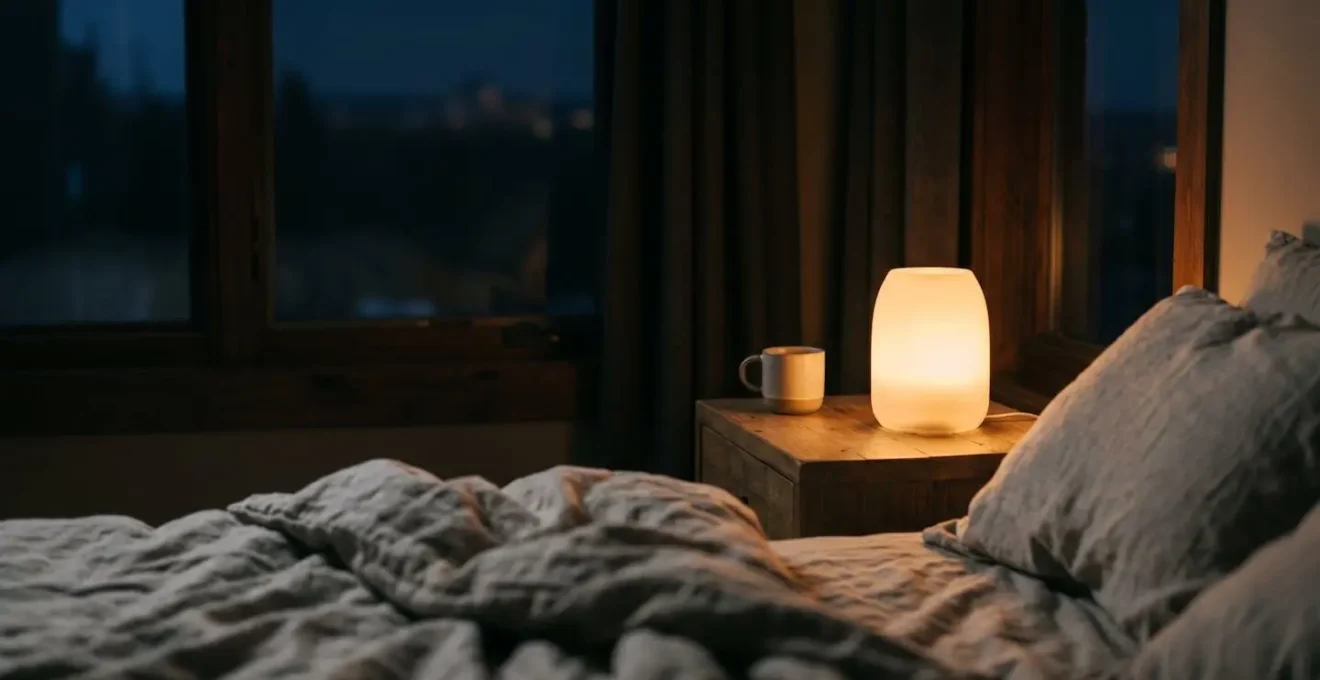
As the image suggests, these devices create an artificial dawn, gently transitioning from a very dim, warm light to a bright, cool-white light over 30-60 minutes before your alarm time. To adapt to the UK’s changing seasons, you should adjust your settings twice a year. When the clocks go back in autumn, you will likely need to increase the peak brightness of your morning light scene to compensate for the lack of natural sunlight. Conversely, when the clocks go forward in spring, you can gradually reduce the intensity as the natural dawn becomes earlier and brighter.
The principle is to ensure your body receives a consistent and powerful light « dose » within the first hour of waking. This anchors your circadian rhythm for the entire day, making it easier to fall asleep that night. The specific timing should be synced to your desired wake-up time, not the fluctuating external sunrise.
By actively managing your morning light exposure, you provide your body with the stability it craves, especially when your work schedule or the seasons create external chaos.
When Is the Best Time of Day to Spend 15 Minutes in Your Garden for Stress Relief?
While optimising indoor lighting is crucial, nothing can fully replace the power of natural sunlight. The intensity and full spectrum of outdoor light provide a circadian signal that is orders of magnitude stronger than any artificial source. For those with access to a garden, patio, or even just a balcony, short periods of outdoor exposure can be a powerful therapeutic tool for both stress relief and body clock regulation. The key, however, is timing.
The optimal time to use your garden depends on your primary goal. If your aim is to anchor your circadian rhythm, the most effective window is within the first hour of waking. Morning sunlight is rich in the blue wavelengths that are most effective at shutting down melatonin production and setting your internal clock for the day. This morning « light dosage » establishes a strong biological start to your day, which makes it easier for your indoor lighting system to maintain momentum.
If your goal is purely stress relief and mental restoration, a late afternoon session can be highly beneficial. Spending 15 minutes outdoors between 4 PM and 5 PM exposes you to the warmer, less intense light of the setting sun. This provides the restorative benefits of being in nature without delivering the strong alerting signal of morning light, which could interfere with your ability to wind down later in the evening. It serves as a gentle transition, signalling to your brain that the day is drawing to a close.
Case Study: Understanding Light Dosage on Cloudy vs. Sunny Days
The effectiveness of outdoor light exposure is highly dependent on weather, a critical factor for anyone in the UK. Outdoor light intensity is measured in lux. According to psychiatric research on light therapy, a cloudy day provides between 1,000-10,000 lux, while a bright sunny day can deliver over 50,000 lux. This has a direct impact on the required « dosage. » To achieve the same circadian-entraining effect, you might need to spend 30 minutes outside on an overcast morning to equal just 10 minutes on a bright, sunny one. This demonstrates the importance of duration when assessing your daily light exposure.
By using your outdoor space strategically, you can leverage the unparalleled power of natural light to either kick-start your day with a powerful circadian signal or wind it down with a moment of calm restoration.
Why Does Warm Light at 9 PM Help You Sleep Better Than Cool White?
The difference between feeling alert at 9 PM and feeling naturally sleepy lies in a specific group of cells in your retina and a hormone they control. The light that enters your eyes does more than just allow you to see; it communicates directly with your brain’s master clock, the suprachiasmatic nucleus (SCN). This communication happens via specialized cells called intrinsically photosensitive retinal ganglion cells (ipRGCs), which contain a light-sensitive protein called melanopsin.
Melanopsin is most sensitive to blue light, the part of the spectrum that is dominant in midday sunlight and cool-white artificial lighting. When blue light hits these cells in the evening, they send a strong signal to the SCN, which in turn instructs the pineal gland to inhibit the secretion of melatonin. Warm, amber, or red light, on the other hand, contains very little of this blue-spectrum energy and therefore has a minimal effect on melanopsin. This is the fundamental, biological reason why warm light at night is « relaxing »—it allows your brain’s natural sleep-promoting processes to occur unhindered.
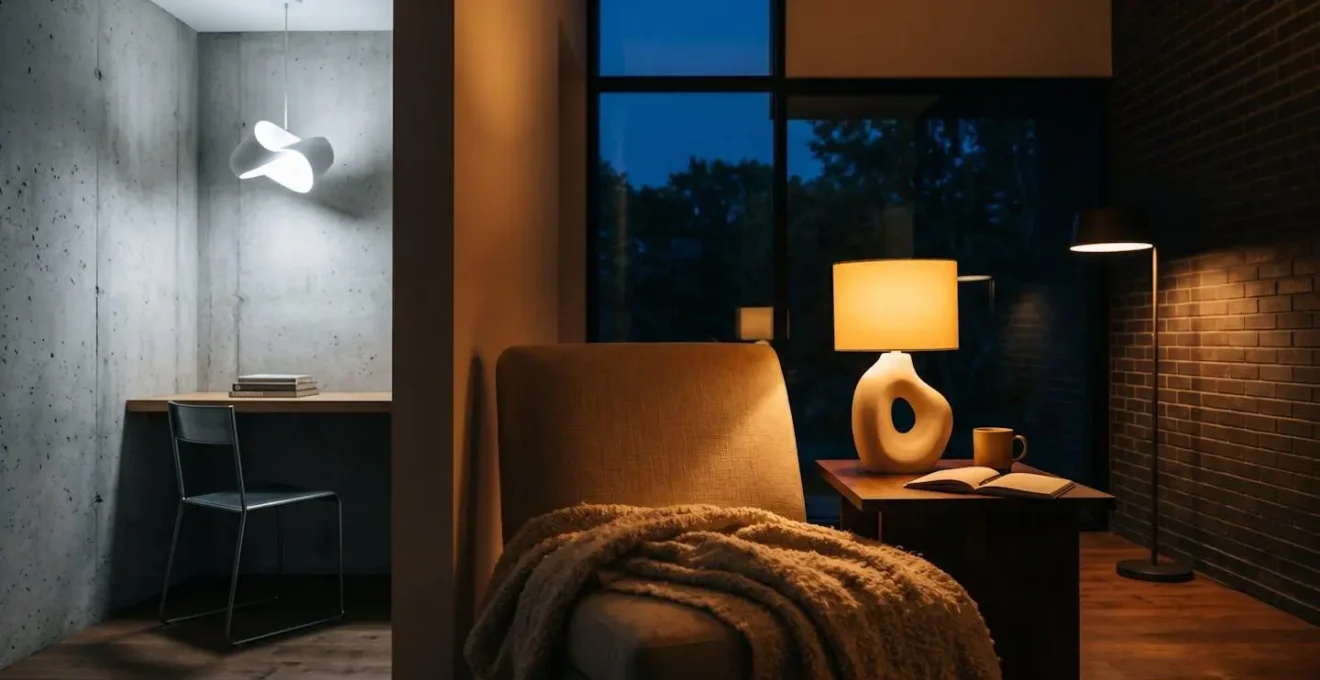
This image perfectly captures the concept of creating a « cave » of warm light in your evening environment. By switching off harsh overhead cool lights and relying on warm table and floor lamps, you are effectively removing the « stop » signal for melatonin production. The science validating this is robust. As one group of experts explains, this mechanism is central to our sleep-wake cycle.
Blue light, typically in the 460–480 nm range, is the primary stimulus for intrinsically photosensitive retinal ganglion cells (ipRGCs) containing melanopsin; when activated in the evening, they signal the suprachiasmatic nucleus (SCN), the master circadian clock, to inhibit pineal melatonin secretion.
– Frontiers in Neurology Research Team, Systematic Review on Blue-Light Blocking
Studies quantify this effect dramatically; research has shown that after just two hours of evening exposure, melatonin levels in individuals under blue light were nearly 70% lower than in those exposed to red light. Choosing warm light at 9 PM is not an aesthetic preference; it is a direct, evidence-based intervention to support your body’s essential sleep biology.
By curating a spectral diet low in blue light in the 2-3 hours before bed, you are giving your body the clear, unambiguous signal it needs to prepare for a night of restorative sleep.
Key Takeaways
- Light is a Tool: Treat your home lighting as a therapeutic system for managing your body clock, not just as decoration.
- Spectrum Over Brightness: The colour of light (blue vs. amber) has a more significant impact on your evening melatonin levels than brightness alone.
- Consistency is King: A consistent dawn and dusk signal, automated through technology, is the most effective way to anchor your circadian rhythm, especially with an irregular schedule.
How to Set Up Dimmers That Automatically match Your Morning and Evening Routines?
The ultimate goal of a circadian lighting scheme is effortless automation. You want your environment to support your body clock without requiring constant manual adjustments. Dimmers and timers are the workhorses that make this possible, allowing you to control both the intensity and, in some cases, the colour of your lights according to a pre-set daily schedule. There are two main paths to achieving this: the smart-tech route and a more accessible, budget-friendly approach.
The high-tech solution involves either smart bulbs (like Hue or LIFX) or smart dimmer switches (like those from Lutron). Smart bulbs offer individual control over colour and brightness, perfect for lamps and accent lighting. Smart dimmer switches, which replace your existing wall switches, control an entire circuit of bulbs at once. This is far more cost-effective for rooms with many fixtures, like a kitchen with recessed downlights. The switch controls the power and dimming, but you lose individual bulb colour control unless you use them with compatible tunable bulbs. The key benefit of both is programming complex scenes that automatically transition your home from a bright, 6000K environment in the morning to a dim, 2200K sanctuary at night.
However, you don’t need an expensive, internet-connected system to achieve effective automation. A highly effective « low-tech » circadian setup can be built with a few simple components:
- Plug-in Dimmer Switches: Inexpensive units that you plug into a wall outlet, and then plug your lamp into.
- Mechanical or Digital Timers: Simple outlet timers can automate the on/off schedule.
- « Dim-to-Warm » LED Bulbs: These are the crucial element. They are standard, « dumb » bulbs that automatically shift their colour temperature from a neutral white (e.g., 2700K) to a very warm amber (e.g., 2200K) as they are dimmed.
By pairing a dim-to-warm bulb with a plug-in dimmer and a timer, you can create a simple automated system. For example, you can set the timer to turn a lamp on at 7 PM with the dimmer set to 50%, providing a gentle, warm light to begin your evening wind-down. This approach delivers about 80% of the benefit of a full smart system at a fraction of the cost and complexity.
Whether you choose a sophisticated smart system or a simple timer-based approach, the act of automating your lighting removes the burden of discipline and ensures your environment is a constant, reliable partner in managing your health and well-being.