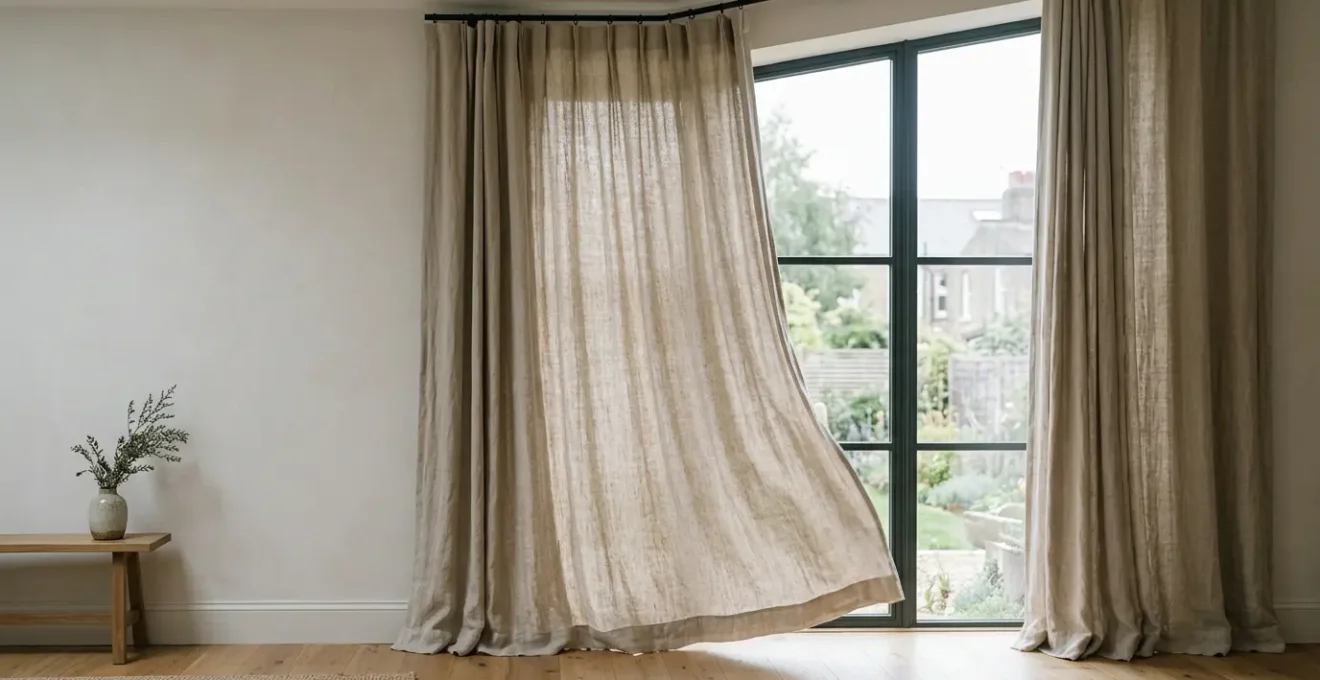
The belief that crisp linen requires constant ironing is a myth; the real secret is working with the fabric’s natural properties, not against them.
- Linen’s structure naturally regulates temperature and can be de-wrinkled with strategic use of steam and moisture.
- Durability is not about origin alone; it’s a measurable standard (the Martindale score) that should dictate a fabric’s use in your home.
- Common issues like shrinkage and musty smells are predictable reactions to heat and humidity, making them preventable with the right knowledge.
Recommendation: Embrace a low-effort care routine by understanding the science of your textiles, from fibre memory to hygroscopic behaviour, to achieve a beautiful home without the endless work.
There’s an undeniable allure to natural fibres. The relaxed, airy elegance of linen curtains, the rich lustre of a velvet sofa, the earthy texture of a jute rug—these materials bring a layer of authenticity and comfort to a home that synthetics simply cannot replicate. Yet, for many homeowners, this love affair is quickly soured by the reality of maintenance. The very mention of linen often conjures images of endless ironing, while velvet and pets seem like a recipe for disaster.
The common advice is often binary and unhelpful: either commit to a high-maintenance routine of constant steaming and pressing, or simply « embrace the wrinkles » and accept a permanently dishevelled look. This leaves little room for those who appreciate the aesthetic of crisp, well-kept furnishings but lack the time or inclination for daily upkeep. We see related trends, like using polyester blends to mimic natural looks, but they never quite capture the same feel.
But what if the key to pristine-looking natural fibres wasn’t about more effort, but more knowledge? The secret to low-effort care lies not in fighting the fabric, but in understanding its inherent science. By mastering the unique properties of each fibre—from linen’s remarkable ‘fibre memory’ to jute’s hygroscopic nature—you can achieve a beautiful, polished look that feels effortless. This isn’t about avoiding work; it’s about making your work smarter and more effective.
This guide will walk you through the essential principles of natural fibre care. We will explore why linen is such a uniquely versatile material, how to choose the right fabric for the right job, and how to solve common household problems from shrinkage to seasonal odours, empowering you to enjoy the beauty of these textiles without the burden of constant maintenance.
Contents: How to Keep Linen Furnishings Looking Crisp Without Constant Ironing
- Why Does Linen Bedding Feel Cool in Summer but Cosy in Winter?
- How to Choose Between Lightweight and Heavyweight Linen for Upholstery?
- Belgian Linen or Chinese Flax: Does Origin Affect Durability in UK Homes?
- The Hot-Wash Mistake That Shrinks Linen Curtains by 10% on First Launder
- When Do UK Textile Retailers Discount Linen Ranges by Up to 40%?
- Why Does Your Jute Rug Smell Musty Every Autumn in Your Conservatory?
- Cotton or Polyester Velvet: Which Resists Fading in a South-Facing UK Lounge?
- How to Keep Velvet Sofas Looking Pristine With Pets in a UK Home?
Why Does Linen Bedding Feel Cool in Summer but Cosy in Winter?
The magic of linen lies in its remarkable, paradoxical ability to be both the perfect summer sheet and a comforting winter layer. This isn’t just a feeling; it’s a result of the flax fibre’s unique physical structure. Unlike cotton, linen fibres are hollow. This structure is the key to its dual-purpose performance, a phenomenon explained by textile experts. As Dr. Jean-Pierre Sarto of the University of Haute Alsace, France, notes:
Linen’s hollow structure offers convective heat loss capability, which is related to a cooler subjective sensation when worn in warm conditions.
– Dr. Jean-Pierre Sarto, University of Haute Alsace, France
In summer, these hollow fibres allow air to circulate freely, wicking moisture away from the skin and promoting evaporation, which creates a cooling effect. Linen is highly hygroscopic, meaning it can absorb a significant amount of moisture before feeling damp. In fact, research shows it can absorb up to 20% of its weight in water, pulling perspiration away from your body and keeping you dry and comfortable. In winter, the same hollow fibres act as a natural insulator. They trap a layer of air warmed by your body, creating a thermal barrier that holds in heat and keeps you cosy without the bulk of heavier fabrics. This makes linen a true four-season textile, adapting to your body’s needs and the ambient temperature.
How to Choose Between Lightweight and Heavyweight Linen for Upholstery?
When selecting linen for home furnishings, the choice between a lightweight, airy weave and a dense, heavy one goes far beyond aesthetics. It’s a critical decision that impacts the longevity and performance of the piece. A common mistake is choosing a beautiful, delicate linen for a high-traffic item like a family sofa, only to see it wear out in a fraction of the time expected. The key to making the right choice is understanding a crucial industry metric: the Martindale score. This test measures a fabric’s resistance to abrasion by rubbing it with a worsted wool cloth until signs of wear appear. The resulting score is a reliable indicator of its durability.
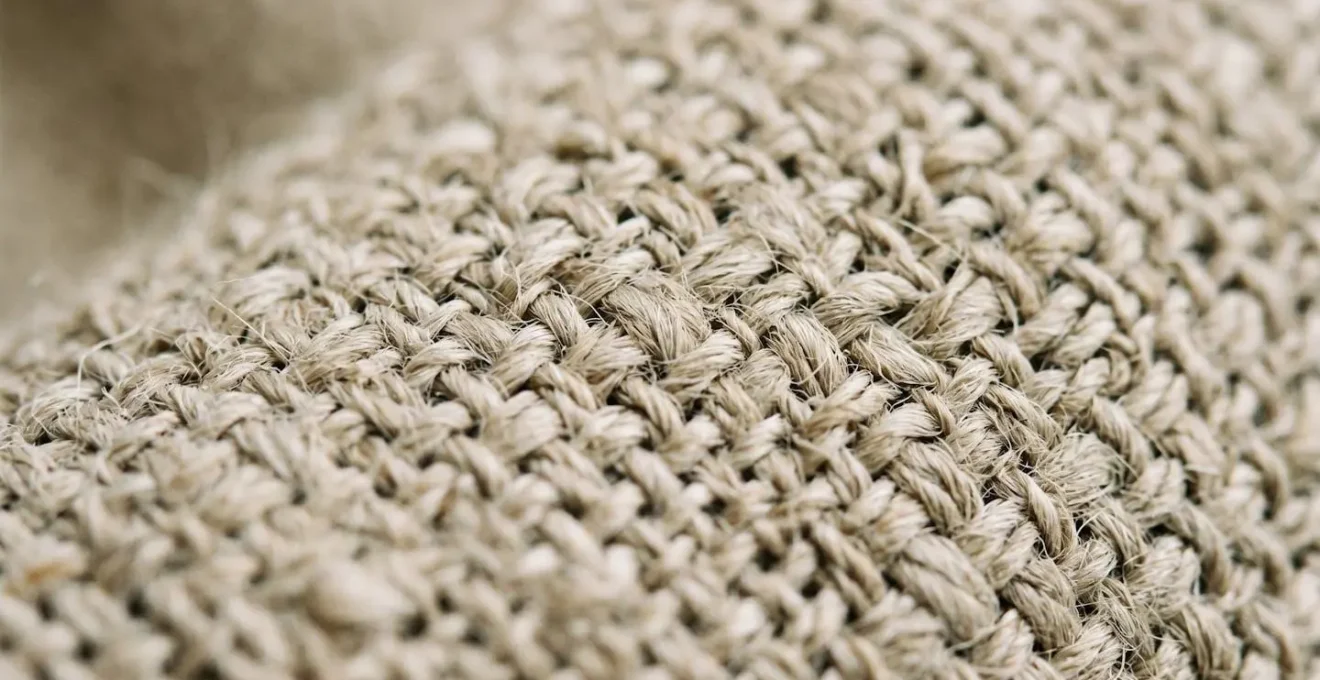
For UK homes, the Martindale score provides a clear guide. A fabric with a score under 10,000 is purely decorative, suitable for items that won’t be handled much, like scatter cushions or blinds. For a frequently used family sofa, you should be looking for a score of 25,000 or higher. This ensures the fabric can withstand the daily rigours of family life. Understanding this objective measure empowers you to choose not just with your eyes, but with the confidence that your investment will last.
This table, based on guidelines from UK fabric specialists, breaks down the scores and their ideal applications:
| Martindale Score | Suitability | UK Home Application |
|---|---|---|
| Under 10,000 | Decorative/Non-upholstery | Scatter cushions, throws, curtains, blinds |
| 10,000-15,000 | Light domestic upholstery | Bedroom armchairs, dining room chairs |
| 15,000-25,000 | General domestic upholstery | Family sofas, everyday armchairs |
| 25,000-30,000 | Heavy domestic/Light contract | High-traffic family sofa, recliner chairs |
| 30,000+ | Contract upholstery | Commercial settings, public spaces |
Belgian Linen or Chinese Flax: Does Origin Affect Durability in UK Homes?
The debate around fabric origin is often clouded by marketing. When it comes to linen, terms like « Belgian » are frequently used as a shorthand for quality, but does the location where the flax was grown or woven truly impact its durability in a UK home? The answer is nuanced. While high-quality flax can be grown in various regions, including France, the Netherlands, and parts of China, the processing and weaving standards are what truly define the final fabric’s quality and longevity. This is where certifications become more important than geographical labels alone.
A country of origin can be a proxy for a certain tradition of quality, but without a clear standard, it remains just a label. The ‘Belgian Linen’ trademark, for example, is not just about location; it’s a guarantee of a specific set of production standards that directly contribute to the fabric’s performance. It represents a system of accountability that ensures consistency and quality from field to fabric, offering peace of mind that a generic « linen » tag cannot.
Case Study: The Belgian Linen Certification Standard
The trust placed in Belgian linen is built on a rigorous certification system. According to the official guidelines from the Belgian Linen & Flax Association, for a fabric to carry the trademark, it must be woven in a Belgian mill. Furthermore, a crucial rule states that at least 85% of the fabric’s weight must come from flax grown within the European Union, a region renowned for its ideal flax-growing climate and long-standing expertise. This system provides complete traceability through unique ID numbers, allowing consumers to verify the origin and authenticity of their fabric. This protects against the widespread market practice of mislabelling lower-quality linens, ensuring that when you invest in certified Belgian Linen, you are investing in proven standards of quality and durability.
Ultimately, while excellent flax can come from many places, a trusted certification provides a tangible assurance of quality that a simple country name cannot. For the discerning UK homeowner, seeking out these certified fabrics is the surest way to guarantee durability.
The Hot-Wash Mistake That Shrinks Linen Curtains by 10% on First Launder
It’s a homeowner’s nightmare: you wash your beautiful new linen curtains for the first time, only to re-hang them and find they are now several inches too short. This isn’t bad luck; it’s a predictable reaction of natural flax fibres to heat and agitation. Washing linen in hot water causes the fibres to contract and the weave to tighten, a process that can be irreversible if not handled correctly. Industry research confirms that linen curtains can shrink by a startling 3% to 10% on the first hot wash. For a floor-length curtain of 2.5 metres, that could mean losing up to 25cm in length.
The key to prevention is simple: always wash linen in cool or lukewarm water (30°C max) on a gentle cycle. If the damage is already done, don’t despair. The same « fibre memory » that causes linen to wrinkle and shrink can also be used to your advantage to recover some of the lost length. The fibres can be gently coaxed back into a more relaxed state while wet. It requires patience, but it can save your curtains from the scrap heap. This process involves carefully re-hydrating and stretching the fibres before they dry, effectively « resetting » them to their original length.
Action Plan: How to Un-shrink Linen Curtains
- Relax the Fibres: Fill a basin or tub with lukewarm water and a small amount of mild detergent. Submerge the shrunken curtains and allow them to soak for at least 15-20 minutes. This rehydrates the fibres and makes them pliable.
- Gently Stretch: While the curtains are still wet and submerged, begin gently stretching the fabric. Work along the length and width, pulling carefully on the edges. The goal is to encourage the weave to loosen, not to tear the fabric.
- Block and Dry: Lay the curtains flat on a large, clean, dry towel (or several). Carefully shape them, pulling them to their desired dimensions. Use heavy, non-staining objects or pins (if on a blockable surface) to hold the edges in place as they dry, maintaining gentle tension.
- Check and Adjust: As the curtains dry, check on them every hour or so. The fibres may try to contract again, so you may need to readjust the weights or gently re-stretch certain areas to ensure even drying and stretching.
- Finish with Steam: When the curtains are almost dry but still slightly damp, use a steam iron on a medium setting. Iron from the centre outwards, gently pulling the fabric as you go. The combination of heat, moisture, and gentle tension will help relax the last of the contracted fibres and reclaim the final inches of length.
When Do UK Textile Retailers Discount Linen Ranges by Up to 40%?
Timing is everything when it comes to securing a bargain on high-quality linen furnishings in the UK. While linen is a year-round fabric, it is heavily marketed as a « summer » textile, associated with light, airy interiors. This seasonal marketing cycle creates predictable opportunities for savvy shoppers to find significant discounts. Retailers are often looking to clear out their « summer » stock to make way for richer, heavier autumn and winter collections.
The first and most reliable window for linen discounts is at the end of the summer season. Look for sales to begin in late August and run through September. Retailers are keen to avoid holding onto stock of light-coloured linen bedding, curtains, and upholstery until the following year. This is often the best time to find discounts of 30-40% on a wide range of items. The second major opportunity comes with the traditional post-Christmas and January sales. As stores clear out old inventory to make way for the new year’s collections, last season’s linen ranges are often included in the markdowns.
Beyond these two main periods, it’s also worth keeping an eye on major retail events like Black Friday in November. While not traditionally a « white sale » period, the competitive nature of this event means home furnishing retailers often include popular lines like linen in their promotional offers to drive traffic. By understanding these key moments in the UK retail calendar, you can plan your purchase and invest in high-quality linen without paying the premium price.
Why Does Your Jute Rug Smell Musty Every Autumn in Your Conservatory?
The familiar, earthy smell of a jute rug can be one of its charms, but when it veers into a persistent, musty odour, it’s a sign of a common problem, especially in UK conservatories. The culprit isn’t dirt, but moisture. Jute, like linen, is a highly hygroscopic natural fibre. This means it acts like a natural sponge, readily absorbing and releasing moisture from the air. A conservatory is an environment with dramatic fluctuations in temperature and humidity, creating the perfect storm for this issue.
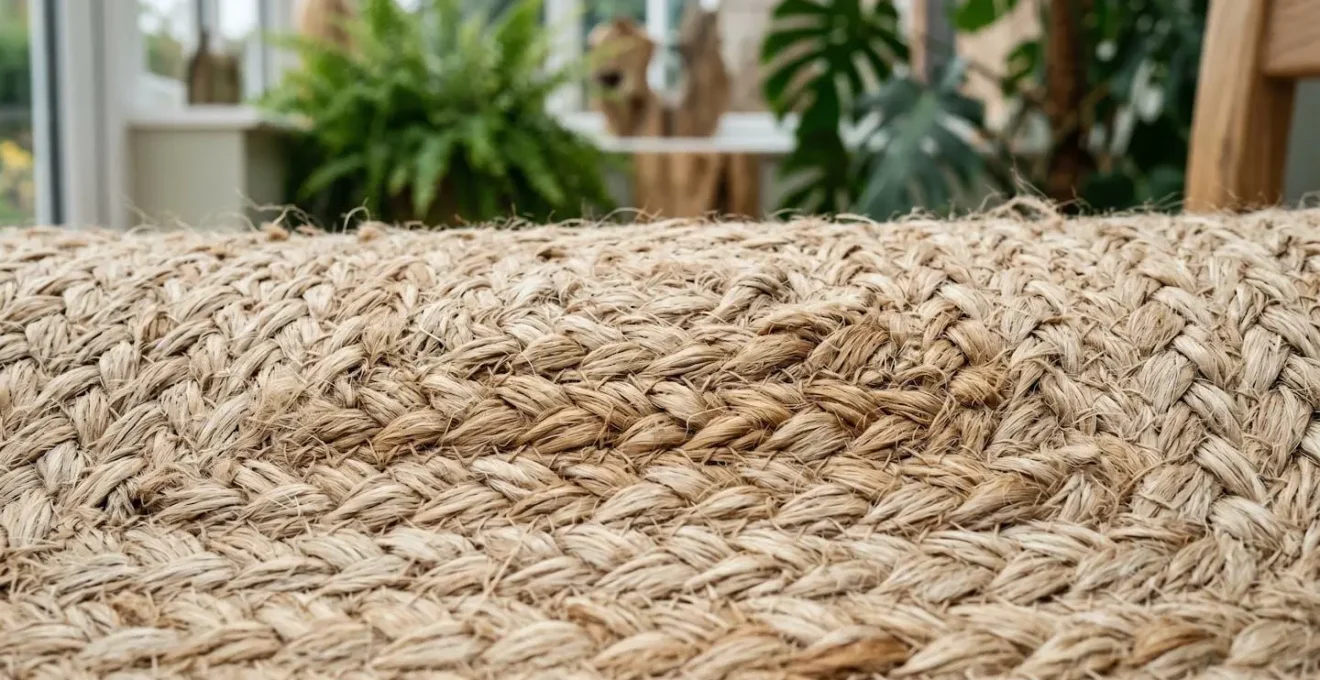
During a warm, sunny autumn day, the air in your conservatory heats up and can hold a lot of moisture. The jute rug absorbs this airborne water. As evening falls and the temperature plummets, the air cools and its ability to hold moisture drops, leading to condensation on windows and a rise in relative humidity. The jute rug, saturated with the day’s moisture and now sitting in a cool, damp environment, releases that characteristic musty smell of damp plant fibres. It’s the same principle that makes a damp towel smell if left in a gym bag.
The solution isn’t to aggressively clean the rug, which can often make the problem worse by adding more moisture. Instead, the focus should be on managing the humidity of the environment. Improving ventilation by opening windows during the day, even on cooler days, can help expel moist air. For persistent issues, using a dehumidifier in the conservatory during the autumn months can make a dramatic difference. It removes excess moisture from the air, preventing the jute from becoming saturated in the first place and keeping that musty smell at bay.
Cotton or Polyester Velvet: Which Resists Fading in a South-Facing UK Lounge?
A south-facing lounge in the UK is a coveted feature, bathing the room in natural light throughout the day. However, this abundance of sunlight comes with a significant downside for interior textiles: ultraviolet (UV) radiation, which is the primary cause of fabric fading. When choosing a velvet for a sofa or curtains in such a room, the choice between natural cotton and synthetic polyester is critical, as their resistance to fading is dramatically different.
Cotton velvet, with its deep, matte lustre and soft feel, is a beautiful choice but is highly susceptible to sun damage. As a natural fibre, its colour dyes are more vulnerable to being broken down by UV rays. In a consistently sunny, south-facing room, you can expect to see noticeable fading on cotton velvet in a relatively short period. In contrast, polyester velvet is significantly more colourfast. As a synthetic polymer, its fibres are engineered to be more resilient, and the dyes used are often more stable and resistant to UV degradation.
The difference in longevity is stark. According to textile durability studies, you might see significant fading in as little as 2-3 years for cotton velvet in a bright, south-facing room, whereas a good quality, UV-treated polyester velvet could retain its colour for 5-7 years or more under the same conditions. While some may prefer the feel of natural cotton, for a sun-drenched space where longevity and colour preservation are priorities, polyester velvet is the clear practical winner for resisting the bleaching effects of the sun.
Key Takeaways
- The secret to crisp linen isn’t the iron, but strategic use of steam and moisture while the fabric is damp to relax the fibres.
- For upholstery, fabric durability is not subjective; use the Martindale score to match the fabric’s resilience to the item’s intended use.
- Many natural fibre issues, like musty smells in jute, are caused by humidity, not dirt. Manage the environment, not just the object.
How to Keep Velvet Sofas Looking Pristine With Pets in a UK Home?
The idea of a luxurious velvet sofa co-existing peacefully with pets might seem like a fantasy to many UK homeowners. Visions of pet hair embedded in the pile, claw marks, and muddy paw prints are enough to put anyone off. However, with the right type of velvet and a simple, low-effort maintenance routine, it’s entirely achievable. Modern polyester velvets, particularly those with a short, dense pile, are surprisingly resilient and easy to clean. Unlike natural fibres, the synthetic pile doesn’t trap hair as readily and is less absorbent, making stains easier to lift.
The key to success is not daily, intensive cleaning, but having a small « first-aid kit » of tools ready for quick, targeted maintenance. A weekly once-over can prevent the build-up of hair and dirt that dulls the fabric’s lustre, keeping your sofa looking pristine with minimal fuss. The goal is to address small issues before they become big problems. For example, brushing the pile regularly prevents pressure marks and keeps the fabric looking uniform and rich in colour.
Here is a simple but effective first-aid kit for any velvet-owning pet lover:
- The Right Brush: A rubber brush or glove is far more effective than a standard lint roller. The static generated by the rubber effortlessly lifts and collects pet hair from the velvet pile.
- The Pull & Pill Remover: A fabric shaver is an essential tool for safely removing any minor pilling or pulls caused by accidental clawing, without snagging or damaging the weave.
- The Spot-Cleaning Solution: Keep a spray bottle with a simple DIY solution of lukewarm water, a few drops of white vinegar, and a single drop of washing-up liquid. This is perfect for blotting out fresh muddy paw prints or other light stains before they set.
- The Routine: A weekly ‘plumping and brushing’ routine helps keep the pile uniform and prevents pressure marks. A monthly light vacuum with an upholstery attachment will remove the deeper dander and dust.
By adopting this simple, proactive approach, you can easily maintain the beauty of a velvet sofa, proving that pets and pristine furniture can indeed go hand-in-hand.
Start applying these fabric-first principles today. By understanding the science of the materials in your home, you can spend less time maintaining your furnishings and more time loving the beautiful, effortless space you’ve created.