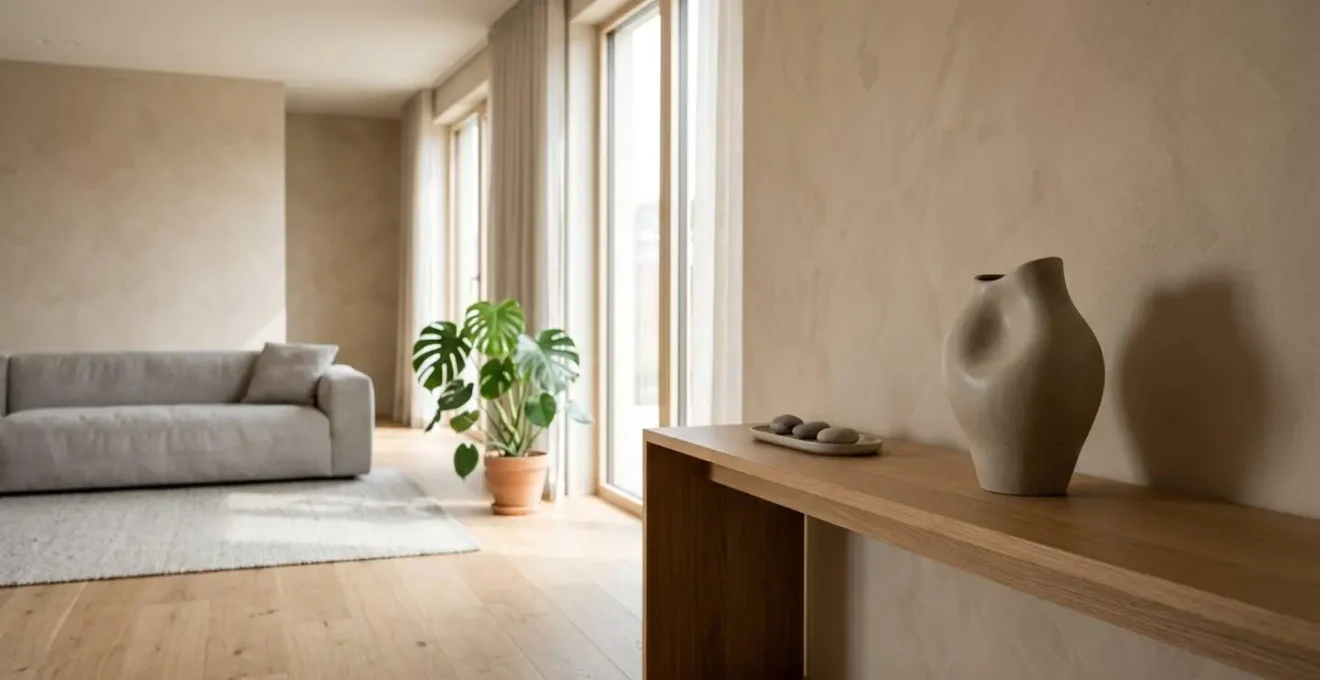
The power of a room lies not in the quantity of its objects, but in the narrative quality of a single, well-chosen hero piece.
- Prioritize an object’s ‘visual weight’ and material story over its mere size or color.
- Choose artisan-made, archetypal forms over mass-produced trends for enduring value and a richer narrative.
Recommendation: Treat your selection as an act of curation, using negative space and purposeful placement to elevate your chosen object into a work of art.
For the minimalist homeowner, the living room often presents a paradox. It is furnished, functional, and uncluttered, yet it can feel strangely incomplete, lacking a central soul or a point of gravity. The conventional response is to add more: more cushions, more small ornaments, another lamp. This approach, however, often leads to a collection of disconnected items rather than a cohesive statement. The search for that single, impactful piece—the one object that can anchor the entire narrative of the space—becomes a frustrating exercise in trial and error.
The common advice often misses the mark. We are told to « go big, » to « match the color scheme, » or simply to « buy what you love. » While well-intentioned, these guidelines are superficial. They treat the object as mere filler or accessory. But what if the process was reframed entirely? What if selecting a defining object was not an act of decorating, but an act of curation? This shift in perspective is the key to unlocking a room’s true potential. It’s about understanding that a single piece can command a space not through its size, but through its presence, its story, and its dialogue with the environment around it.
This guide moves beyond surface-level tips to explore the core principles of spatial curation. We will dissect the concept of visual weight, explore the power of material narrative, and provide a framework for choosing a piece with timeless appeal. By treating your home as a gallery and yourself as its curator, you can find the one object that doesn’t just occupy space, but truly defines it.
To navigate this curatorial journey, this article is structured to build your expertise step-by-step. The following sections will guide you through the essential considerations for selecting a piece that resonates with meaning and power.
Contents: How to Curate a Defining Object for Your Home
- Why Does Your Large Sculpture Overwhelm the Console While Your Small Vase Disappears?
- How to Match a Decorative Bowl to Your Room’s Metal, Wood and Textile Palette?
- High-Street Ornament or Craft-Fair Ceramic: Which Tells a Better Story?
- The Pampas Grass Trap That Dates Your Interior Within 18 Months
- When Do UK Artisan Markets Offer the Best Selection of Unique Decorative Pieces?
- How to Choose One Hero Furniture Piece That Anchors Your Entire Ground Floor?
- Why Does Your Designer Chair Look Cramped Despite a Large Living Room?
- How to Balance a Sculptural Coffee Table With Functional Seating in 20 m²?
Why Does Your Large Sculpture Overwhelm the Console While Your Small Vase Disappears?
The answer lies in a principle far more nuanced than simple size: visual weight. This is the perceived heaviness of an object, determined not just by its dimensions but by its color, texture, and form. A large, light-colored, smooth sculpture might feel lighter than a small, dark, and densely textured ceramic piece. The large sculpture overwhelms because its visual weight is disproportionate to the supporting console, creating an imbalance. Conversely, the small vase disappears because it lacks the visual density to command attention in the surrounding space, or what a curator would call ‘negative space’.
This macro-photograph of a ceramic surface reveals the components of visual weight. The way light pools in the glaze, the variation in color, and the tactile density all contribute to a sense of substance that the eye perceives as ‘heavy’ and significant, regardless of the object’s overall size.

Understanding this concept is the first step in curation. Instead of asking « Is it big enough? », you should ask « Does it have enough presence? ». As designer Maggie Smith notes, successful composition often requires a bold approach to this very idea. In the publication Livingetc, she advises on a core tenet of composition:
The perfect formula involves embracing negative space
– Maggie Smith, Livingetc – Visual Weight in Interior Design
A successful hero piece doesn’t just fill a void; it activates the emptiness around it. By selecting an object with appropriate visual weight, you allow the negative space to become part of the composition, giving the object room to breathe and amplifying its impact. The goal is a dynamic equilibrium, not a battle for dominance.
How to Match a Decorative Bowl to Your Room’s Metal, Wood and Textile Palette?
A curator does not ‘match’; a curator ‘harmonizes’. The goal is not to find a decorative bowl in the exact same shade as your cushions, but to select a piece that enters into a sophisticated dialogue with the existing material story of your room. This means looking beyond color to consider texture, finish, and temperature. Think of your room’s palette as a collection of notes—the warm grain of oak, the cool sheen of brushed chrome, the soft weave of a linen sofa. Your hero object should be a complementary chord, not just a repeated note.
The key is to create material resonance rather than a perfect replica. If your room features warm woods, consider a ceramic piece with an earthy, matte glaze. If your space is defined by cool metals and glass, a sculptural object with a high-gloss or reflective finish can create a beautiful echo. This approach creates depth and prevents the space from feeling flat or one-dimensional. The process of achieving this harmony is both an art and a science, as demonstrated by leading design firms.
Case Study: Studio Piet Boon Material Palette Integration Process
To ensure a cohesive material story, the specialists at Studio Piet Boon employ a rigorous, hands-on methodology. According to an insight into their creative process, their team builds physical palettes on large tables under specialized lighting that mimics natural daylight. They then physically carry these sample boards through different areas of their studio to observe how varying light conditions affect the relationships between materials. Their philosophy emphasizes echoing finishes rather than exact matching. By combining diverse textures like raw wood, smooth plaster, and natural stone all within the same color family, they achieve profound depth. This process extends to the smallest details, testing how architectural hardware in black or stainless steel interacts with the broader palette, ensuring every element, from door handles to a single decorative object, contributes to a unified narrative.
This professional approach highlights a crucial takeaway for the homeowner: test your potential object in your own space. Observe it in the morning light and under artificial light at night. See how its material interacts with the wood of your floor, the metal of your lamps, and the textiles on your furniture. The right piece will feel like it belongs, not because it blends in, but because it enriches everything around it.
High-Street Ornament or Craft-Fair Ceramic: Which Tells a Better Story?
A mass-produced ornament from a high-street store tells a story of trends, global supply chains, and efficient manufacturing. An artisan ceramic tells a story of an individual, a specific place, a particular skill, and a singular vision. For a minimalist seeking a defining object, the choice is clear. The power of a hero piece lies in its ability to be a repository of meaning. A unique, handcrafted object brings a human element and a sense of provenance into a space that a factory-made item simply cannot replicate.
This isn’t merely a romantic notion; it reflects a significant shift in consumer and market values. The demand for objects with a soul is growing, with a recent analysis confirming that the market is responding to this desire for authenticity. A report from Joyye projects a significant rise in the value of the artisan ceramics market, indicating that consumers are increasingly investing in pieces with character and a traceable origin, with projections expecting it to reach $14.68 billion by 2029.
Choosing an artisan piece is the first step in curating your home’s collection. It becomes a conversation starter. You can talk about the maker, the studio where it was created, or the technique used in its firing. This narrative layer adds immense value, transforming the object from mere ‘decor’ into a piece of personal significance. As industry analysts have noted, this narrative is becoming central to an object’s perceived value.
Storytelling, visual merchandising, and artist history are becoming critical elements of market positioning
– Meta Stat Insight, Decorative Pottery Ceramics Market Analysis 2032
When you acquire a piece from a craft fair, a graduate show, or directly from a maker’s studio, you are not just buying an object. You are supporting an artist, investing in a skill, and acquiring a story. This is what ultimately gives the piece its power to define a room.
The Pampas Grass Trap That Dates Your Interior Within 18 Months
Pampas grass, the « live, laugh, love » sign of the 2020s, is a perfect example of a decorative trend. It explodes in popularity, saturates social media feeds, and then fades into a signifier of a specific, now-passed moment. A true hero object must transcend trends to achieve timelessness. It should look as relevant in ten years as it does today. This quality is not accidental; it is a result of deliberate choices rooted in form, materiality, and versatility.
Instead of chasing the latest fad, a curator looks for objects with an enduring quality. This often means returning to archetypal forms—the simple vessel, the perfect sphere, the classic obelisk. These shapes have resonated with humanity for centuries and carry an intrinsic sense of stability and grace. A modern interpretation of a classic form will always have more staying power than a novelty item with no historical precedent. The goal is to find an object that feels both contemporary and ancient at the same time, a piece that has a quiet, confident presence.
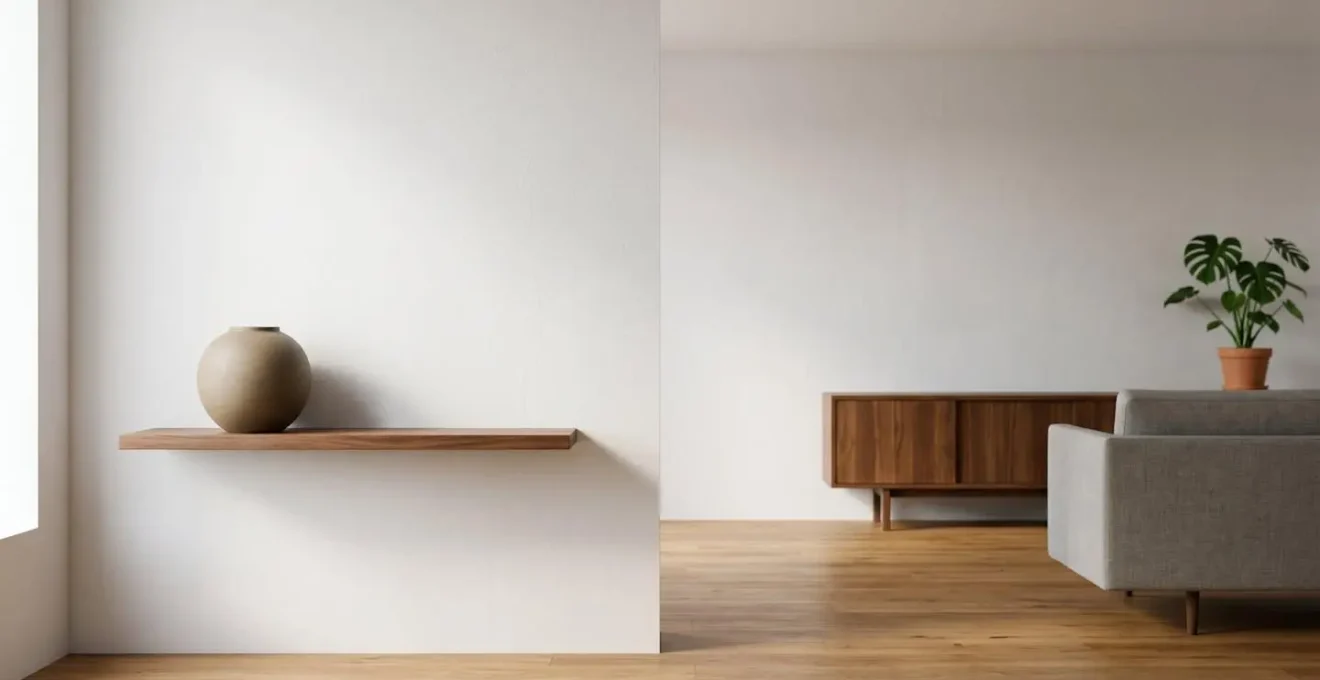
To avoid the trend trap and assess an object’s potential for timelessness, you need a reliable framework. This checklist moves beyond subjective feelings to provide concrete criteria for evaluating a potential hero piece.
Your 4-Point Timelessness Test
- Archetype Test: Ask ‘Is this a modern interpretation of a timeless form (vessel, sphere, obelisk) or a fleeting item with no historical precedent?’ Objects rooted in archetypal forms endure across decades.
- Material Aging Assessment: Choose materials that develop patina and gain character over time—unlacquered brass, marble, hardwood, natural ceramics—rather than finishes that degrade or look dated (iridescent coatings, certain plastics).
- Instagram Saturation Check: Before purchasing, search the object’s name or hashtag; if oversaturated in identical influencer homes, its trend cycle is nearing completion.
- Versatility Test: Evaluate if the object can be restyled in 3-4 different ways or different rooms; truly timeless pieces adapt to your evolving aesthetic rather than serving a single purpose.
By applying this test, you shift your focus from what is fashionable to what is fundamental. You begin to build a collection of pieces that will grow with you, gaining character over time rather than becoming obsolete.
When Do UK Artisan Markets Offer the Best Selection of Unique Decorative Pieces?
While this question points to a specific geography, the underlying strategy for sourcing unique, artisan-made pieces is universal. A savvy curator understands that discovering exceptional work is about timing and knowing where to look, whether in London, New York, or online. Rather than waiting for a piece to find you, you must actively hunt for it, following a calendar that aligns with the rhythms of the art and craft world.
The key is to get access to work before it hits the mainstream gallery circuit. This means targeting moments when new talent emerges or when established artisans present their best inventory. For instance, the period of late spring and early summer is often when art schools hold their graduate shows, offering a first look at the work of emerging artists, often at more accessible price points. Similarly, the pre-holiday season in November and early December is when makers stock their stalls for artisan markets with their most compelling pieces. Arriving early on the first day of a major craft fair is a classic strategy for having the best selection.
Beyond the physical calendar, the digital realm offers year-round sourcing opportunities. Following art school social media accounts, specific hashtags like #studiopottery or #contemporaryceramics, and the rosters of online galleries like Saatchi Art or The Tappan Collective can reveal talent from across the globe. This hybrid approach—combining local, seasonal market visits with consistent digital scouting—is the most effective way to build a unique collection. The goal is to develop an « eye » by constantly exposing yourself to new work, both physically and virtually.
An effective sourcing strategy involves a year-round approach. The early autumn months are often when open studio tours occur, providing direct access to makers in their creative environment. Conversely, the quiet post-holiday months of January and February can be an excellent time to find sales or to commission a custom piece from an artisan with more availability. By understanding this annual cycle, you can plan your acquisitions strategically, maximizing your chances of finding a truly defining object.
How to Choose One Hero Furniture Piece That Anchors Your Entire Ground Floor?
While this article focuses on a decorative object, the underlying principles of curation apply equally to selecting a hero furniture piece. In fact, a truly exceptional decorative object can often perform the same anchoring function as a large piece of furniture, but with greater subtlety and flexibility. Whether it’s a sculptural armchair or a significant ceramic vessel, the selection process is identical: it’s about choosing a piece that establishes the conceptual and aesthetic anchor for the entire space.
The « hero » piece is the first line of the story you are telling. It sets the tone, the material palette, and the level of formality for everything else. As noted by designer Kristen McGowan, this principle of hierarchy is fundamental to creating a space that feels intentional rather than chaotic. The idea is to « choose one standout piece—whether it’s art, furniture, or lighting—and surround it with neutral, supporting decor to prevent visual overload. » This advice is crucial. Your hero piece, whether it’s a Cassina chaise lounge or a 3-foot-tall studio pottery vase, requires a supporting cast of quieter elements to truly shine.
To anchor an entire ground floor, the object or furniture piece must have significant visual weight and be placed at a natural focal point—perhaps in an entryway where it is the first thing seen, or in a central living area where sightlines converge. The piece should feel inevitable, as if the architecture itself was designed to showcase it. When choosing a piece to perform this powerful role, consider its 360-degree appeal. An object that is interesting from all angles is essential for an open-plan space where it will be viewed from multiple perspectives. The goal is to select a piece so compelling that it organizes the entire spatial experience around itself.
This curatorial choice is the most important decision you will make for your interior. It is the gravitational center around which all other smaller decisions will orbit. By giving one piece this hierarchical importance, you simplify all subsequent choices and create a space with powerful, clear-headed intent.
Why Does Your Designer Chair Look Cramped Despite a Large Living Room?
This common frustration stems from a perceptual error: treating a sculptural piece of furniture or a large decorative object as a standalone item. When a significant piece « floats » in a large, open space without any contextual elements, the eye doesn’t register it as important; it registers it as lost or awkward. It becomes a ‘lonely island’ in a sea of floor space. The solution is not to push it against a wall, but to apply a key curatorial technique: creating a composed vignette.
A vignette is a small, curated grouping of objects that tells a micro-story. By grouping your designer chair with a few supporting elements, you give it purpose and ground it in the space. This prevents it from looking like an afterthought and transforms it into a deliberate, confident statement. This method is a core tool for professional interior designers facing this exact problem.
Case Study: Solving the ‘Lonely Island’ Designer Chair Problem
In an article for Homes & Gardens, interior designer Sarah Hart diagnoses this spatial perception error perfectly. Her solution, as detailed in an analysis of negative space, is to create an ‘archipelago’—a purposeful micro-zone around the isolated piece. This involves adding two or three quiet, supporting elements such as a small side table, a dedicated task lamp, or a small-scale area rug that sits just under the chair’s front legs. This cluster transforms the ‘lonely island’ into an intentional destination within the room. The technique requires balancing the chair’s strong visual weight with surrounding furniture forms that are visually ‘quiet’ and using contextual lighting, like a floor lamp, to visually « carve out » its territory. This makes the chair read as a deliberate focal point rather than an awkwardly placed object.
This ‘archipelago’ strategy applies perfectly to a large sculpture, a significant floor vase, or any other major decorative object. Don’t just place your hero piece; compose it. Give it a partner, like a single floor-level spotlight, or place it on a low plinth to give it elevation and importance. By creating a small, self-contained scene, you give the eye a reason to pause and appreciate the object, allowing it to command its corner of the room with authority.
Key Takeaways
- Curation Over Decoration: Approach the selection of a hero object not as filling a space, but as telling a story and anchoring a room’s narrative.
- Prioritize Intrinsic Qualities: Focus on an object’s visual weight, material story, and craftsmanship over its mere size or how well it « matches » a color scheme.
- Value Timelessness and Provenance: Choose archetypal forms and artisan-made pieces over mass-produced trends to ensure your object has enduring relevance and personal meaning.
How to Balance a Sculptural Coffee Table With Functional Seating in 20 m²?
The ultimate test of curatorial skill is applying these principles within a constrained space. In a compact room, every piece must justify its existence. Introducing a sculptural hero piece, like a bold coffee table, can feel risky, as its high visual weight can threaten to dominate the entire area. The key to success is not to downsize the hero piece, but to intelligently down-weight everything around it. It’s a game of visual counter-balance.
In a 20m² space, you cannot have two heroes. You must make a clear hierarchical decision: is the sculptural table the star, or is the sofa? If the table is the anchor, then the surrounding seating must be visually light and deferential. The most effective strategy is to choose seating that is ‘leggy’ or transparent. Sofas and chairs on tall, slim legs allow sightlines and light to pass underneath, reducing their visual footprint. Accent pieces made of glass or clear acrylic can provide function while appearing almost invisible, ceding the spotlight entirely to the sculptural table.
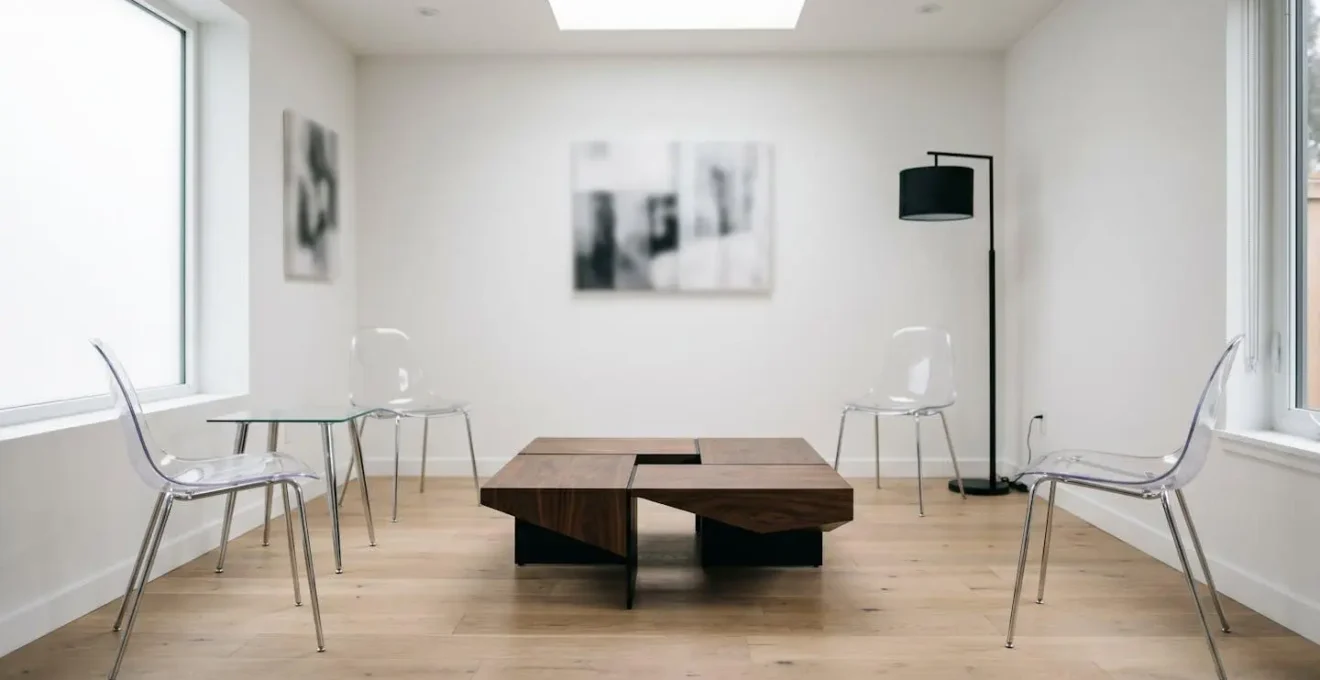
Another critical technique for small spaces is to think vertically. When the horizontal plane feels crowded, draw the eye upward to create a sense of spaciousness. A tall, slender floor lamp, a vertical gallery wall, or floor-to-ceiling curtains can introduce a ‘vertical escape’, balancing the density of the furniture below. Finally, choose function that can disappear. A sculptural table that allows two small poufs or stools to be tucked completely underneath adds seating capacity with zero visual footprint when not in use. This combination of transparent companions, vertical accents, and nested function allows a powerful sculptural piece to anchor even a small room without overwhelming it.
This act of balancing is the culmination of all the principles discussed: understanding visual weight, making hierarchical choices, and composing a scene. It proves that the impact of a hero object is not dependent on a large space, but on intelligent, thoughtful curation.
By applying this curatorial mindset, you can move beyond simply filling your home with objects and begin to build a meaningful collection. Start today by assessing your space not for what it lacks, but for what single story you want it to tell.