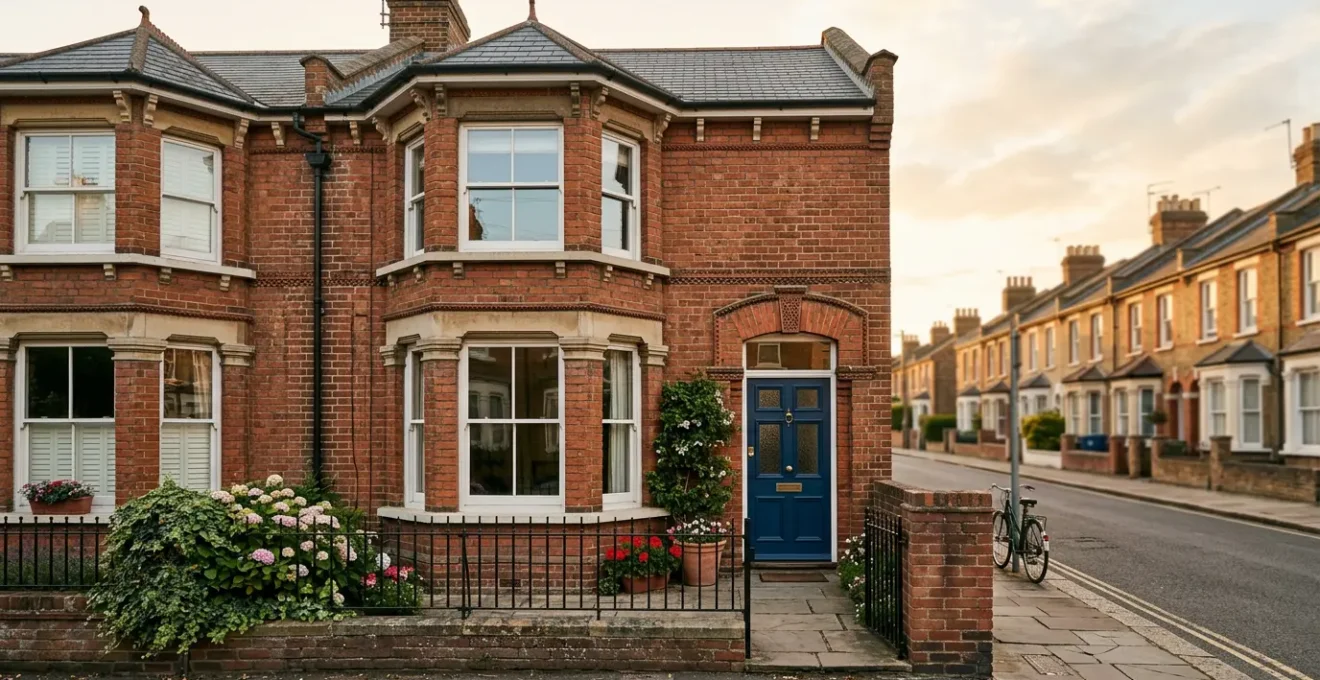
The greatest return on investment for a UK terraced house comes not from the most expensive renovation, but the one most proportional to your property’s ‘value ceiling’.
- Major additions like loft conversions add significant value only when fully compliant with Building Regulations, as ‘paperwork value’ is critical for mortgage lenders.
- Over-spending on high-end finishes in a mid-range property, especially kitchens, is the most common way homeowners fail to recoup their investment.
Recommendation: Before any work begins, establish your street’s value ceiling and get a local estate agent’s opinion on your plans to ensure your budget aligns with the potential uplift.
For UK homeowners of terraced properties, the drive to improve and add value through DIY is a national pastime. The common wisdom suggests that new kitchens, bathrooms, and extra bedrooms are sure-fire ways to increase a home’s price tag. Many embark on ambitious projects, from knocking through walls to extending into the loft, armed with inspiration from home improvement shows and a belief that every pound spent will return twofold upon sale. This thinking, however, often overlooks a critical factor known to every chartered surveyor: the local property market’s unforgiving ‘value ceiling’.
The reality is that not all renovations are created equal from a valuation perspective. While a beautifully executed project can enhance your living space, it can paradoxically fail to add monetary value—or even lower it—if it’s non-compliant, out of character for the area, or simply too expensive for the property’s potential. The true key to a successful renovation ROI isn’t just about adding square footage or shiny new fixtures. It’s about a strategic, data-driven approach that balances ambition with proportional investment, aesthetics with regulatory compliance, and personal taste with broad market appeal.
This guide moves beyond the platitudes. We will dissect the most common renovation projects for UK terraced houses through the critical lens of a property valuer. We’ll explore why a costly kitchen can be a financial pitfall, how to navigate the crucial world of Building Regulations, and when to spend money for maximum impact, ensuring your hard work translates into tangible, bankable value.
This article provides a structured analysis of key renovation decisions, examining each through a valuation-focused lens. The following sections break down the financial and regulatory realities behind the most popular home improvement projects in the UK.
Summary: A Surveyor’s Analysis of Renovation Value in UK Terraced Homes
- Why Does a DIY Kitchen Extension Sometimes Lower Your Valuation?
- How to Obtain Retrospective Building Regs Approval for a Loft Conversion You Did Yourself?
- Loft Conversion or Garage Conversion: Which Adds More Per-Square-Metre Value in the South East?
- The Over-Spec Kitchen Mistake That Never Recoups Cost in a £250,000 Street
- How Many Months Before Selling Should You Complete Renovations for Maximum Impact?
- When to Update Decor Before Selling: The 6-Month Rule UK Estate Agents Recommend
- Developer Carpet Upgrade or DIY Engineered Wood: Which Adds More Resale Value?
- How to Make a Cookie-Cutter New-Build in the UK Feel Unique Within Budget?
Why Does a DIY Kitchen Extension Sometimes Lower Your Valuation?
The idea that a kitchen extension is a guaranteed value-add is one of the most pervasive myths in property improvement. While a well-designed, functional kitchen is highly desirable, a DIY extension can become a financial liability for two primary reasons: lack of regulatory compliance and over-capitalisation. From a surveyor’s standpoint, an extension built without the proper Building Regulations approval is not just an oversight; it represents a risk. A valuer may be forced to disregard the added space entirely, or worse, assign a lower value to the property due to the potential cost of remediation or regularisation for a future buyer.
The second, and more common, issue is exceeding the property’s value ceiling. Every street has a general price limit, and no matter how spectacular your kitchen is, it’s unlikely to push your home’s value significantly beyond the price of other houses in the area. Spending excessively on high-end appliances, bespoke cabinetry, and imported stone countertops in a modest terraced house is a classic case of over-capitalisation. As property investor Mark Poole notes in a survey on value-adding renovations:
Spending £75k on a bespoke, high-end kitchen in a £250k terraced house is likely to be a losing proposition.
– Mark Poole, Cladco Expert Survey
This highlights the crucial principle of proportional investment. A beautiful but disproportionately expensive extension can create a home that is an anomaly in its market, making it difficult to value and sell. The money spent simply won’t be reflected in the final sale price, effectively lowering your net return and, in that sense, your property’s ‘value’ relative to your total investment.
How to Obtain Retrospective Building Regs Approval for a Loft Conversion You Did Yourself?
Completing a DIY loft conversion without formal Building Regulations approval is a significant misstep that directly impacts a property’s value. Without a completion certificate, the converted space is not legally habitable, cannot be marketed as an additional bedroom, and may be uninsurable. This creates a major headache for sellers, as most mortgage lenders will refuse to lend on a property with unauthorised structural alterations. Fortunately, it is possible to seek retrospective approval through a process known as ‘regularisation’, but it comes at a cost.
To obtain a regularisation certificate, you must apply to your local council’s building control department. They will require you to expose key structural elements of the conversion. This can mean cutting into plasterboard to inspect floor joists, steel beam supports, insulation, and fire safety measures like smoke alarms and fire doors. The surveyor from the council will assess whether the work, as far as can be ascertained, complies with the regulations that were in effect at the time the work was carried out. If deficiencies are found, you will be required to rectify them before a certificate is issued.
This process is invariably more stressful and expensive than obtaining approval from the outset. You not only face the cost of the remedial work but also the fees for the regularisation application itself. The financial penalty is clear, as recent building control fee surveys show that retrospective approval can cost between £600 and £1,200 or more, compared to the £400-£900 for a standard application. This ‘paperwork value’ is critical; the certificate itself is what transforms an attic space into a valuable, mortgageable asset in the eyes of a surveyor and a buyer.
Loft Conversion or Garage Conversion: Which Adds More Per-Square-Metre Value in the South East?
When considering adding square footage to a terraced house, the two most common options are converting the loft or the garage (if one exists). From a pure valuation standpoint in a high-demand area like the South East, a loft conversion typically adds significantly more value per square metre. The primary reason is its function: a loft conversion almost always creates a desirable master bedroom, often with an en-suite bathroom. This high-value space fundamentally changes the description of the property (e.g., from a 3-bed to a 4-bed), which has a direct and substantial impact on its market price.

A garage conversion, while often cheaper and quicker to execute, typically creates more versatile but lower-value space, such as a home office, playroom, or downstairs utility room. While useful, these spaces don’t command the same premium as an extra bedroom. Furthermore, in many urban areas of the South East, sacrificing a garage means losing coveted off-street parking, which can be a significant negative for potential buyers and may even slightly detract from the property’s overall value, partially offsetting the gain from the extra internal space.
The financial disparity is clear when analysing the return on investment. The following table, based on recent UK data, illustrates the typical costs and value uplift associated with each project, reinforcing the superior ROI of a well-executed loft conversion.
| Conversion Type | Typical Cost Range | Value Added | ROI Percentage | Key Consideration |
|---|---|---|---|---|
| Loft Conversion | £25,000–£50,000 | 20-25% property value | Higher long-term ROI | Creates high-value bedroom/ensuite space |
| Garage Conversion | £10,000–£20,000 | 10-15% property value | Cost-effective option | Loss of off-street parking may reduce appeal |
| Party Wall Act Impact | £1,000–£3,000 (loft only) | N/A | Adds time/cost | Required for terraced house loft conversions |
As this recent comparative analysis shows, a loft conversion’s potential to add up to 25% to the property’s value makes it the clear winner for homeowners focused purely on maximising financial return, especially in the competitive South East market.
The Over-Spec Kitchen Mistake That Never Recoups Cost in a £250,000 Street
A new kitchen is consistently cited as a top value-adding home improvement, and for good reason. It’s the heart of the home and a major focal point for buyers. However, there is a critical distinction between a ‘new’ kitchen and an ‘over-specified’ one. The biggest financial mistake a homeowner can make is to install a kitchen whose cost is wildly out of proportion with the property’s overall value. In a street where the typical terraced house is valued around £250,000, installing a £40,000 bespoke kitchen with premium brand appliances is a guaranteed way to lose money.
A surveyor values a property based on comparable evidence. They will look at the sale prices of similar homes in the immediate vicinity. While a new, modern kitchen will make your property more attractive than a neighbour’s with a dated one, its contribution to the final valuation is capped. The market will not support a £40,000 premium just for the kitchen. Instead, a valuer will see a clean, modern, and functional space, and the specific brand of the oven or the provenance of the quartz worktop will have a negligible impact on the final figure.
The key is proportional investment. As a rule of thumb, industry guidance recommends spending between 5-15% of the total house value on a kitchen renovation to see a healthy return. For a £250,000 property, this translates to a sensible budget of £12,500 to £37,500. Spending within this range on quality, durable, and neutrally-styled units and appliances will achieve the desired uplift in value without over-capitalising.
Your Pre-Renovation Value Audit: 5 Steps to Verify ROI
- Define the Ceiling: Research recent sale prices of similar, un-renovated terraced houses on your street. This figure is your maximum realistic post-renovation target value.
- Calculate Proportional Spend: Based on your property’s current value, calculate the 5-15% optimal budget for the project. Ensure your quotes and plans fit comfortably within this range.
- Assess Buyer Appeal vs. Personal Taste: List every feature in your renovation plan. Mark each as either ‘Broad Market Appeal’ (e.g., integrated storage, neutral colours) or ‘Personal Taste’ (e.g., niche tile patterns, unconventional colours). The balance must favour broad appeal.
- Confirm Regulatory Needs: Identify if the work requires Building Regulations approval (e.g., moving a structural wall) or a Party Wall Agreement. Factor these essential costs and timelines into your budget from day one.
- Get an Agent’s Opinion: Before committing funds, show your plans and budget to two local estate agents. Ask for their frank, professional opinion on the likely value uplift and any potential red flags they see.
How Many Months Before Selling Should You Complete Renovations for Maximum Impact?
Timing is a frequently underestimated element of a successful renovation strategy. Completing work too close to the sale date can create problems, while doing it too far in advance means you lose the ‘freshly updated’ appeal. From a valuation and sales perspective, a strategic timeline is essential to maximise impact. Major structural work should be completed well in advance, whereas final decorative touches should be timed to coincide with the property going on the market.
Large-scale projects like extensions and loft conversions should ideally be finished at least nine months before you plan to sell. This buffer period is crucial for several reasons. It allows for any ‘snagging’ issues to be identified and resolved without pressure. It also ensures you have all the essential completion certificates from building control in hand, which are non-negotiable for a smooth sales process. Trying to sell while waiting for paperwork is a significant red flag for buyers and their solicitors.
Intermediate projects like kitchen and bathroom renovations are best completed four to six months before a sale. This allows the new installations to ‘settle’—any minor issues with plumbing or cabinetry can be fixed—and it gives you time to enjoy the improvements before moving. Most importantly, it means the rooms are still in pristine condition but don’t smell overwhelmingly of new paint or silicone, which can sometimes make buyers suspicious of rushed, last-minute cover-ups. The final decorative phase—painting, new flooring, and staging—should happen in the last one to three months, ensuring the property looks its absolute best for professional photographs and viewings.
A well-structured timeline for property sales should follow these key stages:
- 9+ months before sale: Complete major structural work like extensions and loft conversions. This accounts for the typical 6-8 week build time plus essential snagging and certification periods.
- 4-6 months before sale: Finish kitchen and bathroom renovations to allow for settling and quality checks.
- 3 months before sale: Engage with a local estate agent for market-specific feedback on final, high-impact improvements.
- 1-3 months before sale: Complete all final decoration, including painting and flooring, so everything is fresh for photos and viewings.
- Final month: Focus exclusively on decluttering, professional cleaning, home staging, and minor, low-cost updates like new hardware, light fixtures, or re-grouting tiles.
When to Update Decor Before Selling: The 6-Month Rule UK Estate Agents Recommend
Purely cosmetic updates, such as painting and minor repairs, offer one of the highest returns on investment precisely because their cost is relatively low. However, the timing of this redecoration is critical to maximising its psychological impact on potential buyers. Many UK estate agents advocate for a « 6-Month Rule » for decoration: aim to have all painting and decorating work completed around three to six months before your property hits the market. This timeframe strikes the perfect balance between freshness and authenticity.
Completing the work in this window ensures that the paint has fully cured, eliminating any lingering chemical smells that can be off-putting during viewings. It also allows enough time for any minor settlement cracks, which are common in terraced houses, to be filled and touched up. A property that looks lived-in yet immaculate feels more genuine and trustworthy to a buyer than one that screams « just painted yesterday, » which can sometimes suggest that problems are being hidden. It gives the home a settled, well-maintained feel that builds buyer confidence.

The financial case for redecoration is compelling. It’s a low-cost way to make a powerful first impression, allowing buyers to envision themselves in a clean, neutral space. While data can vary, the principle holds true over time; even older analyses demonstrate the power of paint, as historical home improvement index data shows a 62% ROI for basic redecoration projects. This simple act of refreshing walls with neutral, light-reflecting colours can transform a space, making it feel larger, brighter, and more valuable, all for a minimal outlay.
Developer Carpet Upgrade or DIY Engineered Wood: Which Adds More Resale Value?
For owners of new-build properties, the choice of flooring presents a classic dilemma: accept the developer’s standard-issue carpet, pay a premium for their upgraded option, or decline both and install your own flooring post-completion? From a resale value perspective, the DIY route of installing a high-quality, continuous hard floor often yields a better return than any developer-provided carpet. While plush carpet can feel luxurious, it is susceptible to wear, stains, and dating. Buyers are often wary of used carpets for hygiene reasons.
Engineered wood or high-quality Luxury Vinyl Tile (LVT), on the other hand, offers a more durable, timeless, and premium feel. Installing a single type of flooring, such as oak-effect LVT, throughout the entire ground floor of a terraced house creates a sense of flow and spaciousness that disconnected carpeted rooms cannot match. This visual continuity makes the property feel larger and more cohesive—a significant selling point that a surveyor and potential buyers will note. While the initial outlay for DIY installation may be higher than a developer’s carpet upgrade, the perceived value and longevity are far greater.
The key is to choose a material that balances cost, durability, and aesthetics. Engineered wood provides the authentic feel of real wood, while modern LVT offers exceptional durability, water resistance (ideal for kitchens), and highly realistic wood or stone effects at a more accessible price point.
Case Study: The Superior ROI of Continuous LVT Flooring in UK Renovations
An analysis of renovation projects demonstrates the powerful impact of flooring choices. As shown in multiple Fittra case studies from 2019-2024 in London boroughs, clients consistently expressed high satisfaction with new hardwood and LVT installations. In both new-builds and full house renovations, homeowners specifically praised the premium feel and visual continuity achieved by running a single type of high-quality flooring throughout the ground floor, confirming its positive impact on buyer perception and overall property value.
This evidence suggests that investing in a quality hard flooring solution, installed post-handover, is a more strategic long-term decision for adding resale value than simply accepting a developer’s limited and often overpriced carpet upgrades.
Key Takeaways
- Proportionality is Paramount: The value of your renovation is capped by your street’s price ceiling. Always align your budget with your property’s total value (e.g., 5-15% for a kitchen).
- Compliance Creates Value: A renovation’s value is not just physical; it’s in the paperwork. A Building Regulations completion certificate is non-negotiable for adding real, mortgageable value.
- Function Dictates Value: Adding a bedroom (e.g., via a loft conversion) will almost always yield a higher ROI than creating ‘flexible’ space (e.g., a garage conversion), as it fundamentally changes the property’s core description.
How to Make a Cookie-Cutter New-Build in the UK Feel Unique Within Budget?
New-build homes offer a blank canvas, but their « cookie-cutter » nature can lack the character and personality that attract buyers. Making a new-build feel unique doesn’t require a huge budget or structural changes. The most effective strategy is to focus on adding architectural detail and texture through clever, low-cost DIY projects. These additions create focal points and a sense of depth that standard plasterboard walls lack, instantly elevating the interior from generic to bespoke.
One of the most popular and high-impact methods is installing decorative wall panelling. Whether it’s classic shaker-style panels in a bedroom, a contemporary slat wall behind a media unit, or simple dado rails to break up a long hallway, panelling adds texture, shadow, and a sense of permanence. It’s a relatively inexpensive project using MDF sheets or timber strips, but the result looks sophisticated and custom-built. Painting the panelling a contrasting colour or a shade darker than the walls can create a dramatic and memorable feature wall.

Beyond panelling, other budget-friendly updates include upgrading standard-issue hardware and lighting. Swapping generic chrome door handles and light switches for a more distinct finish like matt black, brushed brass, or antique bronze can transform the feel of a room for a minimal cost. Similarly, replacing basic pendant light fittings with more sculptural or interesting fixtures creates instant focal points in living rooms, dining areas, and bedrooms. These small, thoughtful changes accumulate to give a new-build a unique identity that stands out in a homogenous market, adding significant perceived value for a very modest investment.
By applying these valuation-led principles, you can move beyond generic advice and make informed, strategic decisions. The next logical step is to create a detailed, costed plan for your chosen project, ensuring it aligns perfectly with your property’s market potential and your long-term financial goals.