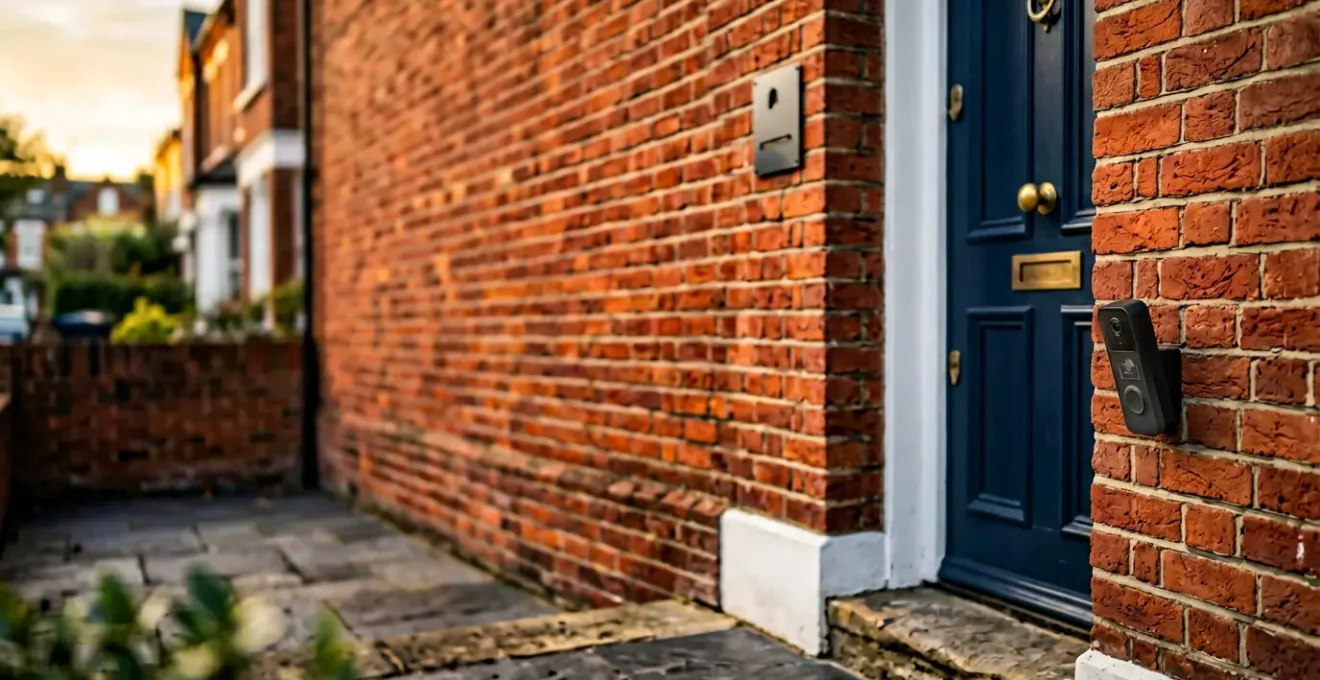
Installing a video doorbell in the UK requires more than just physical setup; it demands building a legally defensible security system to avoid significant legal and financial penalties.
- Your legal obligations under UK GDPR begin the moment your camera can view or hear people outside your property.
- Technical choices, like using privacy zones and wired power, are crucial for demonstrating « data minimisation by design. »
Recommendation: Proactively configure your device’s privacy settings and document your setup before a dispute arises, treating your domestic system with the same seriousness as a commercial one.
The decision to install a video doorbell often starts with a simple goal: to enhance your home’s security and gain peace of mind. You want to see who is at the door, protect deliveries from porch pirates, and create a deterrent for potential intruders. Yet, for UK homeowners, this modern convenience comes with a significant and often underestimated responsibility. The moment your camera captures footage of the pavement, a shared pathway, or a neighbour’s property, you are no longer just a homeowner; you become a ‘data controller’ under the UK’s stringent data protection laws, including GDPR and the Data Protection Act 2018.
While many online guides will offer simple advice like « put up a sticker » or « talk to your neighbours, » these steps are merely the baseline. They fail to address the core of the issue that leads to costly legal disputes. The headlines about six-figure fines are not myths; they are the result of homeowners failing to understand their duties and, crucially, failing to configure their technology to respect those duties. True compliance isn’t a passive act of box-ticking. It’s an active process of building a compliant security system.
But if the very technology designed to protect you could expose you to legal risk, how can you find the right balance? The key lies in shifting your mindset. Instead of seeing compliance as a legal burden, you must view it as an act of technical engineering. This guide is designed from that perspective. We will move beyond the platitudes to give you a consultant’s view on making deliberate, informed choices—from the hardware you select and the software settings you enable, to understanding your duties when a neighbour requests their data. This article will equip you to create a security perimeter that is not only effective but legally defensible, before moving on to other critical aspects of managing your home’s safety and value.
This comprehensive guide will walk you through the essential considerations for setting up and managing your smart home technology and other home improvement projects, ensuring you are well-informed at every step.
Summary: How to Install a Video Doorbell That Complies With UK GDPR and Neighbour Privacy?
- Why Could Your Ring Doorbell Land You in a UK Data Protection Dispute?
- How to Mask the Pavement From Your Doorbell Camera’s Field of View?
- Wired or Battery Doorbell: Which Survives a Rainy UK Winter Without Signal Loss?
- The Cloud Storage Fee Mistake That Costs £100/Year for Features You Don’t Need
- When Should You Install a Video Doorbell to Protect Christmas Deliveries?
- The Non-Slip Pad Mistake That Causes 15% of UK Home Falls Involving Rugs
- How to Obtain Retrospective Building Regs Approval for a Loft Conversion You Did Yourself?
- Which DIY Renovations Add the Most Value to a UK Terraced House?
Why Could Your Ring Doorbell Land You in a UK Data Protection Dispute?
It is not illegal to own or install a video doorbell in the UK. However, your legal standing changes dramatically the moment its sensors capture information beyond your private property boundary. When your camera records a public footpath, a shared drive, or your neighbour’s garden, you assume the role of a data controller with full responsibilities under UK GDPR. Ignoring these responsibilities is what transforms a security device into a legal liability. The core issue is the potential for harassment and a breach of an individual’s right to privacy in their own home.
The most prominent example of this is the landmark case of Fairhurst v Woodard. It wasn’t just the presence of a Ring doorbell that led to the dispute; it was the specific way it was used. The homeowner was found liable for harassment and data breaches because his system captured extensive video and, crucially, audio footage far beyond his property line. The judge noted the audio recording was particularly invasive. This case established a critical precedent: domestic users are fully accountable for how their devices operate in public or neighbouring spaces.
Case Study: Fairhurst v Woodard (2021) – The £100,000 Doorbell Dispute
In this landmark 2021 case, a homeowner was found to have violated UK GDPR after his Ring devices captured extensive video and audio of his neighbour, Dr. Fairhurst, well beyond his property’s boundary. The court ruled the cameras’ operation constituted harassment and a breach of the Data Protection Act 2018. A key factor was the intrusive nature of the audio recording and the defendant’s misleading statements about the system’s capabilities. This resulted in a penalty of approximately £100,000, setting a stark warning that domestic CCTV users are considered data controllers with serious legal obligations.
To avoid a similar fate, you must demonstrate a « legitimate interest » for your recording (i.e., crime prevention) and show that your use is proportionate and transparent. This means you cannot indiscriminately record everything. For example, UK courts have given guidance on what is considered excessive, with a court ruling that recording over 60 feet from a property is often deemed excessive. Simply wanting to see who is on the street is not a sufficient justification. You must be able to prove you have taken active steps to minimise data collection, which is why technical configuration is so vital.
How to Mask the Pavement From Your Doorbell Camera’s Field of View?
The most effective way to demonstrate compliance with UK data protection law is through « data minimisation by design. » This means using your doorbell’s built-in technology to actively prevent the collection of unnecessary data. The primary tool for this is the privacy zone feature, which allows you to draw a black box over areas in the camera’s field of view that you do not have a legitimate interest in recording, such as a public pavement, a neighbour’s window, or their garden.
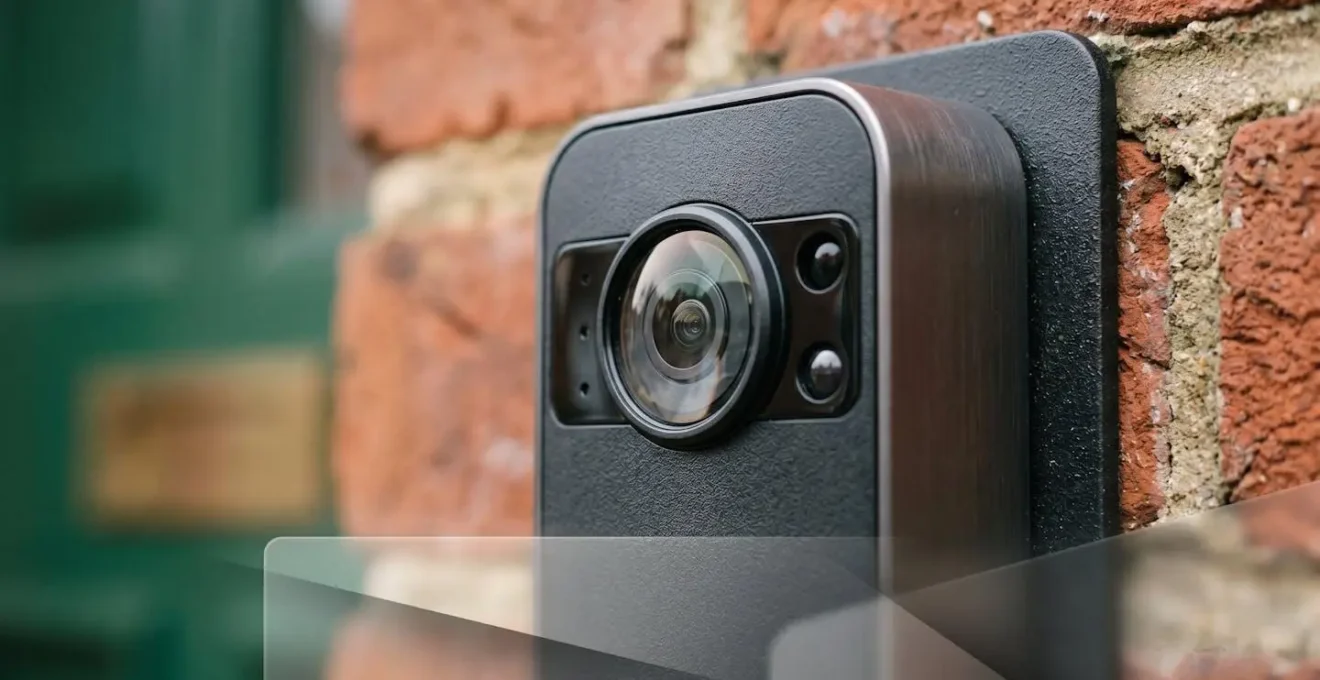
As the image above illustrates, this feature digitally masks selected areas, ensuring no motion is detected and no footage is recorded within them. This is a proactive step that provides clear evidence you have considered and respected the privacy of others. Most leading brands offer this functionality, though the implementation varies slightly. For instance, Ring and Eufy provide true blackout zones, while older Nest systems focus more on ignoring motion in specified areas.
In some situations, particularly with UK terraced houses where front doors open directly onto public paths, digital zones may not be enough. In these cases, physical solutions are your next line of defence. Using an angled wedge mount can physically tilt the camera’s gaze downwards and away from public land or neighbouring properties. Combining a wedge mount with a carefully configured privacy zone creates a robust, multi-layered approach to building your legally defensible perimeter.
Action Plan: Setting Up Your Privacy Zones
- Ring Privacy Zones: Open the Ring app, navigate to your device’s Settings, then Privacy Settings. You can create up to two blacked-out privacy zones per device to completely block areas from being recorded.
- Eufy Privacy Zones: In the eufySecurity app, select your camera and go to Camera Settings, then Privacy Zones. Create zones where the camera will not detect motion or record any events.
- Nest Activity Zones: While Nest focuses on « Activity Zones » to ignore motion rather than true blackouts, you can configure these in the Google Home app to minimise unwanted alerts and recordings from public areas.
- Physical Alterations: If digital masking is insufficient, install a vertical or horizontal wedge mount to physically change the camera’s angle. Placing the doorbell under an eave or porch roof can also help limit its view of the pavement.
Wired or Battery Doorbell: Which Survives a Rainy UK Winter Without Signal Loss?
Your choice between a wired and a battery-powered doorbell has significant implications that go far beyond convenience; it directly impacts your system’s reliability and, consequently, its legal defensibility in the UK. While battery models offer easy DIY installation, their performance can be compromised by the very conditions in which you need them most: cold, damp UK winters. This can weaken your « legitimate interest » argument if your system fails to record an actual security event due to technical issues.
A wired doorbell offers a continuous power supply, eliminating concerns about battery degradation in cold weather. This ensures consistent performance and a stable field of view, making your privacy configurations more robust and legally sound. Its fixed position means your carefully set privacy zones cannot be accidentally altered. The main drawback is the need for existing doorbell wiring or professional installation, which can be a challenge in older UK properties.
Conversely, battery-powered doorbells are susceptible to performance dips. Cold temperatures below 5°C can significantly reduce battery capacity, leading to more frequent charging or even system failure. Furthermore, their reliance on a 2.4 GHz Wi-Fi signal can be an issue in UK homes with thick brick or stone walls, leading to signal loss and missed recordings. This lack of reliability, or « system integrity, » can undermine the security purpose you rely on for your legal justification.
This decision is critical, as a recent comparison of doorbell performance in UK weather highlights significant differences. The following table summarises the key trade-offs for a UK homeowner.
| Feature | Battery-Powered Doorbell | Wired Doorbell |
|---|---|---|
| UK Winter Battery Life | 3-4 months with moderate activity (15-25 events/day). Cold below 5°C significantly reduces capacity. Ring devices experience battery depletion at 36°F (2°C). | Continuous power supply – no battery degradation in cold weather |
| Signal Reliability | May experience interference from thick UK brick/stone walls. Requires strong 2.4 GHz Wi-Fi connection. | Stable wired connection with consistent field of view. More legally defensible as camera position remains fixed. |
| Motion Detection in Cold | PIR sensors less sensitive in cold weather. Eufy recommends increasing sensitivity levels in winter even if summer settings work fine. | Consistent detection performance regardless of temperature |
| Installation Flexibility | Easy DIY installation, ideal for UK rentals and older properties without existing wiring. Can be repositioned easily. | Requires existing doorbell wiring or professional installation. Limited placement options. |
| Legal Defensibility | Camera can be easily moved or fail to record (invalidating ‘legitimate interest’ security justification) | Stable setup with consistent field of view makes privacy configuration more legally defensible under UK GDPR |
The Cloud Storage Fee Mistake That Costs £100/Year for Features You Don’t Need
Many homeowners focus on the upfront cost of a video doorbell but overlook the ongoing subscription fees for cloud storage, which can easily exceed £100 per year for a multi-device setup. While cloud storage offers convenience, it’s crucial to evaluate whether you are paying for features you don’t actually need. More importantly, your choice of storage—cloud vs. local—directly impacts your ability to fulfil your legal duties as a data controller under UK GDPR.
One of the most significant of these duties is responding to a Subject Access Request (SAR). Any individual you have recorded has the right to request a copy of their personal data (i.e., the video footage of them). You are legally obligated to provide this footage, usually within one month. Failing to do so can lead to a complaint to the Information Commissioner’s Office (ICO). This is where your storage choice becomes critical. A system with easily searchable local storage (like a Eufy HomeBase with an SD card) can make finding and exporting specific footage straightforward, without ongoing fees. Cloud-based systems are also searchable but tie this fundamental legal requirement to a paid subscription.

The real « cost mistake » isn’t just the subscription fee itself; it’s paying for a service without understanding the responsibilities that come with it. You need a reliable and accessible evidentiary chain. Whether you choose a cloud plan or a local storage device, you must know how to access, isolate, and export footage promptly to remain compliant. Being prepared for an SAR is a core part of proactive compliance.
Your Checklist: Fulfilling a Subject Access Request (SAR) From a Neighbour
- Acknowledge the Request: Formally acknowledge receipt of the request within 72 hours. The Information Commissioner’s Office (ICO) provides a clear framework, and you must be able to respond to a request within one calendar month.
- Access Your Storage: Log into your cloud account (Ring, Nest) or access your local storage device (Eufy HomeBase, SD card) to begin the search.
- Isolate the Footage: Identify and gather all recordings that contain the person making the request. You are obligated to provide footage where they are identifiable but should redact or blur other individuals if possible.
- Export in a Common Format: Export the relevant clips in a standard video format like MP4, ensuring the file can be viewed without proprietary software.
- Provide Securely: Deliver the footage using a secure method, such as an encrypted email, a secure file transfer service, or by providing it on physical media like a USB drive. Document your delivery method and date.
- Communicate Delays: If you cannot provide the data within the one-month deadline, you must inform the requester of the delay and provide a valid reason.
When Should You Install a Video Doorbell to Protect Christmas Deliveries?
The festive season sees a dramatic spike in online shopping and, consequently, a rise in parcel theft or « porch piracy. » A video doorbell is an excellent deterrent, but its effectiveness depends on strategic timing. Installing it in the midst of the December rush is a common mistake. To truly protect your Christmas deliveries, you should aim to have your system fully operational by early to mid-November at the latest.
This timeline provides a crucial buffer period for several reasons. First, it gives you ample time to physically install the device without the pressure of imminent deliveries. Second, and more importantly, it allows you a stress-free window to configure and test the system. You can fine-tune motion sensitivity, set up your GDPR-compliant privacy zones, and ensure the Wi-Fi connection is stable. This testing phase is essential for ensuring the system is reliable when you need it most.
Finally, installing your doorbell well before the festive decorations go up gives you an opportunity to proactively inform your neighbours. A friendly conversation explaining that you’ve installed a new security device and have taken care to configure privacy zones can pre-emptively resolve potential concerns. Arriving on their doorstep with a box of mince pies and a quick, transparent explanation is far better than having them discover the camera themselves. By planning ahead, you transform your doorbell from a last-minute panic buy into a well-integrated and legally sound part of your home’s proactive security plan for the busiest delivery season of the year.
The Non-Slip Pad Mistake That Causes 15% of UK Home Falls Involving Rugs
While digital security is a modern concern, traditional home safety remains paramount. A startling number of household accidents are caused by a simple oversight: an unsecured rug. The common mistake is not the absence of a non-slip pad, but the use of the wrong type or a worn-out pad. Not all pads are created equal, and mismatching a pad to your floor surface can render it ineffective, creating a dangerous slip hazard.
The primary error is using a generic, one-size-fits-all pad. For example, a felt-backed pad designed for use on carpets will slide dangerously on a hardwood or laminate floor. For hard surfaces, you need a pad made from natural rubber or a rubber-and-felt combination that provides genuine grip. Cheap, PVC-based pads should be avoided, as their plasticisers can damage certain floor finishes like vinyl or polyurethane-sealed wood over time.
Another frequent mistake is continuing to use an old, dirty, or degraded pad. Non-slip pads lose their effectiveness as they accumulate dust and dirt, which act like tiny ball bearings between the pad and the floor. They should be cleaned according to the manufacturer’s instructions periodically. Furthermore, rubber pads can harden and become brittle over time, losing their gripping power. A pad that feels stiff or is crumbling is no longer safe and must be replaced. Choosing the right material for your floor type and ensuring it’s in good condition is a small, inexpensive step that can prevent a serious fall.
How to Obtain Retrospective Building Regs Approval for a Loft Conversion You Did Yourself?
Discovering that a previous owner—or even you—completed a loft conversion without the required Building Regulations approval can be a major headache, especially when you decide to sell your property. Fortunately, there is a formal process in the UK for legalising such work: applying for a Regularisation Certificate from your Local Authority Building Control (LABC).
The first step is to contact your local council’s building control department. You will need to submit a regularisation application and pay a fee, which is typically higher than the fee for an application made before work started. You must be prepared for the LABC to inspect the work thoroughly. This is not a simple paperwork exercise; a building control surveyor will need to be satisfied that the conversion meets the regulations that were in effect at the time the work was carried out.
The surveyor will focus on key safety aspects. These include:
- Structural Stability: They will need to see evidence that the new floor joists, beams, and any alterations to the roof structure are adequate. This may involve exposing parts of the structure for inspection.
- Fire Safety: This is a critical area. They will check for proper fire doors, interconnected smoke alarms on every storey, and a safe means of escape.
- Staircase Design: The staircase to the loft must meet regulations regarding steepness, headroom, and handrails.
- Insulation and Ventilation: The conversion must meet thermal efficiency standards and have adequate ventilation to prevent condensation.
If the work is found to be non-compliant, you will be required to open up, correct, or upgrade the elements at your own expense before a certificate is issued. While the process can be costly and disruptive, obtaining a Regularisation Certificate is the only official way to legitimise the work and ensure your property is safe and sellable.
Key takeaways
- Proactive planning is the best defence against legal disputes and safety hazards in your home.
- Understanding the technical and legal details of your smart devices is a non-negotiable part of modern homeownership.
- For both digital security and physical renovations, adhering to UK-specific regulations protects your safety and your property’s value.
Which DIY Renovations Add the Most Value to a UK Terraced House?
In the unique context of a UK terraced house, where space is often at a premium and party walls are a consideration, not all DIY renovations offer the same return on investment (ROI). The most valuable projects are those that either increase the usable living area, modernise key functional spaces, or enhance the property’s kerbappeal and connection to the outdoors.
First and foremost, updating the kitchen and bathroom consistently provides the highest ROI. These are the functional hearts of a home, and modern, clean, and well-designed spaces are a top priority for buyers. A DIY cosmetic update—painting cabinets, replacing worktops, installing new taps, and modern tiling—can transform a dated room for a relatively low cost. You don’t need a full-scale refit; smart, stylish improvements make the biggest impact.
Second, any project that adds square footage or improves the layout is a clear winner. While a full loft conversion often requires professionals, creating an open-plan kitchen/diner by removing a non-structural wall can make a terraced house feel significantly larger and more suited to modern living. Another high-value addition is a downstairs toilet or utility room, even if it’s just tucked under the stairs. This practical feature is highly sought after and adds significant convenience.
Finally, don’t underestimate the value of the garden. In a terraced house, outdoor space is a luxury. Improving the connection between the inside and outside with the addition of bi-fold or sliding doors can add a « wow » factor. A low-maintenance, well-designed garden with a clear seating area or patio becomes an extra « room » in the summer months, substantially boosting the property’s appeal and perceived value. These projects focus on improving the quality of life within the home, which is what ultimately translates to a higher valuation.
By taking a proactive, informed, and compliant approach to all your home projects—from digital security to structural improvements—you not only enhance your quality of life but also protect the long-term value and safety of your property. Begin today by auditing your current setup and planning your next project with these principles in mind.